The Collector's Guide to Signatures, Hallmarks & What Actually Matters
I've been in the Diamond District for years. Every week someone walks in with a "signed Cartier" they bought online. Sometimes they got a deal. Often they didn't.
This site is different. Real knowledge. Not theory. Not hedge-everything language. Practical information that helps you make better decisions.
Free Jewelry Tools
Practical calculators and reference charts for collectors and professionals.
Hallmark Identifier →
Search and identify vintage jewelry hallmarks by country, era, and type.
Authentication Checklist →
Generate brand-specific checklists to verify Cartier, VCA, Bulgari & more.
Value Estimator →
Understand factors affecting vintage jewelry market value.
Era Timeline →
Explore jewelry history from Georgian to Contemporary.
Jewelry Glossary →
A-Z reference with 75+ terms, instant search & cross-references.
Carat Calculator →
Estimate diamond and gemstone weight from measurements.
What "Signed" Actually Means
When dealers say a piece is "signed," we mean it has some kind of identifying mark from the maker—usually a brand name, maker's mark, or both.
That mark matters. But here's what most people get wrong: the signature alone proves almost nothing.
A signature is one piece of evidence. The construction, the materials, the wear patterns, the mark placement, the metal stamps—they all have to tell the same story. When they do, you've probably got something real. When they don't, you've got questions.
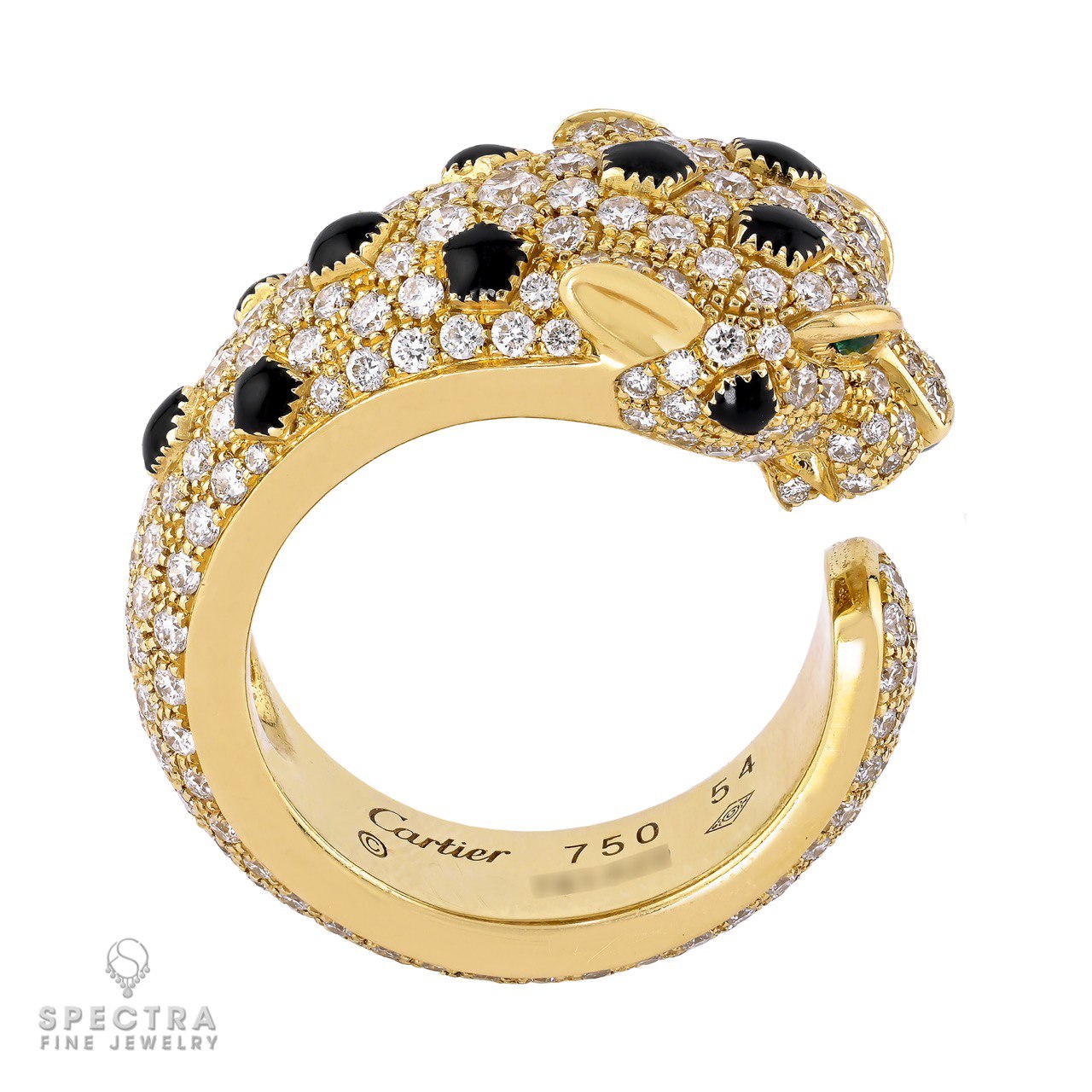
Example: Cartier ring with proper hallmarks and signature
The Three Things I Check First
The Mark Stack
Not just the brand name—everything. The metal stamp (750, 18K, 950 Pt), any assay marks, serial numbers, workshop codes. They should be in logical places and show consistent wear.
Mark Placement
Authentic pieces from major houses put stamps where they'll survive wear but stay discreet. Weird placement isn't proof of anything bad, but it's a reason to slow down.
Wear Consistency
A crisp, sharp signature on a heavily worn 1960s bracelet? That's a problem. The stamp should look like it's been through the same decades as the metal around it.
What You'll Find Here
Systematic knowledge that helps you think about authentication like a dealer— skeptically, methodically, and without panic.
Hallmarks Explained →
What those tiny stamps actually mean—and what they can't tell you.
How to Authenticate →
The step-by-step process I use. No magic, just method.
Cartier Guide →
What collectors need to know about the most faked brand.
Van Cleef & Arpels →
Authentication guide for the most copied fine jewelry designs.
Glossary →
Plain-English reference for terms collectors actually use.
Blog →
Deep dives on specific topics, fakes, and collector insights.
A Note on What I Won't Do
I won't promise certainty from photos alone. I won't tell you a single stamp "proves" anything. And I won't pretend there's some secret trick that separates every fake from every authentic piece.
What I will do is show you how to think about this stuff like a dealer—systematically, skeptically, and without panic.
That's worth more than false confidence.
Frequently Asked Questions About Signed Jewelry
Ready to Browse Authenticated Pieces?
Every item at Spectra Fine Jewelry goes through our verification process before it hits the case. No guesswork. No surprises.