Belperron: The Female Designer Who Refused to Sign Her Work
Published: July 3, 2026
The short answer: Suzanne Belperron never signed a single piece of jewelry in her life — yet her work is among the most collected and counterfeited in the world. Her belief that "my style is my signature" means authenticating a Belperron piece today relies entirely on recognizing her hand: the stone cuts, the mount construction, and the design language she perfected over five decades.
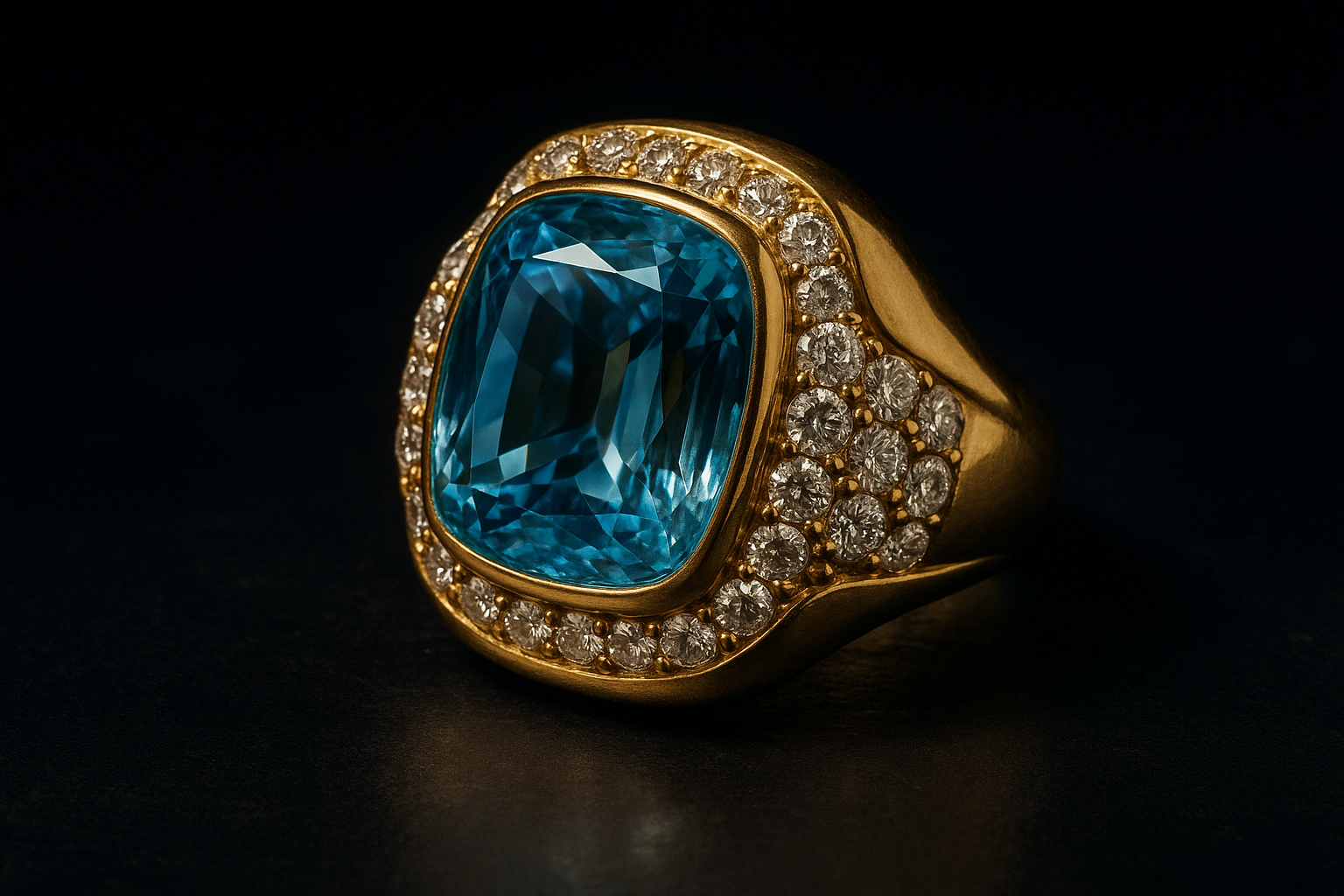
I've held about six real Belperron pieces in my hands in 17 years. You don't forget the first one. It was a rock crystal and diamond ring — the crystal carved in a way that made no structural sense unless you understood she was a sculptor first and a jeweler second. The shank wasn't soldered; it was carved from the same block. That's the kind of detail that separates Belperron from everyone else who tried to copy her.
Suzanne Belperron started at Boivin in 1921, took over the workshop by 1932, and then ran Herz-Belperron with Bernard Herz until the Nazis killed him at Drancy in 1943. She kept the company alive through the war, transferred ownership into her name, and restored it to Herz's son Jean after liberation. Most dealers skip that part. It matters. Her refusal to abandon the firm tells you everything about who she was.
What Makes Belperron Design Immediately Recognizable?
Four things, and if you miss any of them, you'll buy a fake.
First, the volume. Belperron didn't design flat jewelry. Even her rings have mass — the gold wraps, bulges, curls. She worked in three dimensions the way a sculptor handles clay. When you pick up a real Belperron piece, the weight distribution surprises you. The back of a brooch is as finished as the front. A fake almost always has a flat, stamped backing.
Second, the stone cuts. Belperron commissioned custom cuts that didn't exist commercially. She'd take a sapphire and have it cut as a star-shaped cabochon, or carve rock crystal into a seashell, or use massive topaz crystals in shapes no other jeweler was touching in 1935. If every stone in a "Belperron" piece is a standard calibrated cut, walk away. She didn't work that way.
Third, the material palette. She mixed rock crystal, chalcedony, blue zircon, aquamarine, and hematite with diamond and platinum in combinations that Boivin's male designers wouldn't have attempted. She used 22k yellow gold when Cartier was still doing everything in platinum. The combinations look effortless — that's the hardest thing to fake.
Fourth, the absence of a signature. She refused. Her exact words: "My style is my signature." Every real Belperron piece is unsigned. Counterfeiters can't resist stamping something — even a fake signature adds perceived value. That single fact is the fastest filter. If it says "Belperron" on the metal, it's almost certainly wrong.
How Do You Authenticate a Belperron Without a Signature?
Belperron authentication is a forensic exercise. I've watched dealers with 30 years in the trade get it wrong. Here's what actually works:
-
Go to the archives. Veronique de Cerval, who worked with Belperron and documented her entire archive, published the definitive reference book. The Herz-Belperron archive holds design drawings, production records, and client ledgers. A piece either traces to the archive or it doesn't. Period.
-
Study the construction technique. Belperron's workshop used specific mounting methods — certain prong shapes, stone-setting approaches, and metalworking techniques — that are documented in the de Cerval archives. A legitimate expert examines these under magnification. The fakes get the overall shape right but fail at 10x.
-
Check the materials chronologically. She used specific stone sources in specific decades. Brazilian aquamarine and citrine in the 1930s. Indian carved emeralds Mughal-style in the 1950s. Burmese ruby and Ceylon sapphire for her important commissioned pieces. A piece advertising Kashmir sapphire from Belperron's early period needs to show the right crystal structure under the 'scope — and for sapphires, you want a SSEF or Gübelin report, not GIA's origin call.
-
Find the provenance. Unlike Cartier or Van Cleef, Belperron didn't number her pieces. Authentication lives in the paper trail: purchase receipts, insurance appraisals, photographs, auction catalogs. Christie's Geneva sold a major Belperron rock crystal suite in 2016 from the collection of Daisy Fellowes — that kind of provenance is gold. Without it, you're betting on the object alone.
What's Belperron Value Doing Right Now?
Prices have doubled in the last 8 years. A good Belperron ring — rock crystal and diamond, 1930s-1940s — runs $25,000 to $60,000 at auction. Her more ambitious pieces have cracked seven figures. A chalcedony, sapphire, and diamond necklace sold at Sotheby's in 2022 for CHF 1.1 million. Her colored stone bracelets from the 1960s — the ones with carved emerald beads or massive cushion-cut aquamarines — trade between $80,000 and $300,000 depending on condition and stones.
The market is still catching up. Belperron made fewer than 3,000 pieces across her entire career. Compare that to Cartier producing thousands of pieces per year across multiple boutiques. The supply is genuinely tiny, and museums are buying what comes to market. The Met has a collection. The Musée des Arts Décoratifs in Paris holds major pieces. What's left for private buyers is vanishing fast.
Condition matters enormously here because the materials aren't replaceable. A chipped rock crystal on a Belperron piece isn't like a chipped diamond you can recut — the carving is integral to the design. Repairs, if done wrong, can halve the value overnight.
How Do You Buy One Without Getting Burned?
Buy from one of maybe 15 dealers globally who actually know the material. The serious Belperron market runs through Veronique de Cerval's archive certification, through a handful of specialists at the major auction houses, and through private dealers who've handled enough pieces to recognize the real thing by muscle memory.
Never buy a Belperron online from a listing you can't verify. Never trust a "Belperron" that carries a signature. And never, ever skip the archive check. A piece without Veronique de Cerval's certificate of authenticity trades at a 40-60% discount to one with it — and the discount exists for exactly the reason you think.
The thrill of holding a real one is that you're holding jewelry designed by someone who refused to compromise for 50 years straight. She wouldn't sign her work because she knew it was unmistakable. Your job as a buyer is to make sure you can tell the difference as clearly as she could.
Frequently Asked Questions
Why did Suzanne Belperron never sign her jewelry? She believed her design language was so distinct and personal that any signature was redundant. "My style is my signature" wasn't marketing — it was her actual conviction. She thought a stamped name cheapened the object. This was also practical: in the 1930s and 1940s, female designers rarely got top billing, and the Boivin workshop didn't credit individual designers. By the time she was running Herz-Belperron, the unsigned tradition was already her brand identity. The result is that authenticating her work requires deep archival knowledge, not just a loupe and a hallmark reference book.
How much is a Belperron ring worth? Entry-level Belperron rings — simple gold designs from the 1950s-1960s — start around $15,000 to $25,000. A good rock crystal and diamond ring from her prime 1935-1945 period is $40,000 to $80,000 at auction. She didn't produce enough inventory to create a liquid secondary market, so prices are set by the three to five pieces that surface at Sotheby's and Christie's each season. Expect to pay retail anywhere from $50,000 to $250,000 for a significant ring with archive certification, and understand that condition, stones, and provenance make the difference between $40,000 and $200,000 on what looks like the same piece in photographs.
Can GIA authenticate a Belperron colored stone? GIA can identify and grade the stone itself — species, variety, treatments — and their diamond grading is the industry standard. But for colored stones in a Belperron piece, the origin determination matters enormously. Belperron used very specific material sources by decade. If you need a lab to confirm a Burmese origin or a Kashmir origin on a sapphire, or Colombian origin on an emerald, you want a SSEF or Gübelin report. Those labs specialize in colored stone origin calls at the level of precision that matters for a six-figure Belperron piece. AGL is also respected in the US market for colored stone reports. GIA's color origin work has improved, but among top dealers handling Belperron and other signed vintage material, SSEF and Gübelin remain the preferred labs for colored gemstone origin verification.
Written by Lawrence Paul
Lawrence Paul is a fine jewelry dealer based in New York's Diamond District with over 20 years of experience buying and selling signed vintage and estate jewelry. He is President of Spectra Fine Jewelry at 44 West 47th Street, Suite GF1, New York, NY 10036.
Continue Reading
Get the Collector's Newsletter
Join collectors who get authentication tips, market insights, and new guide alerts. No spam, just practical knowledge.
Need Help?
Send photos of a piece you're evaluating. We'll give you a straight read—no pressure, no BS.
Contact Spectra Fine Jewelry →Ready to Browse Authenticated Pieces?
Every item at Spectra Fine Jewelry goes through our verification process before it hits the case. No guesswork. No surprises.