Buying Estate Jewelry Online: Risks, Red Flags, and How to Protect Yourself
Published: July 7, 2026
The short answer: Estate jewelry buying online works when you know the difference between a real dealer and a drop-shipper with a Shopify store. Demand original lab reports, check return policies before clicking buy, and never wire money to someone who can't produce a single in-focus photo of the hallmark. Most "deals" online are neither estate nor deals.
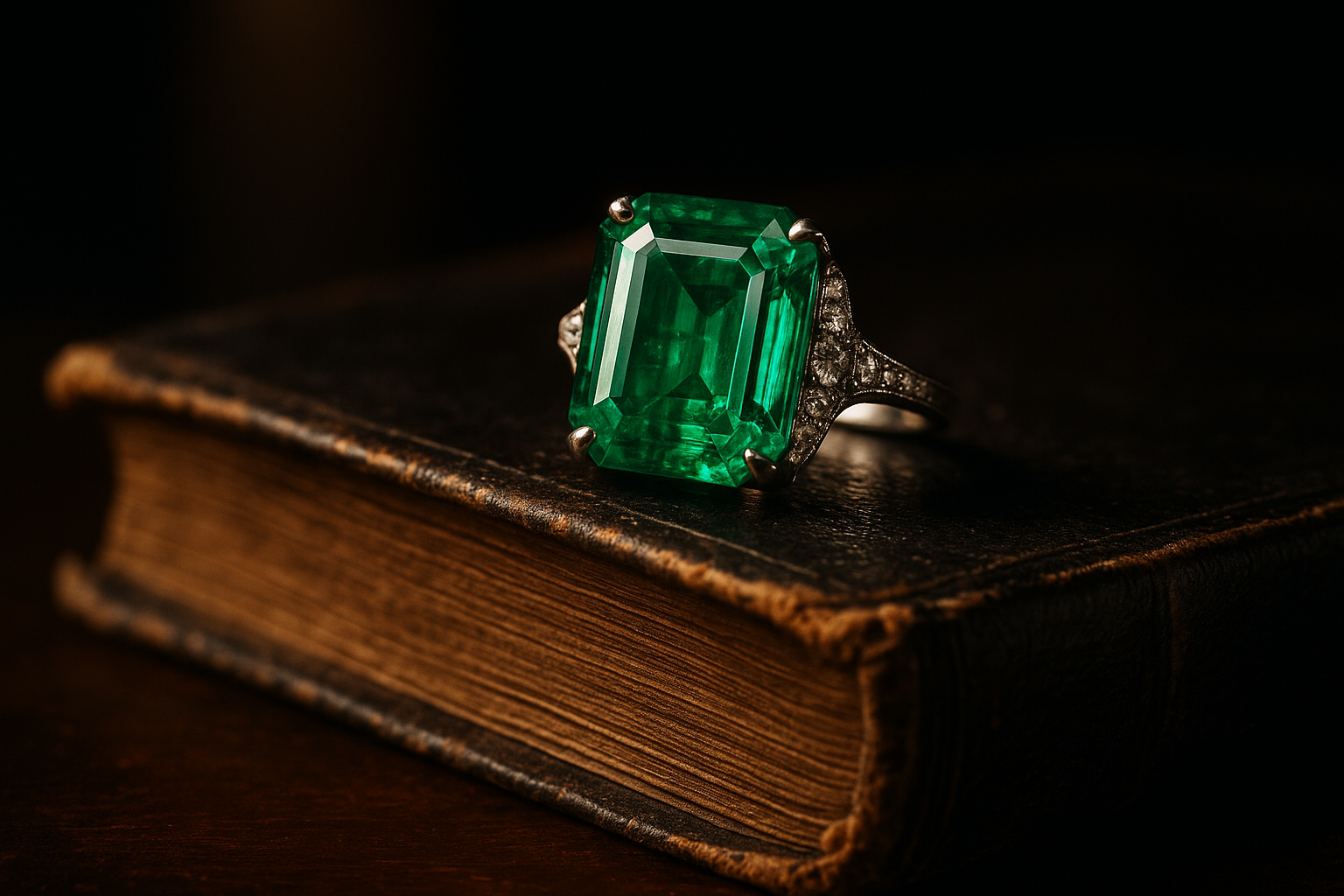
I've watched someone pay $47,000 for a "Kashmir sapphire ring" on a popular estate jewelry marketplace. The stone was a heated Ceylon sapphire worth maybe $3,800. The seller had 300 five-star reviews and a nice logo. The buyer wasn't stupid — they just didn't know which questions to ask before they handed over the money.
I'm Lawrence Paul. I've been buying jewelry since 2009 — 17 years in the trade. I run Spectra Fine Jewelry on West 47th Street in the NYC Diamond District. I buy signed vintage pieces from Christie's Geneva and Sotheby's, and I know what gets listed online versus what actually shows up in person. Those two things diverge more than most buyers realize.
Estate jewelry is my favorite category. Cartier from the 1930s. Van Cleef & Arpels Mystery Set pieces. Bulgari Monete necklaces from the 1970s. Harry Winston cluster rings. These are objects with real craftsmanship and real history. The problem is that "estate jewelry" online has become a catch-all phrase that means everything and nothing. A 1980s mall-brand ring with chipped side stones? "Estate." A mass-produced pendant from a department store closeout? "Vintage estate." The term is being used as a costume. Here's how to see through it.
How Do You Spot a Fake "Estate" Listing Online?
Bad photos are the first tell — and I mean consistently bad photos, not one blurry shot of a hallmark mixed in with 12 sharp ones. A real dealer who owns the piece will give you macro shots of hallmarks, stamps, maker's marks, and any damage. If you ask for a specific angle and they say they'll "check with the warehouse," you're talking to a middleman who has never touched the piece.
Check the description for provenance. A real Cartier listing names the collection, approximate era, reference numbers, and condition. A fake one says "stunning vintage Cartier-style ring" or mentions the brand name once and then describes the metal weight like it's scrap. The word "style" after a brand name means it's not that brand. Read it again if you need to — sellers count on you missing that word.
Look at what they're not photographing. A signed piece should show the signature at multiple magnifications. No clear hallmark shot? They're hiding something, or there's nothing to show.
What Documents Should You Demand Before Buying?
For diamonds: a GIA report. Not an "in-house appraisal." Not a "certified gemologist card." A GIA report with a number you can verify on GIA's website right now. I won't buy a diamond over $5,000 without one, and neither should you.
For colored stones — sapphires, rubies, emeralds, Paraiba tourmalines — the labs that matter are SSEF, Gübelin, and AGL. These are the labs that can determine origin and treatment with real authority. GIA is the standard for diamonds but is not the right lab for colored stone origin or treatment determination. If a seller hands you a GIA colored stone report and claims it definitively proves Kashmir origin or "no heat," they either don't know better or they're hoping you don't.
An original box or papers adds value but doesn't prove authenticity on its own. Empty Cartier boxes sell for $200 on eBay. I've seen faked certificates that look better than the real ones. Cross-reference everything.
What Are the Most Common Estate Jewelry Scams Right Now?
-
The "lab report included" bait: They show a GIA cert in the listing photos. What they don't mention: the cert is for a different stone, or it's been laser-inscribed onto a lower-quality diamond with matching measurements.
-
The treatment omission: A Colombian emerald listed with "minor oil" on the SSEF report is a legitimate, desirable stone. The same emerald treated with a heavy resin filler and listed as "natural" is fraud. Sellers bank on you not knowing the difference between traditional cedarwood oil, synthetic resins, and the various epoxies that don't hold up. If the treatment section of the report is photographed at an angle or cropped out, walk.
-
The "fresh estate" story: Every week someone's grandmother apparently owned a flawless 5-carat diamond ring she never wore. Untouched. In a safe. With "no paperwork." Estate pieces with real value come with paper trails — original receipts, insurance appraisals, auction records. The grandmother-with-a-safe story is fiction designed to explain why the paperwork doesn't exist.
-
The bait-and-switch return: You buy a photographed piece. You receive a similar but lower-quality piece. You return it. They claim you switched it. Document your unboxing on video, every time, for anything over $1,000.
How Do You Protect Yourself When Buying Estate Jewelry Online?
-
Buy from dealers with a physical address, not just a P.O. box. If they won't tell you where the piece is physically located, end the conversation.
-
Get the return policy in writing. 7 days minimum, and confirm it covers "any reason" — not just "if not as described," which lets them argue endlessly about what "as described" means.
-
Pay by credit card or a method with buyer protection. Wire transfers, Zelle, and cryptocurrency are final. Once that money leaves, it's gone. I wire money for auction purchases at Christie's and Sotheby's — institutions with 250+ years of history — not to someone I met on Instagram.
-
Ask for a video, not just photos. Ask them to show the piece under different lighting — daylight, indoor, no jewelry store spotlights. Spotlights make everything look good. Daylight shows you what you're actually buying.
-
Run the lab report number on the lab's website. Don't just look at the PDF they sent you. PDFs can be altered in under five minutes.
-
If you're spending serious money — north of $10,000 — have a third-party appraiser examine the piece during your return window. I charge clients for this service and consider it the cheapest insurance you'll ever buy.
Estate jewelry online isn't a minefield if you treat it like the unregulated marketplace it is. The same skepticism that serves you at a car dealership should apply here. Good dealers welcome questions. Bad dealers deflect them. The difference becomes obvious fast — if you actually ask.
Frequently Asked Questions
Is it safe to buy estate jewelry on eBay or Etsy?
Safe if you follow a hard rule: only buy from sellers who offer a return policy and have a verifiable physical business address. eBay's authenticity guarantee covers certain items over $500, which adds a layer of protection, but the guarantee checks whether the item matches the listing — not whether the price is fair or the stone has undisclosed treatments. Etsy has no standardized authentication. On either platform, check how long the seller has been active and whether their inventory is consistent. A shop selling vintage Cartier one day and used sneakers the next is a red flag.
How can I tell if an estate piece is overpriced?
Compare it to auction results, not retail listings. High-retail asking prices on 1stDibs and Chairish are not sale prices — they're wishful thinking. Look at realized prices from Christie's, Sotheby's, and Phillips for comparable pieces. Factor in the buyer's premium (ranges from 15% to 27% depending on the house and hammer price). If an online estate seller is asking more than recent auction results for a comparable piece with equal paperwork and condition, they're either uninformed or counting on you to be. Signed pieces from top houses hold value. Unsigned pieces depend entirely on the stones and metal.
What should I do if I received a piece that doesn't match the listing?
Stop communicating through the platform's messaging system and file a formal dispute immediately. Take clear photos of what you received next to screenshots of the listing. If you paid by credit card, contact your issuer about a chargeback — most cards give you 60-120 days. Document everything in writing with timestamps. If the seller shipped across state lines and the value is significant, mail fraud statutes may apply, and the FBI's IC3 complaint center takes these reports. The people who lose money are the ones who spend two weeks going back and forth with the seller hoping it's a misunderstanding. It rarely is.
Written by Lawrence Paul
Lawrence Paul is a fine jewelry dealer based in New York's Diamond District with over 20 years of experience buying and selling signed vintage and estate jewelry. He is President of Spectra Fine Jewelry at 44 West 47th Street, Suite GF1, New York, NY 10036.
Continue Reading
Get the Collector's Newsletter
Join collectors who get authentication tips, market insights, and new guide alerts. No spam, just practical knowledge.
Need Help?
Send photos of a piece you're evaluating. We'll give you a straight read—no pressure, no BS.
Contact Spectra Fine Jewelry →Ready to Browse Authenticated Pieces?
Every item at Spectra Fine Jewelry goes through our verification process before it hits the case. No guesswork. No surprises.