Colombian Emeralds: Why Origin Matters and What "No Oil" Really Means
Published: June 3, 2026
The short answer: Colombian emeralds command 30–50% premiums over Zambian stones of equivalent weight and clarity because their color is fundamentally different — a warmer, slightly bluish green that no other source replicates. "No oil" means exactly that: zero clarity enhancement of any kind, confirmed by SSEF, Gübelin, or AGL — not GIA, which isn't the authority for colored stone origin or treatment analysis.
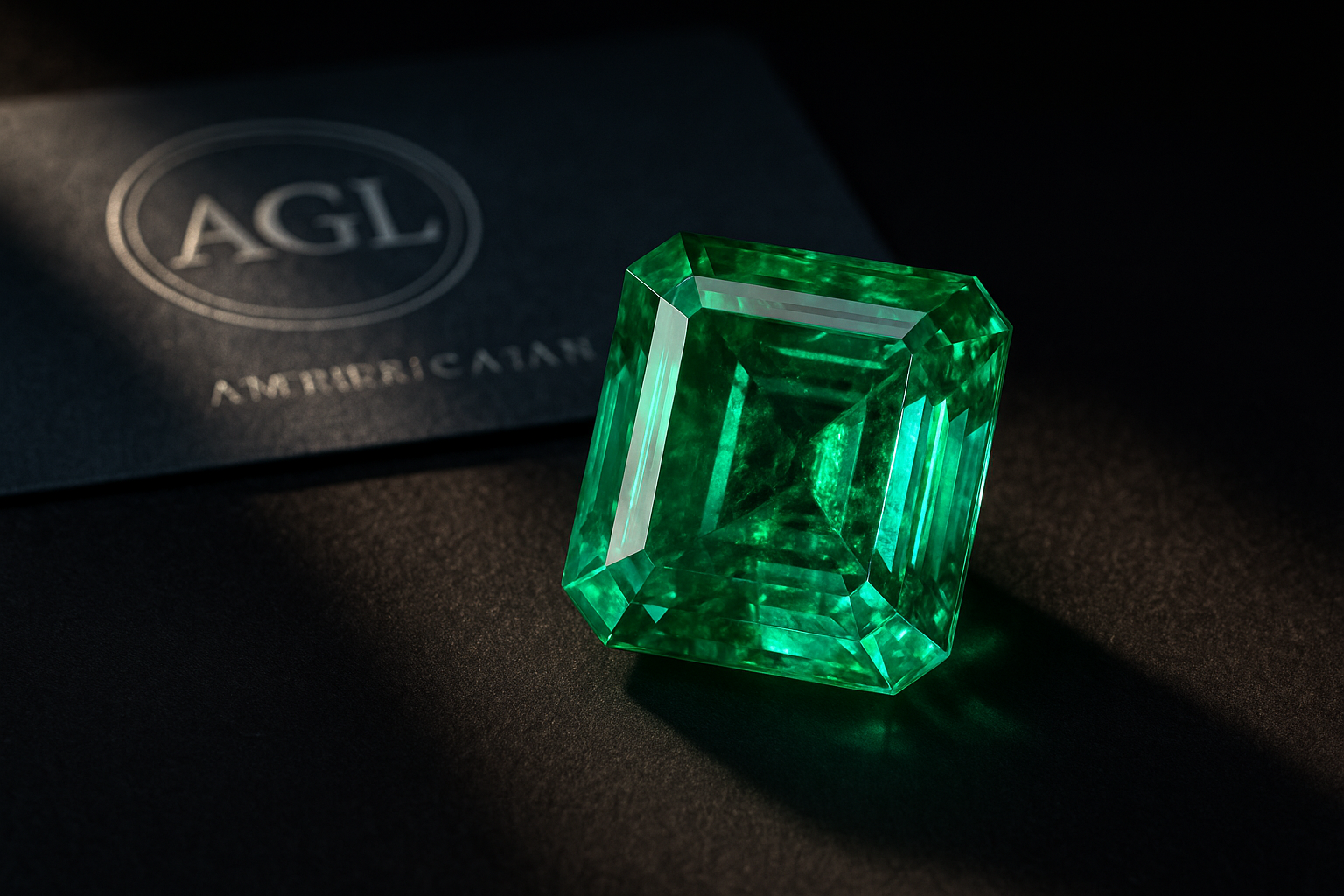
I bought my first Colombian emerald in 2009 — a 2.14-carat Muzo with minor oil, GIA cert. I paid $4,800 per carat. A Colombian colleague of mine laughed when he saw the cert. "Why GIA? They don't know emeralds." He was right. I learned the hard way. These days, every colored stone that crosses my desk at 44 West 47th has an SSEF, Gübelin, or AGL report. GIA runs the table for diamonds. For emeralds? Wrong tool for the job.
Here's what seventeen years in the trade teaches you about Colombian emerald value, what "no oil" actually means on a cert, and why most dealers aren't telling you the full story.
What Makes Colombian Emeralds Worth More?
Color. That's the whole answer, and anyone who gives you a longer one is selling something.
Colombian emeralds — specifically from the Muzo, Chivor, and Coscuez mines — carry a signature green that's warmer and more saturated than Zambian material. Zambian emeralds lean toward a cooler, slightly bluish-green. Beautiful stones, no question. But side by side under a daylight-corrected lamp, the difference is immediate. The Colombian stone glows. The Zambian stone reflects.
Chromium is the element driving that color in Colombian material. Zambian and Brazilian emeralds get their green primarily from vanadium. The chromium-rich Colombian crystal produces what dealers call "fire in the green" — an internal luminosity that survives in every lighting condition. A top Muzo emerald at 3 carats with minor oil can trade at $18,000–$25,000 per carat. A Zambian equivalent? $8,000–$14,000. The spread widens as quality climbs.
Origin premiums are not marketing. They're the market speaking. Christie's Geneva sold a 23.28-carat Colombian emerald and diamond ring in May 2024 at CHF 2.1 million — roughly $90,000 per carat. You don't see Zambian stones hitting those numbers. The auction record tells you everything you need to know about what buyers are willing to pay.
What Does "No Oil" Really Mean on an Emerald Certificate?
It means the stone received zero clarity enhancement. No cedarwood oil. No Palma resin. No Excel. No Canadian balsam. Nothing.
This is far rarer than the term suggests. I'd estimate fewer than 5% of faceted emeralds above one carat are genuinely untreated. Emeralds form under violent geological conditions — the same chromium that gives them color also creates internal fractures. Nature filled those fractures with fluids and gas bubbles. Cutting exposes them as surface-reaching fissures. Without treatment, those fissures scatter light and deaden transparency.
A truly no-oil Colombian emerald with decent clarity is a geological freak. Nature did what human treatment usually has to fix. Stones in this category demand 50–100% premiums over equivalent material with minor traditional oil.
But here's the part most dealers skip: "no oil" doesn't mean the stone has no fissures. It means the fissures are empty — or, more precisely, contain only what nature put there. A reputable lab like SSEF or Gübelin uses microscopy, UV fluorescence, and Raman spectroscopy to confirm the absence of any foreign substance in surface-reaching fractures. The report will state "no indications of clarity enhancement" or "no indications of clarity modification." If your cert says "minor" or "faint" — there's something in there. Read the fine print.
Labs that matter for emeralds: SSEF (Basel), Gübelin (Lucerne), AGL (New York). These three have the spectroscopy equipment and reference databases to make treatment calls that hold up. GIA colored stone origin reports exist, but I've seen them miss treatments that SSEF flagged within ten seconds under the microscope. Use the right tool.
Is Minor Oil Actually a Problem?
No — if it's traditional cedarwood oil and the stone is disclosed honestly.
Cedarwood oil has been used for centuries. It has a refractive index close to emerald, so it fills fissures optically without being obvious. It's reversible. It's natural. SSEF and Gübelin specifically distinguish between "traditional oil" and "resin" — and that distinction matters for value.
Resin treatments — Palma, Permasafe, Excel — are different. These are semi-synthetic fillers. They're harder to remove, they can yellow over time, and they disguise larger fractures than oil can. A stone with resin filler should trade at a discount to an oil-treated equivalent. Disclosure is everything. I treat my own important emeralds, and I've removed bad resin treatments from acquisition stones, recut them, and re-treated them properly with cedarwood oil. The transformation can be dramatic if you know what you're doing.
Here's a rough hierarchy for what I look at when buying:
- No oil, Colombian origin, SSEF/Gübelin cert — top of the market. Pay the premium if you can find it.
- Minor traditional oil, Colombian, lab-certified origin — the sweet spot for serious collectors. Most of the best stones I've owned fall here.
- Moderate oil, Colombian — acceptable at a discount. Negotiate hard.
- Resin-filled, any origin — know what you're buying. Price accordingly.
- No cert, no origin, no treatment disclosure — walk. Nobody in this business gives away information by accident.
How Do I Verify What I'm Actually Buying?
Start with the lab report. Not the seller's word. Not the seller's "in-house gemologist." The report.
An SSEF or Gübelin report will include: species confirmation, weight, measurements, shape/cut, color description, origin determination, and — critically — a treatment field that specifies the type of enhancement (if any) and the degree. "No indications of clarity enhancement" is the exact phrase you want for no oil. "Minor amount of oil in fissures" is the standard language for traditional cedarwood. "Moderate" or "significant" — negotiate accordingly.
Red flags I see weekly on 47th Street:
- Sellers who claim "no oil" but can't produce a report from SSEF, Gübelin, or AGL
- Certificates from labs you've never heard of (ask yourself why they used that lab instead of Basel or Lucerne)
- Reports more than two years old — treatments can be applied after certification
- "Minor" oil on a heavily fractured stone — minor doesn't mean clean, it means the treatment volume is low relative to what could have been added
Buy the stone, not the story. A Colombian emerald with minor traditional oil and an SSEF cert is a vastly better purchase than a "no oil" stone with a no-name lab report and a confident sales pitch.
Frequently Asked Questions
Why does Colombian emerald origin matter so much for value? Colombian emeralds get their color from chromium, which produces a warmer green with what dealers call "fire" — an internal glow that holds across different lighting. Zambian emeralds are vanadium-colored and lean cooler/bluer. That color difference isn't subtle once you've seen both. The auction market reflects this: Colombian stones consistently break records while Zambian material hits a ceiling. A fine 5-carat Muzo emerald with minor oil trades at a 30–50% premium to a Zambian equivalent. Origin matters because color is what makes an emerald worth buying — and no other source delivers that specific Colombian glow.
What's the difference between "no oil" and "minor oil" in emerald grading? "No oil" means zero clarity enhancement of any kind — the stone's fissures are empty. This is genuinely rare; maybe 5% of faceted emeralds over one carat qualify. "Minor oil" means traditional cedarwood oil was introduced into surface-reaching fractures in small quantities to improve transparency. It's reversible, natural, and has been used for centuries. The value spread between the two is significant — no-oil commands 50–100% premiums — but minor oil with a Colombian origin cert from SSEF or Gübelin is the practical sweet spot for most serious buyers. A well-chosen minor-oil Colombian will outperform a mediocre no-oil Zambian every time.
Which lab should I trust for emerald certification? SSEF in Basel and Gübelin in Lucerne are the gold standard for colored stone origin and treatment analysis. AGL in New York is the best domestic option. These three labs have the spectroscopy equipment, Raman capabilities, and reference databases to make treatment determinations that stand up to scrutiny. GIA is the authority for diamonds — period. For emerald origin and treatment, use the labs that specialize in it. A Colombian emerald with an SSEF or Gübelin report confirming minor traditional oil is a legitimate, investment-grade stone. A "no oil" emerald with a certificate from a lab you've never heard of is a gamble you don't need to take.
Written by Lawrence Paul
Lawrence Paul is a fine jewelry dealer based in New York's Diamond District with over 20 years of experience buying and selling signed vintage and estate jewelry. He is President of Spectra Fine Jewelry at 44 West 47th Street, Suite GF1, New York, NY 10036.
Continue Reading
Get the Collector's Newsletter
Join collectors who get authentication tips, market insights, and new guide alerts. No spam, just practical knowledge.
Need Help?
Send photos of a piece you're evaluating. We'll give you a straight read—no pressure, no BS.
Contact Spectra Fine Jewelry →Ready to Browse Authenticated Pieces?
Every item at Spectra Fine Jewelry goes through our verification process before it hits the case. No guesswork. No surprises.