Emerald Treatments Explained: Cedar Oil, Resin, and What the Lab Report Actually Says
Published: May 21, 2026
The short answer: Emerald treatments fall into two camps — traditional cedarwood oil and modern resin (Palma, Permasafe, Excel). The words "minor," "moderate," or "significant" on a lab report carry massive price implications, and the lab matters: SSEF, Gübelin, and AGL set the standard for colored stones, not GIA.
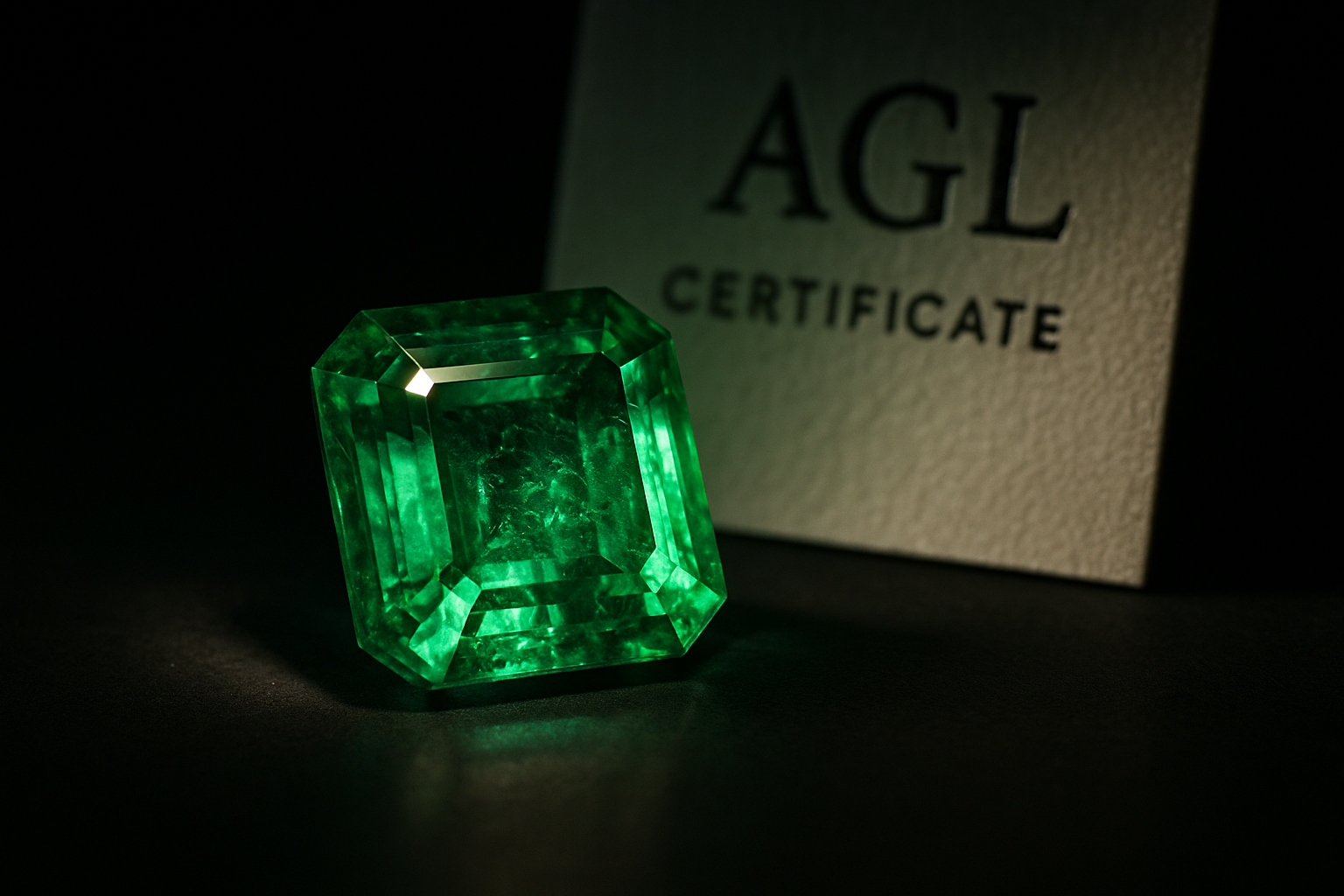
I bought a 12-carat Colombian emerald at auction in 2017 with "moderate oil" on its AGL report. A dealer I know told me I'd overpaid by 30%. Six months later, after recutting and having it re-treated with cedarwood oil by a specialist, the same stone came back from SSEF with "no indications of clarity enhancement." It sold within a week — for more than double what I paid.
Nearly every emerald on the market is treated. The question isn't "is it treated?" — it's "with what, how much, and does it matter for this specific stone?"
What's the Difference Between Cedarwood Oil and Resin?
Cedarwood oil has been the standard for over a century. Its refractive index sits around 1.57, close to emerald's own, so when it fills surface-reaching fissures it makes them optically disappear without anything synthetic entering the stone. SSEF and Gübelin will often note it as "traditional oil" — language that carries weight in the trade and at auction.
Resins — Palma, Permasafe, Excel, and older formulations like Canadian balsam — are synthetic or semi-synthetic polymers. They fill fissures the same way but don't leach out over time. That permanence sounds like a selling point. From a value standpoint, it isn't. Resin-treated emeralds trade at a discount to cedarwood equivalents every time.
A Colombian emerald with "minor oil" on an SSEF report will outsell the same stone with "minor resin." I watch this gap play out at every auction I attend.
What Should You Actually Look for on a Lab Report?
Skip GIA for colored stones. They own diamonds. For emeralds, you want SSEF, Gübelin, or AGL.
The treatment language breaks down like this:
"No indications of clarity enhancement" — The holy grail. No filler in the fissures under microscopic exam. True no-oil emeralds carry premiums of 100–300% over treated equivalents. They're rare — I might see one at every third in-person auction I attend.
"Minor" / "Insignificant" — Trace filler. This is the most common finding for fine emeralds, and it shouldn't scare anyone. A 5-carat Colombian with "minor oil" and strong color still trades for serious money because the treatment hasn't meaningfully altered the stone.
"Moderate" — Noticeable filler in multiple fissures. Pricing gets complicated here. Moderate oil with exceptional color can still work at the right price. Moderate resin? I pass unless I'm buying with a specific plan to recut and re-treat.
"Significant" — Pervasive filler. The stone depends on it for transparency. Avoid these. Full stop.
The report should specify filler type. If it says "oil/resin" or "organic filler" without detail, push for specifics. A real lab distinguishes cedarwood oil from synthetic resin. If yours won't, walk.
Does Treatment Affect Long-Term Durability?
Yes — and oil and resin behave differently in ways that matter for actual ownership.
Cedarwood oil leaches out over decades, or in minutes if someone runs the stone through an ultrasonic cleaner or a jeweler's torch. I've seen emerald rings come in for resizing where the stone looked noticeably worse afterward because heat drew the oil out. Re-oiling fixes it fast if you know what you're doing. But it's an extra step.
Resins don't leach. That's the pitch. What nobody mentions: older resin formulations yellow over time. A stone treated with Canadian balsam in 1985 can look cloudy today. Reversing resin requires solvents and a specialist. Not every jeweler can handle it.
For daily-wear rings, resin's permanence has a practical edge. For collector's pieces that live in a vault, oil wins — both for value retention and authenticity.
How I Evaluate a Treated Emerald Before Buying
My process — refined in the 17 years I've been doing this:
-
Read the report last. Examine the stone under 10x magnification first. Train your eye. The report confirms what you see; it shouldn't be your starting point.
-
Color is king, but it doesn't forgive excessive treatment. Electric Colombian green with "significant" filler is a compromised asset. Don't let color override your judgment.
-
Ask about treatment history. Has it been re-oiled? When? By whom? Seller can't answer? Wrong seller.
-
Factor treatment into your exit. A "minor oil" emerald finds a buyer fast. A "moderate resin" stone needs the right buyer at the right price. Know which one you're holding before you commit.
-
If the stone has no SSEF, Gübelin, or AGL report, build the cost of getting one into your purchase price.
Frequently Asked Questions
Q: Is a no-oil emerald always better than an oil-treated one? No. A no-oil emerald with mediocre color is still mediocre. I'd take a "minor oil" Colombian with vivid saturation over a washed-out "no indications" stone every time. The market agrees — color drives value first, treatment second. But when color is equal across two stones, the no-oil one commands the premium. In the top tier — 10 carats and up, exceptional saturation, clean crystal — no-oil status can double or triple the price. That's not marketing. I've written the checks.
Q: Can resin-treated emeralds be re-treated with oil later? Sometimes, but it's case-by-case. Removing resin takes solvents and experience. The stone may need recutting if the resin was filling structural fractures that become unstable once the filler is gone. Never buy a resin-treated emerald assuming you can "convert" it to oil later. Buy it because it works for you as-is.
Q: Why does an SSEF report cost more than GIA for emeralds? Because SSEF, Gübelin, and AGL do specialized work GIA's colored stone department doesn't match. Origin determination — Colombia vs. Zambia vs. Afghanistan vs. Brazil — requires spectroscopic analysis and a gemologist who's examined thousands of reference stones from each locality. Treatment identification, down to distinguishing oil types and detecting trace resin in microscopic fractures, demands the same depth. These labs invested in the equipment and the people. GIA is world-class for diamonds. For emeralds, use a lab that built its name on colored stones.
The emerald market rewards knowledge. Understand what's in those fissures and your decisions get sharper — whether you're spending $5,000 or half a million.
Written by Lawrence Paul
Lawrence Paul is a fine jewelry dealer based in New York's Diamond District with over 20 years of experience buying and selling signed vintage and estate jewelry. He is President of Spectra Fine Jewelry at 44 West 47th Street, Suite GF1, New York, NY 10036.
Continue Reading
Get the Collector's Newsletter
Join collectors who get authentication tips, market insights, and new guide alerts. No spam, just practical knowledge.
Need Help?
Send photos of a piece you're evaluating. We'll give you a straight read—no pressure, no BS.
Contact Spectra Fine Jewelry →Ready to Browse Authenticated Pieces?
Every item at Spectra Fine Jewelry goes through our verification process before it hits the case. No guesswork. No surprises.