The Collector's Guide to French Hallmarks
Published: January 25, 2026
If you collect signed jewelry from European makers—Cartier, Van Cleef & Arpels, Boucheron, Chaumet—you're going to encounter French hallmarks. These small punched symbols are independent verification of metal content, applied by French assay offices rather than the jeweler.
Understanding them isn't just academic. French hallmarks are among the most reliable authentication markers you'll find. They're standardized, well-documented, and difficult to fake convincingly.
Here's what you need to know.
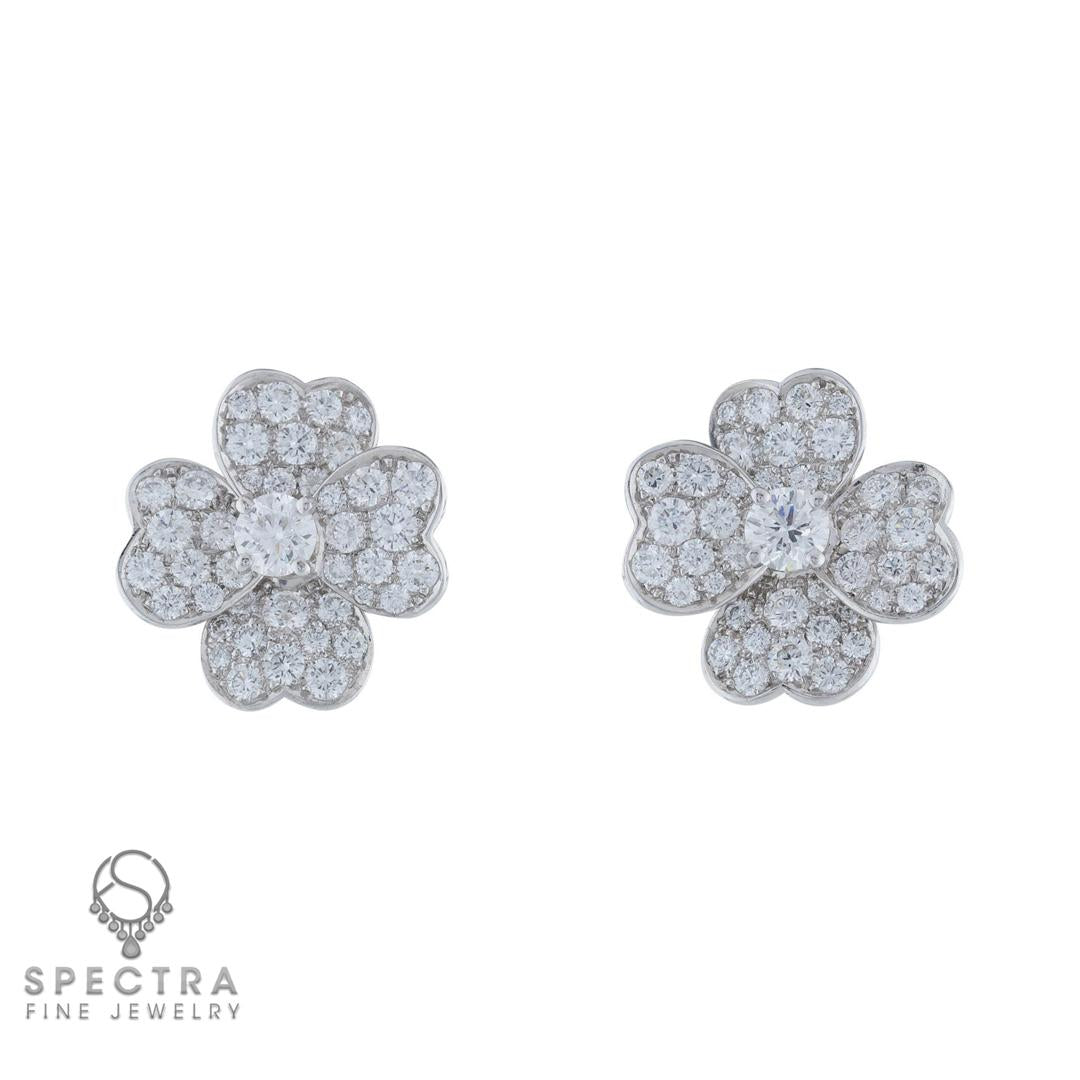 Van Cleef & Arpels Cosmos earrings—French jewelry houses like VCA carry official French hallmarks that serve as independent authentication
What French Hallmarks Actually Are
French hallmarks (poinçons) are official stamps applied by the Bureau de Garantie—France's government assay authority. When precious metal items are tested and meet legal standards, they receive specific punch marks.
Key concept: These marks are independent of the maker. Cartier doesn't apply them. The government assay office does. That independence is what makes them valuable for authentication.
The system dates back to 1275, making it one of the oldest continuous hallmarking systems in the world. It's been refined over centuries.
Gold Hallmarks: The Eagle Head Family
Tête d'Aigle (Eagle Head) — 18K Gold, French Made
The eagle head is the most common mark on French fine jewelry. It indicates:
- 18 karat (750 fineness) gold—these numbers represent the parts per thousand of pure gold; our precious metals converter helps with the calculations
- Made in France
- Passed assay testing
    /\
   /  \
  /____\    ← Stylized eagle head facing right
  |    |       Small punch, often 1-2mm
  |____|
What to look for:
- Sharp, clean impression
- Eagle facing right
- Detail visible under loupe (eye, beak definition)
- Often appears near maker's mark and "750"
Hibou (Owl) — 18K Gold, Imported
The owl mark indicates gold imported into France from elsewhere. It means:
- 18 karat (750 fineness) gold
- Made outside France
- Tested upon entry into France
The owl is often misunderstood. A "Cartier Paris" piece with an owl mark was probably manufactured in another country and imported for sale in France. This was common practice—many houses had pieces made in Switzerland, Italy, or elsewhere.
Why it matters: The owl tells you the piece passed through French customs and was tested. That's independent verification, regardless of where it was made.
Platinum Hallmarks: Dog Head and Rhinoceros
Tête de Chien (Dog Head) — Platinum, Older System
The dog head was used for platinum under the older French system. You'll see it on vintage pieces—particularly Art Deco and mid-century jewelry.
- Indicates platinum (typically 950 fineness)
- Dog/mastiff head in profile
- Used through much of the 20th century
Rhinoceros — Platinum, Current System
France switched to a rhinoceros mark for platinum in their updated system. Modern platinum pieces carry:
- Rhinoceros head in profile
- 950 fineness (95% platinum)
Transitional period: You may see pieces with dog head marks that are clearly more recent than expected. The transition took time.
Silver Hallmarks
Minerva Head — Sterling Silver
For silver, France uses the Minerva (goddess) head:
- Profile of Minerva
- Number indicating fineness (1 = 950, 2 = 800)
- First standard (1) is most common for fine jewelry
Owl on Silver
Just like gold, imported silver can carry the owl mark indicating it passed French customs testing.
The Maker's Mark (Poinçon de Maître)
Alongside the metal purity marks, French jewelry carries a maker's mark. This is a diamond-shaped lozenge containing:
- Initials of the maker or sponsor
- Sometimes a symbol
Note: This isn't the decorative brand signature you see ("Cartier" in script). It's a separate, smaller punch registered with the assay office. Big houses have multiple maker's marks used over different periods.
Responsibility Marks for Watch Cases
Watch cases have their own system:
- Crab mark: Small gold watch cases
- Horse head: Larger gold watch cases
- Owl with "O": Imported watch cases
If you're looking at a Cartier Tank or Patek Philippe in a French case, you might see these alongside the standard marks.
Where French Hallmarks Appear
On Rings:
- Inside the shank
- Often grouped with brand signature and "750"
- May be spaced around the interior
On Bracelets:
- Clasp tongue is most common
- Sometimes on a link near the clasp
- Both sides of the clasp may be marked
On Necklaces:
- Clasp or clasp tag
- Jump ring or bail area
- Near the brand signature
On Earrings:
- Clip mechanism (inside)
- Post
- Back of decorative element
On Brooches:
- Back, near the pin mechanism
- Edges or cartouche areas
Reading a Full French Hallmark Stack
A typical high-end French piece might show:
┌─────────────────────────────────┐
│                                 │
│    [Eagle]  [Maker]  750        │
│                                 │
│    "Cartier" (in script)        │
│                                 │
│    Serial number                │
│                                 │
└─────────────────────────────────┘
Eagle head: Metal verified as 18k by French assay Maker's mark: Registered maker/sponsor 750: Fineness mark Brand signature: Decorative name Serial: Tracking number
All of these should be consistent with each other and with the piece's construction and apparent age.
What French Hallmarks Tell You
✓ Metal content was tested by an independent authority ✓ The piece passed through the French system at some point ✓ The maker was registered (for the maker's mark) ✓ Country of manufacture (French marks vs. import marks)
What They Don't Tell You
✗ That the piece is authentic to a specific brand ✗ That all parts are original ✗ That the piece hasn't been modified ✗ Current market value
Spotting Fake French Hallmarks
Counterfeiters know French hallmarks add credibility, so they try to fake them. Here's what gives them away:
Poor definition: Real hallmarks have sharp edges and clear detail. Fakes often look mushy or indistinct.
Wrong placement: Hallmarks appear in specific locations. Random placement is suspicious.
Inconsistent depth: Real punches have consistent depth. Fake marks often vary.
Missing components: An eagle head without a maker's mark is odd. The system includes multiple marks.
Wrong style for era: Hallmark styles have changed. A "1920s" piece with a modern-format mark is problematic.
Too perfect: Vintage hallmarks show some wear consistent with the piece. Pristine marks on a worn piece suggest recent application.
French Hallmarks on Non-French Brands
You might see French hallmarks on:
- Italian pieces sold in France
- Swiss watch cases
- American jewelry imported for French sale
- Any piece that entered the French market
The owl mark handles most of these. Its presence means the piece was assayed in France—not that it was made there.
Reference: Common French Marks Quick Guide
| Mark | Metal | Meaning |
|---|---|---|
| Eagle head | Gold 750 | Made in France |
| Owl | Gold 750 | Imported to France |
| Dog head | Platinum | French, older system |
| Rhinoceros | Platinum | French, current system |
| Minerva 1 | Silver 950 | First standard |
| Minerva 2 | Silver 800 | Second standard |
| Lozenge + initials | Any | Maker's mark |
For Further Study
French hallmarks are well-documented. If you want to go deep:
- The Bureau de Garantie publishes official guides
- Auction houses (Christie's, Sotheby's) have cataloging standards
- Collector reference books show historical mark variations
- Museum collections provide authenticated examples
Practical Takeaway
When evaluating a piece with French hallmarks:
- Identify each mark (eagle, owl, maker's mark, etc.)
- Check placement (appropriate for the piece type?)
- Assess quality (sharp definition, consistent depth?)
- Consider consistency (marks match the era? match each other?)
- Use as supporting evidence (not standalone proof)
French hallmarks don't replace other authentication methods. They're one piece of evidence in a larger picture. But they're good evidence—independent, standardized, and historically reliable.
Need Help Reading Hallmarks?
Send photos. We'll tell you what we see.
Browse Authenticated French Signed Jewelry →
Independent educational resource. Hallmark information references Bureau de Garantie documentation and standard numismatic/collector references.
Continue Reading
Get the Collector's Newsletter
Join collectors who get authentication tips, market insights, and new guide alerts. No spam, just practical knowledge.
Need Help?
Send photos of a piece you're evaluating. We'll give you a straight read—no pressure, no BS.
Contact Spectra Fine Jewelry →Ready to Browse Authenticated Pieces?
Every item at Spectra Fine Jewelry goes through our verification process before it hits the case. No guesswork. No surprises.