Hemmerle: Why the Munich Family Jeweler Commands Trophy Prices
Published: July 4, 2026
The short answer: Hemmerle jewelry commands trophy prices because every piece is a one-off fabrication by a fourth-generation Munich family workshop using reverse-set stones, unconventional metals (copper, iron, aluminum), and gemstones mounted without visible settings — all produced in extremely limited quantities with multi-year waitlists.
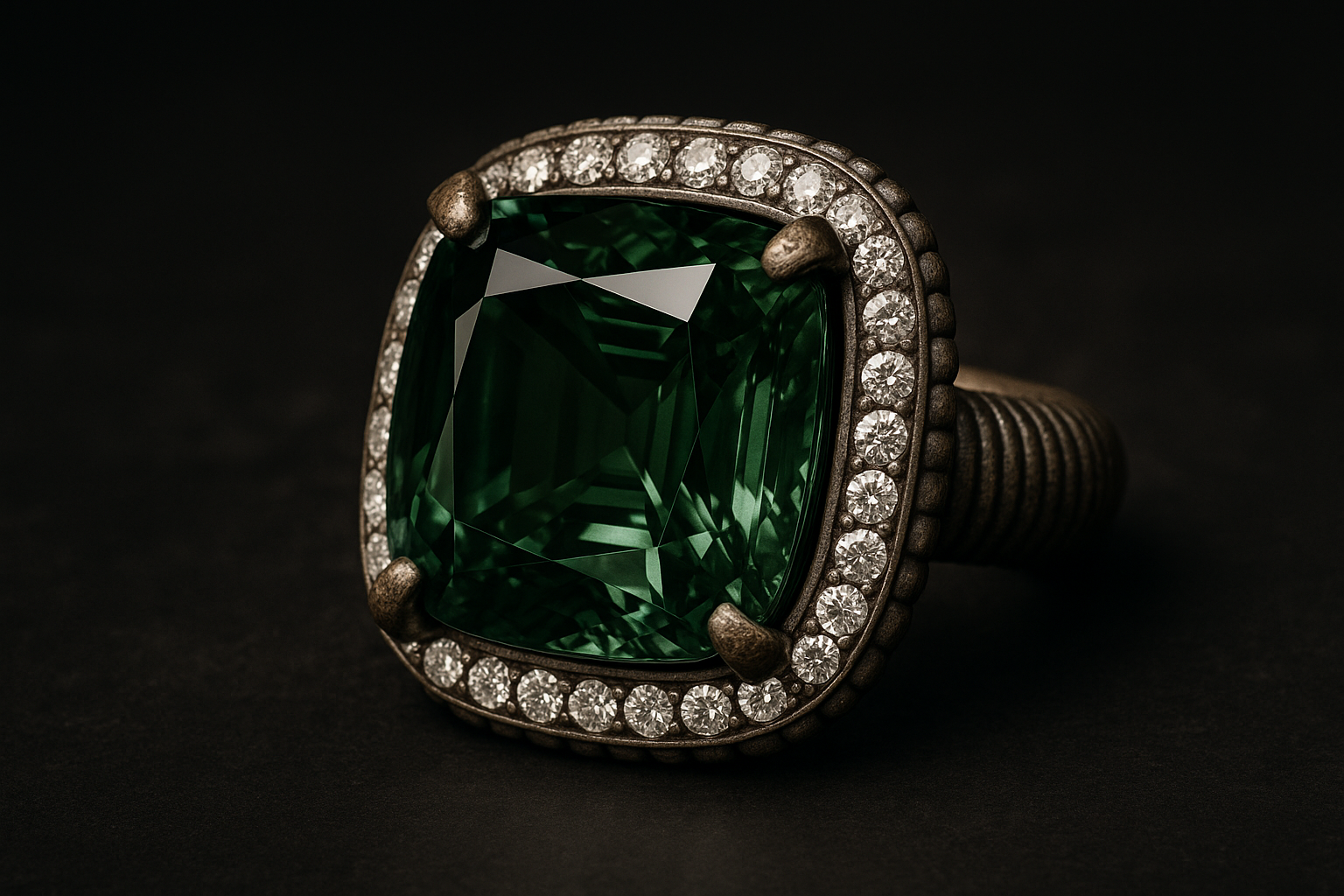
I held a Hemmerle aluminum-and-copper earring at TEFAF Maastricht in 2017 and knew within three seconds I was looking at something I couldn't buy. Not because of the price — because it was already sold, three minutes after the doors opened. That's Hemmerle. You don't shop Hemmerle. You wait for Hemmerle to make something, and then you pray you're on the list.
Most collectors discover Hemmerle once — usually at a fair, or through a private dealer who slides a single piece across the table like contraband — and never forget it. The Munich house has been doing this since 1893, but the modern Hemmerle era started in 1995 when Stefan Hemmerle took over and made a radical decision: stop making what sold, and start making what mattered.
The result is a body of work that looks nothing like what you see in the windows on Place Vendôme or Fifth Avenue. Hemmerle pieces use materials that other jewelers would call scrap — copper, iron, aluminum, treated steel — and turn them into objects that sell for six figures. A pair of Hemmerle copper earrings with small diamonds can run $40,000–$80,000. Their carved gemstone rings with mixed-metal shanks routinely cross $100,000. I've seen a single Hemmerle brooch — a carved aquamarine set in copper and white gold with cognac diamonds — sell privately above $200,000. Per carat, that's territory most jewelry never touches.
Why Doesn't Hemmerle Look Like Traditional Fine Jewelry?
Because Hemmerle deliberately broke the rulebook. They mount gemstones without visible prongs — the reverse-setting technique buries the stone into the metal so you see color flush with the surface, no claws, no bezels. They pair materials that don't belong together on paper: copper with tsavorite, iron with Paraíba, aluminum with diamonds. Their most collected pieces — the vegetable and fruit brooches, carved from single blocks of gem material — look more like small-scale sculpture than jewelry.
Stefan Hemmerle and his wife Sylveli, along with their son Christian, make every design decision as a family. There is no creative director from outside. No investor demanding scale. No diffusion line. When I say every piece is a one-off, I mean it literally — they don't repeat designs. If you want the earring you saw at PAD London, too bad. Somebody already bought it, and Hemmerle won't make it again. That scarcity is built into the model, not manufactured as a marketing tactic.
What Materials Does Hemmerle Use That Other Jewelers Won't Touch?
Copper. Aluminum. Iron. Reverse-set gemstones. Untreated wood. Treated steel with a patina they control in-house. The metal palette alone eliminates 99% of jewelers — most won't work with these materials because they tarnish, they're too soft, they react with skin chemistry, or frankly because their clients expect gold and platinum for the money.
Hemmerle doesn't care. A copper bracelet with reverse-set tsavorites from Hemmerle will outprice a standard diamond tennis bracelet at any serious auction. Their iron pieces develop a controlled surface patina — you're buying an object that will age visibly, and that's the point. The copper earrings darken over time. Some clients have them re-polished by Hemmerle; most don't, because the patina is part of the piece.
The stones they use come with serious paperwork. For colored gems — emeralds, sapphires, tourmalines — the relevant labs are SSEF, Gübelin, and AGL. GIA is the gold standard for diamonds, but for colored stone origin and treatment determination, you want SSEF or Gübelin. Hemmerle sources top-tier material, and their gemological standards are as high as the design ambition.
How Many Hemmerle Pieces Exist, and Why Does That Matter?
Far fewer than most people think. Hemmerle produces approximately 200–250 pieces per year across all categories — rings, earrings, brooches, necklaces, and the odd tiara or object commission. Compare that to Van Cleef & Arpels, which produces tens of thousands of pieces annually across Alhambra alone. Compare it to Bulgari or Cartier, where production runs reach five figures easily.
Every Hemmerle piece that has ever been made since 1995 might total 5,000–6,000 objects. Not per year — total. Over 30 years. That's less than what some major houses produce in a month. The secondary market is microscopic. When a Hemmerle piece does appear at auction — and it's rare — it typically sells above estimate. Christie's and Sotheby's both know these pieces bring out specific bidders who won't touch anything else in the sale.
I've been buying jewelry since 2009, and in 17 years I've seen maybe 20–25 Hemmerle pieces come through the secondary market in any real condition worth bidding on. Most Hemmerle clients are end-users who never sell. The pieces stay in families, donated to museums, or traded privately between collectors who know each other.
What Should You Know Before Buying Hemmerle?
- Expect a waitlist. Hemmerle doesn't carry inventory. They make for exhibitions, fairs (TEFAF, PAD, Masterpiece), and private commissions. The commission queue can run 18–24 months.
- No returns, no repeats. The piece you buy is the piece that exists. Don't expect to exchange it for something else or order a matching pair later.
- Resale is a slow game. There's no Hemmerle price list or index. Secondary values are determined by who's looking that month. You need patience and the right connections.
- Look at the metal before the stone. Hemmerle pieces are valued for the material composition and fabrication technique as much as for the gems. A copper-and-iron setting is not a downgrade — it's the signature.
- Get the exhibition provenance if you can. Pieces shown at TEFAF or PAD carry documentation value. Keep the catalog page, the correspondence, the original box. Hemmerle collectors are obsessive about provenance.
Is Hemmerle a Better Investment Than Van Cleef or Cartier?
Depends on your definition of investment. Van Cleef Alhambra holds value through sheer market liquidity — I can sell a vintage 20-motif Alhambra necklace in 48 hours at any major jewelry center on earth. You cannot do that with Hemmerle. The buyer pool is tiny, truly global, and deeply private.
But if you're asking about appreciation potential on truly exceptional pieces — the carved aquamarine-and-copper brooches, the reverse-set Paraíba rings, the early 2000s iron-and-gold pieces — Hemmerle has outperformed almost everything in the signed vintage market over the last decade on a percentage basis. A Hemmerle brooch bought for $60,000 in 2010 is realistically worth $180,000–$250,000 today if it's the right piece with the right materials. That's not a line — I've watched those numbers trade.
Park a $100,000 Hemmerle ring next to a $100,000 Cartier Panthère ring. The Cartier is the safer asset. The Hemmerle is the better trophy. Collectors who buy at this level know the difference, and they're willing to wait for it.
Frequently Asked Questions
How can I verify an authentic Hemmerle piece? Every Hemmerle piece is hallmarked with the Hemmerle maker's mark and appropriate metal stamps. The house maintains records of every piece produced since 1995. For serious verification, Hemmerle themselves can authenticate pieces through their Munich atelier — contact them directly, not through a dealer. The paperwork matters. For colored stones in Hemmerle pieces, look for SSEF or Gübelin reports. GIA is the standard for diamonds but not the authority for colored gemstone origin or treatment — that's SSEF and Gübelin territory.
Why does Hemmerle use copper and iron instead of gold and platinum? Because the Hemmerle family treats materials as an expressive medium, not as a cost calculation. Copper oxidizes into a warm patina that changes with wear. Iron develops a dark, industrial surface that contrasts with bright gems in a way gold can't match. The material choice is aesthetic, not economic — the labor cost of fabricating a Hemmerle piece in copper equals or exceeds what most jewelers spend on a platinum setting. The materials are harder to work with, not cheaper. The price tag reflects the craft, not the metal weight.
Where can I buy Hemmerle jewelry if there's no store? Hemmerle operates a private atelier in Munich at Maximilianstrasse 14. Appointments are essential — you don't walk in. The primary retail channel is through select international fairs: TEFAF Maastricht (March), PAD London (October), and occasionally Masterpiece London or Salon Art + Design in New York. A small number of pieces are placed with specific gallery partners, including Adrian Sassoon in London. The secondary market is almost entirely private: dealer-to-dealer, collector-to-collector. Major auction houses handle Hemmerle maybe once or twice a year — when they do, it's an event.
Written by Lawrence Paul
Lawrence Paul is a fine jewelry dealer based in New York's Diamond District with over 20 years of experience buying and selling signed vintage and estate jewelry. He is President of Spectra Fine Jewelry at 44 West 47th Street, Suite GF1, New York, NY 10036.
Continue Reading
Get the Collector's Newsletter
Join collectors who get authentication tips, market insights, and new guide alerts. No spam, just practical knowledge.
Need Help?
Send photos of a piece you're evaluating. We'll give you a straight read—no pressure, no BS.
Contact Spectra Fine Jewelry →Ready to Browse Authenticated Pieces?
Every item at Spectra Fine Jewelry goes through our verification process before it hits the case. No guesswork. No surprises.