How Recutting a Sapphire Can Double Its Value
Published: May 20, 2026
The short answer: A mediocre sapphire with a thick pavilion, windowed center, or flat color can often be recut to restore proper proportions and saturation — sometimes doubling its per-carat value overnight. You're trading a few points of carat weight for a stone that sells itself instead of sitting in inventory.
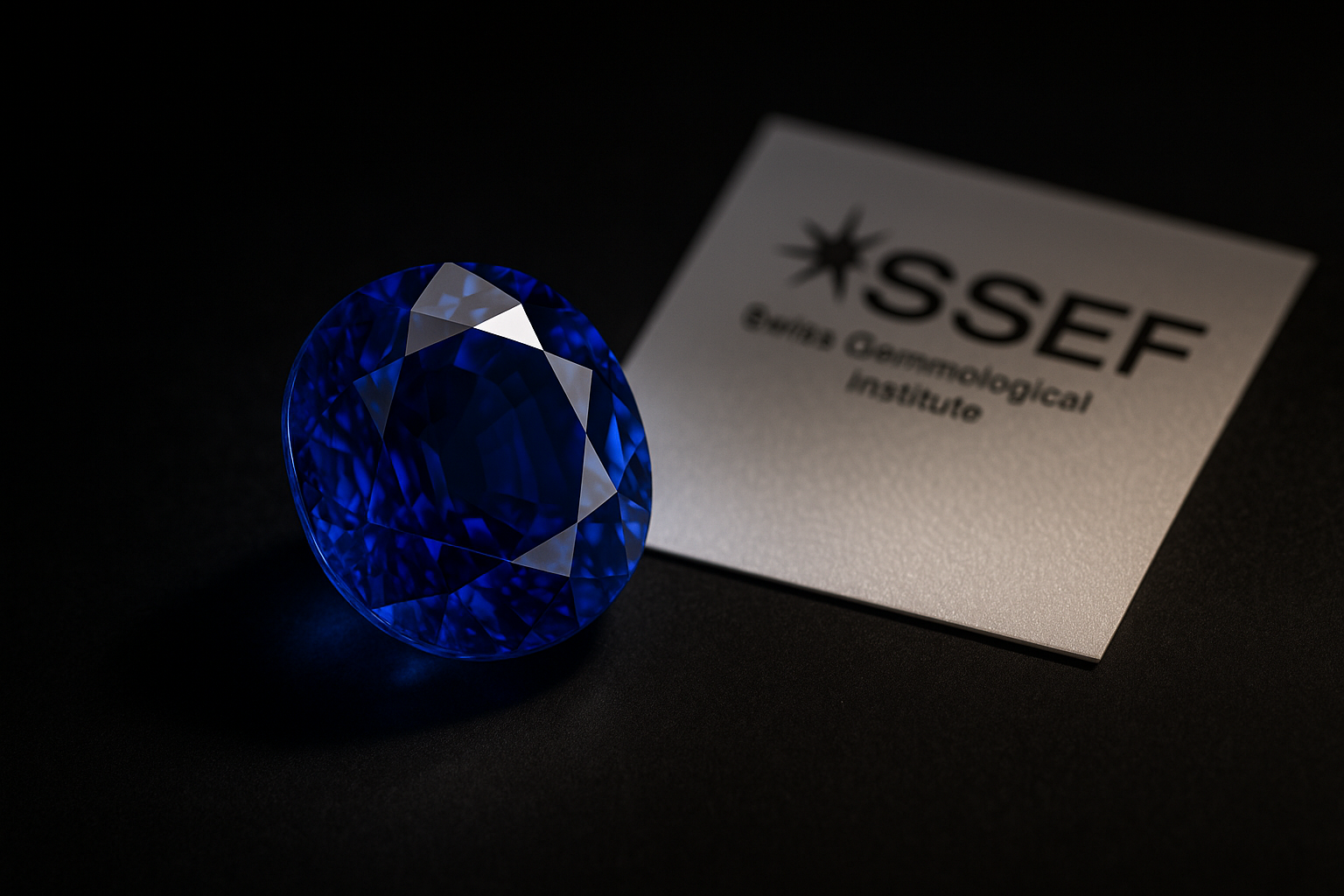
I've recut more sapphires than I can count in the 17 years I've been doing this, and here's something most dealers won't tell you: the biggest money on the table isn't in finding the right buyer. It's in fixing the stone before anyone sees it.
Last year I bought a 9.82-carat Ceylon sapphire at auction. The color was there — a proper cornflower blue you could spot from across the room — but someone had cut it with a belly so fat the center washed out completely. The window was the size of a dime. Hammer price was $6,200 per carat because nobody wanted to touch a sapphire that looked dead in the middle. I sent it to my cutter in Bangkok. Took it down to 8.14 carats with a complete re-proportion. Same stone, same color, same origin. Sold it three weeks later at $14,800 per carat.
The math doesn't care about your feelings. I gave up 1.68 carats and more than doubled the value. That's the game.
Why Would Anyone Cut a Sapphire Wrong in the First Place?
Orient. Weight retention. Laziness. Pick your poison.
In the source countries — Sri Lanka, Burma, Madagascar — rough sapphire sells by the gram. Cutters there maximize yield, not beauty. A 10-carat rough that should yield a 2.5-carat finished stone gets pushed to 3.8 carats instead. The pavilion gets deep, the crown gets shallow, the girdle gets thick. The color goes wherever it wants instead of where the cutter directs it.
Sapphire is pleochroic. It shows different colors depending on which crystal axis you're looking down. A blue sapphire might look blue from one direction and greenish-blue from another. A good cutter orients the table to the axis that produces the richest blue. A yield-maximizing cutter orients the table to whatever direction saves the most weight. The difference in finished value is staggering.
I've seen Kashmir sapphires — stones that should command $40,000+ per carat — cut so poorly that the cornflower blue everyone obsesses over looks gray and lifeless. Fix the crown angles, tilt the table a few degrees, and suddenly the color wakes up. Same rough. Different decision.
What Actually Happens When You Recut a Sapphire?
You're reshaping the pavilion facets to redirect light back through the crown instead of letting it leak out the bottom. That's what causes a window — light passes straight through instead of reflecting back to your eye. A well-cut sapphire has no window. You tilt it 30 degrees in any direction and the color stays saturated.
The process isn't magic. It's geometry.
-
Pre-grading at GIA or AGL — You need a baseline lab report before you touch the stone. For sapphires, I send everything to SSEF or AGL. GIA does fine work on diamonds but I don't use them for colored stone origin or treatment determination. Get the origin confirmed, the treatment status documented, and the measurements recorded. You want proof of what you started with.
-
Evaluation by a specialist cutter — Not every lapidary can recut colored stones. The person cutting your sapphire needs to understand pleochroism, color zoning, and how to position the table for maximum saturation. My guy in Bangkok has been doing this for 30 years. The good ones can tell you exactly how many carats you'll lose and exactly what the finished stone will look like before they touch a wheel.
-
The recut itself — Usually takes 1–3 weeks depending on complexity. Most recuts lose 10–25% of carat weight. On a stone that cuts correctly the first time, you might lose as little as 5%. On a disaster where someone cut a 60% pavilion, you could lose 30% or more. The key is that the dollar-per-carat jump needs to more than compensate for the weight loss.
-
Re-certification — Send the finished stone back to SSEF or AGL. The new report confirms what you already know: same origin, same treatment status, dramatically better proportions. Buyers pay premiums for stones with lab reports from the right labs. Don't cheap out here.
-
Repolishing — Sometimes you don't need a full recut. A stone with good proportions but lousy polish can get a simple repolish. Better luster, better symmetry, maybe a quarter-carat lost. It's the lowest-risk play and can still add 15–30% to sellable value.
When Does Recutting Actually Make Financial Sense?
When the stone's per-carat value post-cut exceeds the original per-carat value by enough to cover what you lost in weight — plus a margin that makes the whole exercise worth your time.
A real example: I bought a 5.44-carat unheated Burmese ruby in 2023. Heavily included, but the color was that electric pigeon's blood red that Burma is famous for. The problem was a massive window — the center was literally transparent. Paid $8,200 per carat. Recut to 4.31 carats. AGL report confirmed unheated Burma with significantly improved proportions. Sold at $19,500 per carat. Lost 1.13 carats, gained $11,300 per carat.
The stones where recutting makes zero sense: commercial-grade sapphires under $1,000 per carat. The math doesn't work. You're spending $500–$1,500 on cutting and certification to improve a stone that won't appreciate enough to cover the bill.
The stones where recutting is a no-brainer: Kashmir, Ceylon, and Burmese sapphires over 3 carats with strong color but poor cut. Unheated stones with lab-confirmed origin. These buyers are educated. They know what a window is. They'll pass on a poorly cut stone every time but will pay a premium for one that's been re-proportioned by someone who knew what they were doing.
Recutting a sapphire isn't about being clever. It's about respecting the material enough to let it be what it could have been from the start.
Frequently Asked Questions
How much carat weight will I lose when recutting a sapphire?
Most sapphire recuts lose between 10% and 25% of total carat weight. A stone with a severely deep pavilion or excessive girdle thickness can push into the 30% range. Repolishing alone — where the proportions are already good but the surface polish is poor — typically costs less than 5% of carat weight. The right cutter can usually estimate exact weight loss before starting. Demand that estimate in writing. If they can't give you one, find someone who can.
Does recutting a sapphire change its lab report origin or treatment status?
No — and this is critical. Recutting does not change origin determination or treatment disclosure on a proper lab report from SSEF, Gübelin, or AGL. Those are based on inclusion analysis, trace element chemistry, and spectroscopic data that exist in the stone regardless of how it's cut. The lab will confirm the same origin and the same treatment status on the new report. What changes are the measurements, weight, and proportion notes. Always get a new report after recutting. Buyers want documentation that matches what they're buying.
Should I use GIA to certify a recut colored stone?
No. GIA is the gold standard for diamonds — period. For colored stones, particularly when origin and treatment determination matter, the relevant labs are SSEF (Switzerland), Gübelin (Switzerland), and AGL (New York). These labs specialize in the microscopic inclusion analysis and advanced spectroscopy required to determine geographic origin and treatment type in sapphires, rubies, emeralds, and other colored gems. A GIA report on a colored stone doesn't carry the same weight with educated buyers. If you're spending money on a recut, spend money on the right paper.
Written by Lawrence Paul
Lawrence Paul is a fine jewelry dealer based in New York's Diamond District with over 20 years of experience buying and selling signed vintage and estate jewelry. He is President of Spectra Fine Jewelry at 44 West 47th Street, Suite GF1, New York, NY 10036.
Continue Reading
Get the Collector's Newsletter
Join collectors who get authentication tips, market insights, and new guide alerts. No spam, just practical knowledge.
Need Help?
Send photos of a piece you're evaluating. We'll give you a straight read—no pressure, no BS.
Contact Spectra Fine Jewelry →Ready to Browse Authenticated Pieces?
Every item at Spectra Fine Jewelry goes through our verification process before it hits the case. No guesswork. No surprises.