How to Buy Vintage Jewelry at Christie's and Sotheby's Without Getting Burned
Published: June 4, 2026
The short answer: Buy the cert, not the story. At Christie's and Sotheby's, vintage jewelry condition is never guaranteed — you're bidding on what's in front of you, not what the catalog copy suggests. Inspect every piece in person, verify lab reports against the stone in your hand, and never bid without knowing your exact walk-away number including buyer's premium.
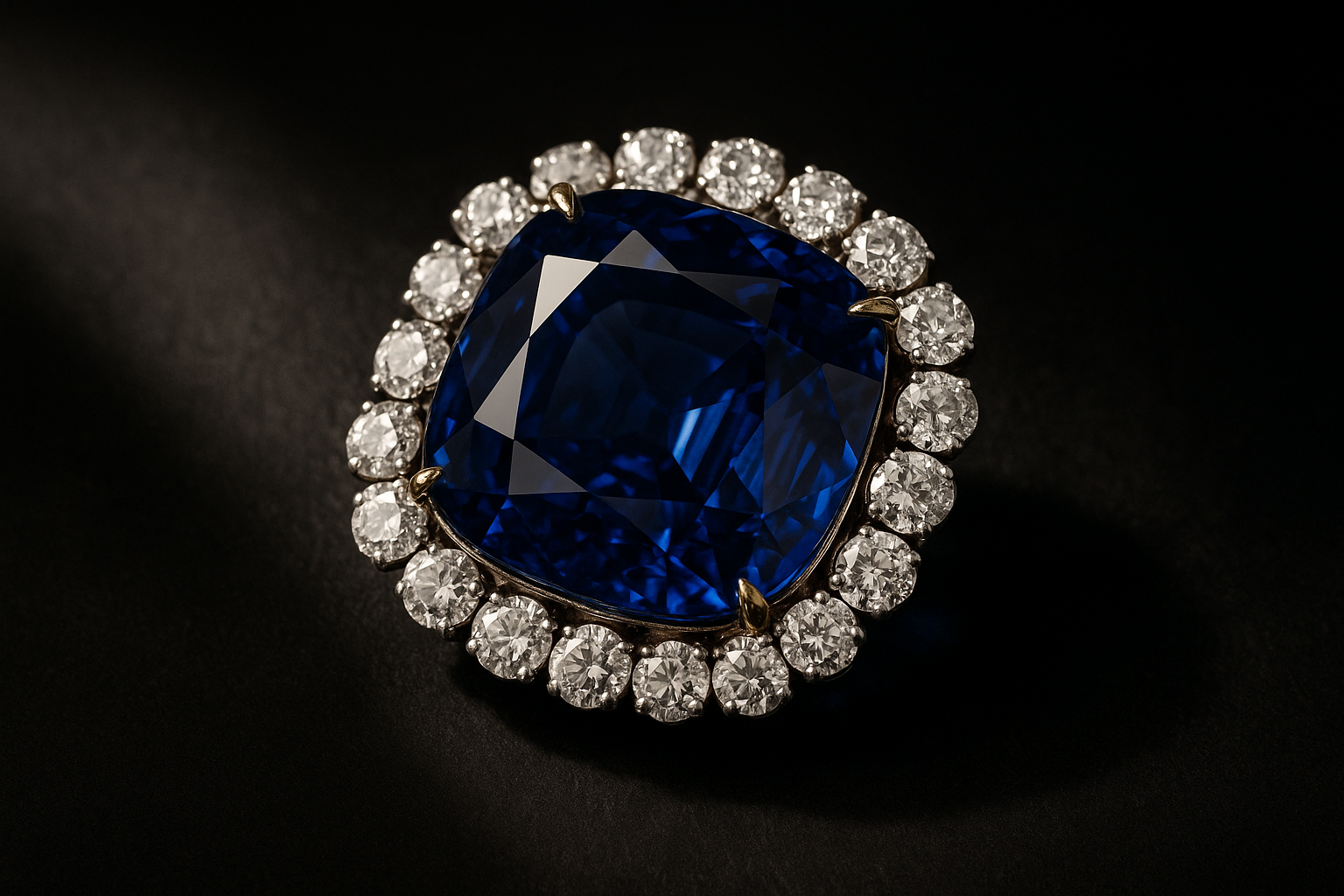
I watched a man pay $340,000 for a "Cartier Tutti Frutti" bracelet at Christie's Geneva last November. He hadn't pulled the condition report. The enamel was restored — badly — and the piece was worth maybe half what he paid. He'll find out when he tries to sell it. That's the auction room. Nobody holds your hand.
I've been buying jewelry since 2009. I'm in the auction rooms multiple times a year. Christie's Geneva, Sotheby's New York, the Magnificent Jewels sales — I've done the 6am previews, the condition report deep dives, the post-sale shock when a piece I wanted went for double estimate. I've also walked away from plenty of lots that looked great in the catalog and fell apart under a loupe.
Here's what separates the people who get good pieces at fair prices from the people who get burned.
How Do You Actually Read a Condition Report?
Catalog photos lie. Every single one. They're shot under perfect light, often with stones angled to hide inclusions or wear. Your job is to find what the photo doesn't show.
Request the condition report before you even book your flight. Christie's and Sotheby's will send it — it's free, and it's written by their in-house gemologists. Read every line. "Minor abrasions consistent with age" on a 1920s Cartier piece is normal. "Enamel loss," "replaced clasp," "evidence of solder" — those matter. Especially on signed pieces. A Van Cleef & Arpels brooch with a non-original pin stem might still be wearable, but it's worth 20-30% less than an untouched example.
The condition report won't tell you everything. It's been getting sparser over the years — the houses are more cautious about liability. So here's what you do:
- Request it early. Don't wait until preview day. Some lots have documentation issues that take time to unpack.
- Cross-check against the catalog image. Look for discrepancies between what they photographed and what they described.
- Look for omissions. If a report mentions "one small chip to enamel" but the photo shows a piece the size of a quarter, ask yourself what else might be hiding.
- Bring your own loupe to preview. The house loupes are fine. Your own 10x triplet is better. You know its optics.
What Do the Lab Reports Actually Mean — and When Do You Need Your Own?
This is where I see buyers make expensive mistakes.
For diamonds, GIA is the standard. If a signed vintage diamond piece comes with a recent GIA report, you're in good shape. But check the date. A GIA report from 2005 is basically worthless — grading standards have tightened, and stones can get chipped in 20 years of wear. If the report is older than 5 years, assume you'll need a new one. Factor that $150-500 cost into your bid math.
For colored stones — sapphires, rubies, emeralds, anything with color — the lab matters enormously. SSEF, Gübelin, and AGL are the authorities. Not GIA. I'll say it plainly: GIA is not the right lab for colored stone origin or treatment determination. If a Kashmir sapphire at Christie's comes with an SSEF report confirming Swiss origin opinion and no heat, you can bid with confidence. If the same stone comes with a GIA colored stone report, I'm calling SSEF or Gübelin before I raise my paddle.
Here's what trips people up: auction houses sometimes list "accompanied by" reports that are 10+ years old. A 2012 AGL report on a Colombian emerald saying "minor oil" doesn't mean anything in 2026. Emeralds get re-treated. Oil dries out. Resin gets added. If you're spending six figures on a signed emerald piece, spend the $500-800 on a fresh SSEF report during preview. Yes, you can do that if you move fast.
Why Does "Signed" Actually Matter — and When Does It Not?
Signed means Cartier, Van Cleef & Arpels, Bulgari, Harry Winston, Boucheron, JAR, David Webb — houses where the name alone adds 30-200% to the value. The signature is the provenance. But there's a hierarchy.
A Cartier Art Deco diamond bracelet from 1925 with original box and Cartier archives documentation is the top tier. That piece trades at a premium and holds value through market cycles. A Cartier 1990s Trinity ring without papers — still signed, still desirable, but you're not getting the same multiplier.
Unsigned pieces of the same period and quality trade at a significant discount. I've bought unsigned 1920s Art Deco diamond bracelets for $15,000-25,000 at auction that would be $60,000+ with a Cartier plaque. That's the spread. Sometimes the unsigned piece is better value — same stones, same workmanship, half the price. But you need to actually know what you're looking at.
Authenticity issues at auction are rare but real. The houses have gotten better at catching fakes, but I've seen "Cartier-style" pieces listed with wishful attributions. If it's signed, the signature should be clear, period-correct, and match known production records. A blurry Cartier stamp on a piece from a period when Cartier used crisp, deep hallmarks — walk away.
How Do You Win Without Overpaying?
Everyone overpays on their first three auctions. It's practically a rule. Here's how to make it fewer.
Know your all-in number before you register to bid. The buyer's premium is real money. At Christie's, on a $100,000 hammer, you're paying $127,000. At Sotheby's, similar structure. Do the math cold, at your desk, not in the room with adrenaline pumping.
Bid late. Don't jump in at the opening bid. Let the room thin out. Raise your paddle when the increments slow down. This isn't theater — it's a transaction.
Watch the estimate, not the hammer. Estimates are set low to generate interest. A piece estimated at $20,000-30,000 that hammers at $45,000 isn't "overperforming" — it was deliberately estimated low. Look at the piece and decide what it's worth to you, not what the auction house wants you to think it's worth.
Ignore the "provenance of a lady" nonsense. Unless it's a named collection — the Estate of some actual notable person with documentation — the flowery catalog language about "property of a distinguished European collector" means nothing. Zero. It's marketing.
Attend the preview. If you're spending real money and you haven't held the piece in your hand, you're gambling. Not investing. Gambling.
The best auction buy I ever made was a signed piece I spent 45 minutes inspecting at preview, cross-referencing against two lab reports, and bidding on only after I'd set a hard limit I refused to cross. I won it at 15% below my max. The worst buy I ever watched someone else make took three minutes of catalog browsing and one impulsive paddle raise. The auction room rewards preparation. It punishes everything else.
Frequently Asked Questions
Do I need to be at the auction in person to bid?
You don't, but you should be. Phone bidding and online platforms work fine logistically — I've used Christie's LIVE and Sotheby's online bidding plenty of times. The problem isn't the technology. It's that you're buying something you haven't held. If you must bid remotely, hire someone to preview for you. A local dealer, a trusted gemologist, anyone competent who can put hands on the piece and send you honest notes. I've done this for colleagues and they've done it for me. Without eyes on the piece, you're flying blind — and auction terms are clear that condition is never guaranteed.
Should I get my own lab report before bidding?
For diamonds over 3 carats or any colored stone over $20,000 estimate, yes. Call the auction house jewelry department and ask if you can have the piece examined during preview. They'll usually accommodate a reputable lab — SSEF, Gübelin, or AGL for colored stones; GIA for diamonds. You'll pay for the report whether you win or not. That's the cost of doing business. For smaller lots, rely on the house report but read it carefully — and check the date. A report older than 5 years means re-test. The stone in front of you today might not be the same stone that was graded in 2019.
What's the one thing most first-time auction buyers get wrong?
They buy the estimate. They see "$15,000-20,000" and mentally budget $17,500. In reality, that piece might hammer at $32,000 because the estimate was set low to attract bidders, or because two people in the room both want it. Your number should come from the piece — what it's worth in the retail market, what similar pieces have sold for, what condition it's really in — not from the auction house's marketing number. I watch this happen at every sale. Don't let it happen to you.
Written by Lawrence Paul
Lawrence Paul is a fine jewelry dealer based in New York's Diamond District with over 20 years of experience buying and selling signed vintage and estate jewelry. He is President of Spectra Fine Jewelry at 44 West 47th Street, Suite GF1, New York, NY 10036.
Continue Reading
Get the Collector's Newsletter
Join collectors who get authentication tips, market insights, and new guide alerts. No spam, just practical knowledge.
Need Help?
Send photos of a piece you're evaluating. We'll give you a straight read—no pressure, no BS.
Contact Spectra Fine Jewelry →Ready to Browse Authenticated Pieces?
Every item at Spectra Fine Jewelry goes through our verification process before it hits the case. No guesswork. No surprises.