Is Fine Jewelry a Good Investment? An Honest Dealer's Answer
Published: June 26, 2026
The short answer: Fine jewelry can be an investment — but not the kind most people think. You won't flip a sapphire ring for profit in 18 months. The money is in rarity, provenance, and holding long enough for the market to recognize what you bought. Most jewelry loses money. The top 2% outperforms.
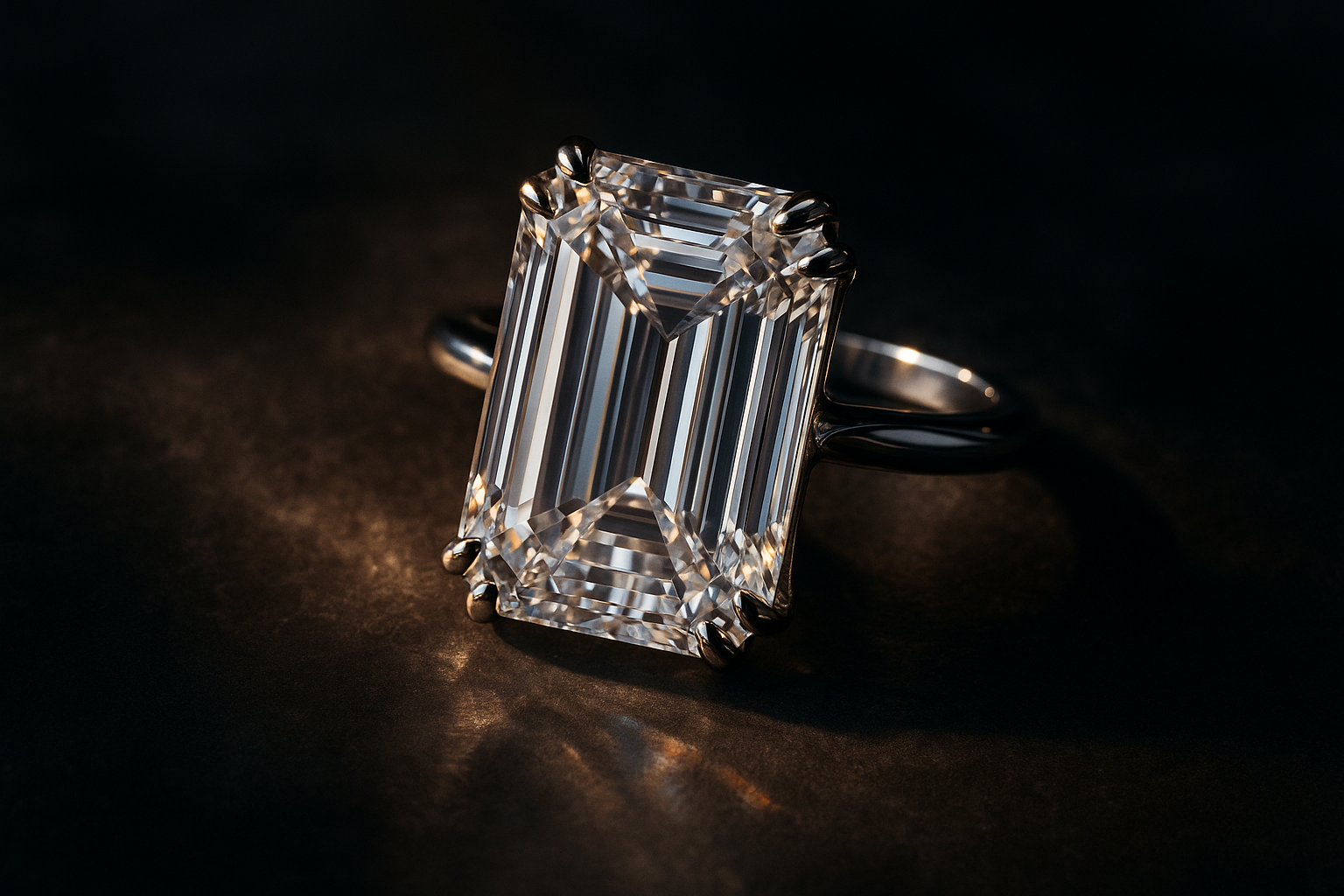
I watched a Kashmir sapphire ring sell at Christie's Geneva last November for CHF 1.82 million. The buyer had waited 14 years to buy that stone. Fourteen years of patience, watching the market, knowing exactly what a no-heat Kashmir over 15 carats with SSEF papers was worth. That's not shopping. That's investing.
I've been in this trade since 2009. Seventeen years on West 47th Street, in the auction rooms, at the benches where stones get recut. I've bought and sold everything from $3,000 vintage cocktail rings to seven-figure Argyle pinks. Here's what nobody tells you about jewelry as an investment: the math is brutal, the timeline is long, and the people who win are the ones who buy what others don't yet understand.
What Kind of Jewelry Actually Holds Value?
Signed pieces from the top houses — Cartier, Van Cleef & Arpels, Bulgari, Harry Winston, Boucheron, JAR — these have a real secondary market. A Van Cleef Alhambra necklace from the 1970s in yellow gold with original papers will sell tomorrow at a price you can predict within 5%. That's liquidity, and liquidity is rare in this business.
The unsigned 1.50-carat GIA H/VS2 round diamond in a generic platinum setting? You'll get 30–40% of retail if you try to sell it. Maybe less. The diamond itself has commodity-level pricing — Rapaport sets the grid, the grid sets the wholesale, and retail markup evaporates the second you walk out the door.
Here's where the real returns live:
-
Top-tier colored stones with lab documentation. An unheated Burmese ruby over 3 carats with an SSEF or Gübelin origin report. A Colombian emerald with no oil or minor oil, AGL-certified. These stones don't trade on a grid. They trade on rarity, and rarity only goes one direction when supply is finite and new money keeps entering the market.
-
Argyle pink diamonds. The mine closed in 2020. Every Argyle pink above 1 carat with a GIA report is now a depleting asset. I've watched the price per carat on vivid pinks double in five years. Not because of marketing — because there are literally no more being pulled out of the ground.
-
Period signed jewelry with intact design integrity. Not altered, not "improved" with added diamonds, not refinished to look new. Collectors pay premiums for untouched Cartier from the 1920s–1960s the way car collectors pay for matching-numbers Porsches.
Why Do Most People Lose Money on Jewelry?
Because they buy at retail and try to sell at wholesale. That gap is not small — it's 50–70% on most commercial jewelry. A $40,000 diamond engagement ring from a Madison Avenue retailer has $12,000–$15,000 worth of stone and metal at wholesale. The rest is brand markup, rent, marketing, and margin.
The second problem: they buy wrong. I see it every week. Someone paid a premium for a "certified" colored stone — and the cert is from a no-name lab that overgraded the color and missed the treatment. GIA is the standard for diamonds. Period. For colored stones — sapphires, rubies, emeralds, Paraíba tourmalines — the relevant labs are SSEF, Gübelin, and AGL. If your Burmese ruby comes with anything less, the trade doesn't trust it, and the resale value reflects that.
Third: they sell too soon. The jewelry market is not the stock market. There's no daily bid. You need 7–15 years for a significant colored stone or signed piece to appreciate meaningfully. The people who made real money on Kashmir sapphires bought in the 1990s and early 2000s, when the market hadn't fully priced the supply constraint. The people buying now at $200,000+ per carat will need another decade to see the same kind of return.
What Should You Look For If You're Buying With Investment in Mind?
I tell my clients the same thing every time: buy the best example of something irreplaceable. Don't spread $100,000 across five "pretty good" pieces. Put it into one exceptional stone or one exceptional signed piece with unimpeachable provenance.
Here's my checklist:
-
Lab reports from the right labs. GIA for diamonds. SSEF, Gübelin, or AGL for colored stones. If the seller can't produce one of those, the stone isn't investment-grade — it's fashion jewelry with an asking price.
-
Original condition, original papers. A Cartier Tutti Frutti bracelet that's been resized, re-enameled, or had stones swapped is worth 30–50% less than an untouched one. Buy the one with the original box and certificate. That sounds fussy. It's not — it's the difference between an asset and a liability at resale.
-
No-heat, no-treatment, or minimal traditional treatment. For sapphires and rubies: unheated only. For emeralds: traditional cedarwood oil (minor to none). Avoid resin-filled emeralds regardless of what the seller says about "industry standard." You're buying for the long term, and treatment taste changes. Traditional oil has been acceptable for a century. Synthetics and heavy resins might not be in 20 years.
-
Provenance you can prove. Auction records from Christie's, Sotheby's, or Phillips. Famous previous owners. Documentation that survives scrutiny. A stone with a documented auction history is worth more than an identical stone without one, and that gap widens over time.
-
A realistic timeline. If you need to sell within three years, don't buy jewelry as an investment. Buy it because you love it. The math only works at 7+ years, and 10–15 is where the serious returns compound.
How Does the Auction Market Work for Sellers?
It's not free money. Christie's and Sotheby's charge seller's commissions that typically start at 10% and are negotiable for high-value consignments. The buyer's premium — 27% on the first CHF 1.2 million at Christie's Geneva, stepping down from there — is paid by the buyer, but it affects how much they're willing to bid. When someone bids CHF 1 million, they're actually paying CHF 1.27 million. Smart sellers factor that into their reserve price.
You also need a compelling reason for the auction house to take your piece. They're curating sales, not running a pawn shop. A 5-carat unheated Burmese ruby with SSEF papers — they'll fight over it. A 1-carat GIA G/VS1 round diamond — they'll politely decline. The auction market rewards rarity and punishes ordinary.
If you want to make money in jewelry, buy what can't be replaced. A Kashmir sapphire. An Argyle vivid pink. A JAR ring with original sketches. Buy it with the right papers from the right labs, pay the right price, and wait. The market rewards patience and punishes impulse. I've watched it happen for 17 years. The formula hasn't changed.
Frequently Asked Questions
What's the minimum amount I should spend to buy investment-grade jewelry?
For a single piece with genuine investment potential, you're looking at $30,000–$50,000 minimum. Below that, you're mostly buying jewelry you'll enjoy wearing, which is a perfectly good reason to buy — but don't confuse it with investing. At $50,000–$100,000, you can access a real unheated Ceylon sapphire over 5 carats with SSEF papers, or a period Cartier piece from the 1950s–1960s. At $250,000+, you're in the conversation for top Burmese rubies, Kashmir sapphires, and Argyle pinks over 1 carat. The entry price is high because the supply of exceptional stones and signed pieces is genuinely limited, and the dealers who hold them know exactly what they have.
How do I sell investment-grade jewelry when I'm ready?
The best exit is through a major auction house — Christie's, Sotheby's, or Phillips — if your piece is auction-quality. Expect to negotiate seller's commission, and understand the full cost structure including photography, catalog placement, and insurance. Private sale through a reputable dealer is another option; you'll typically leave 10–15% on the table versus auction retail but close faster. Avoid selling to a dealer who's buying for inventory — that's a wholesale transaction and you'll get wholesale pricing. The worst option is a pawn shop or "we buy gold" counter, which will pay you for melt value and nothing for the gemstone or the signature. Plan your exit before you buy.
Does brand name matter more than the stone itself?
Both matter, but for different buyers. A signed piece from Cartier or Van Cleef & Arpels has a built-in collector base — buyers who collect the house regardless of the individual stone's characteristics. That creates a floor under the value. An unsigned piece with an exceptional stone — a 10-carat unheated Kashmir sapphire with Gübelin papers — will sell on the stone's merit alone, because the stone is so rare that the setting becomes secondary. At the very top of the market, a great stone beats a great signature. But for pieces under $100,000, the signature is often the safer bet for resale. The ideal, of course, is both: a major signed piece with a major stone. That's where the record-setting auction prices happen.
Written by Lawrence Paul
Lawrence Paul is a fine jewelry dealer based in New York's Diamond District with over 20 years of experience buying and selling signed vintage and estate jewelry. He is President of Spectra Fine Jewelry at 44 West 47th Street, Suite GF1, New York, NY 10036.
Continue Reading
Get the Collector's Newsletter
Join collectors who get authentication tips, market insights, and new guide alerts. No spam, just practical knowledge.
Need Help?
Send photos of a piece you're evaluating. We'll give you a straight read—no pressure, no BS.
Contact Spectra Fine Jewelry →Ready to Browse Authenticated Pieces?
Every item at Spectra Fine Jewelry goes through our verification process before it hits the case. No guesswork. No surprises.