Understanding Italian Gold Hallmarks (750, Star System)
Published: January 20, 2026
Italian jewelry has a distinctive hallmarking system that confuses collectors who are used to UK or French marks. The star with a number, the "750" stamp, regional codes—it all means something specific if you know how to read it.
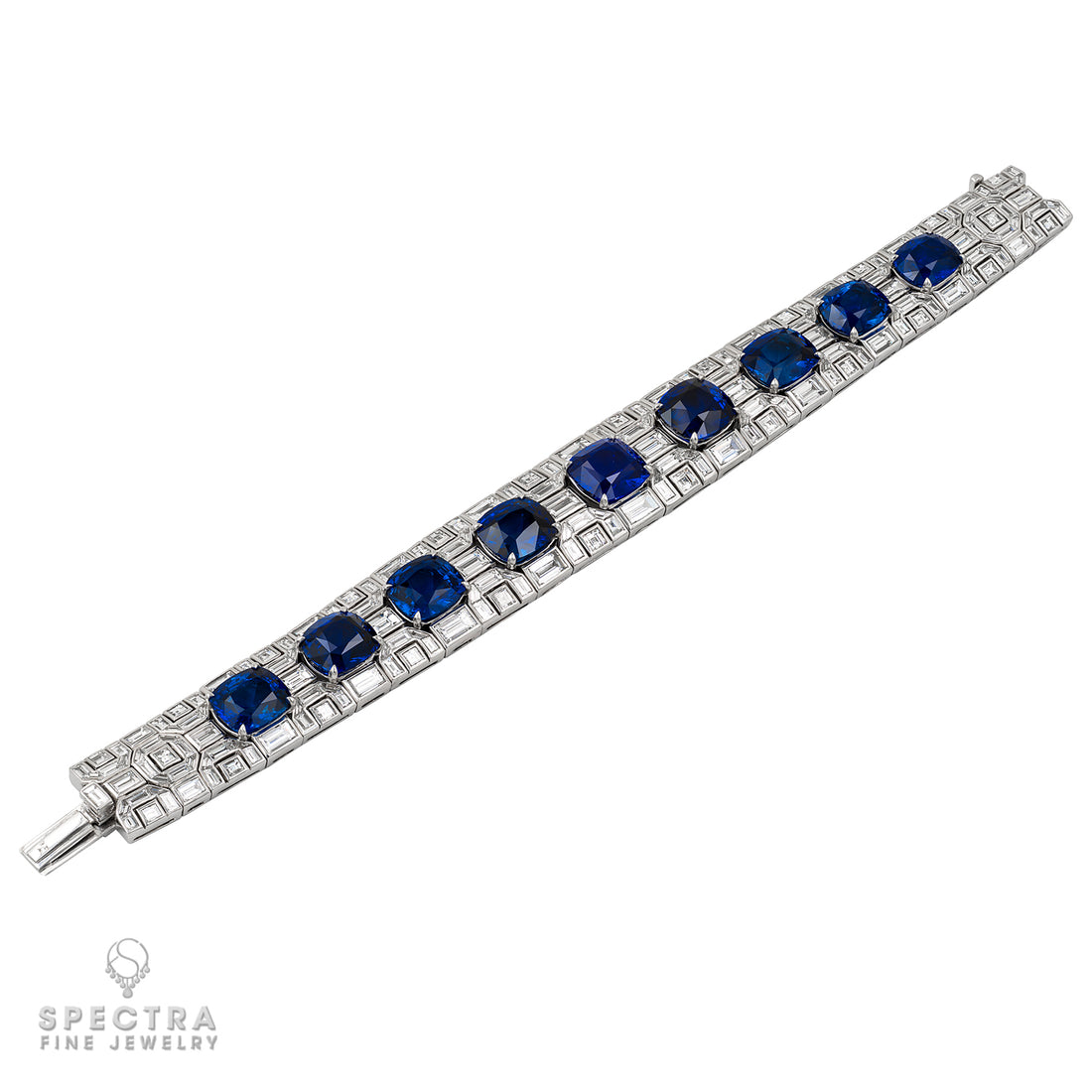 Signed Bulgari platinum and sapphire bracelet from the 1980s—Italian jewelry houses like Bulgari carry the distinctive Italian hallmarking system
Italy produces enormous quantities of gold jewelry. If you collect estate pieces, you'll encounter Italian marks. Here's how to decode them.
The Basic Structure
Italian gold hallmarks typically include:
- Fineness mark (750, 585, etc.)
- Star with number (manufacturer/sponsor registration)
- Sometimes regional codes or additional marks
Unlike the UK system, Italy doesn't have independent assay office testing for all pieces. The manufacturer self-declares fineness, and the marks are their responsibility. That said, there's government oversight, and the marks mean specific things.
Fineness Marks
Italian jewelry uses the millesimal system:
750 — 18 karat gold (75% pure gold) Most common on Italian fine jewelry. The standard for quality Italian pieces.
585 — 14 karat gold (58.5% pure gold) Less common in Italian jewelry than American. Used in some production.
375 — 9 karat gold (37.5% pure gold) Rarely seen in Italian fine jewelry.
916 — 22 karat gold (91.6% pure gold) Uncommon except for specific traditional styles.
The number tells you gold content. 750 on Italian jewelry means the same as 750 on French jewelry—18k gold. If you need to convert between systems or calculate pure gold content, our precious metals converter makes it straightforward.
The Star Mark System
This is uniquely Italian and often confuses collectors.
The star mark looks like this:
    ★
   XXX
A star above a number (usually 1-4 digits).
What the number means: The number is a registered manufacturer or sponsor code. Every Italian manufacturer working in precious metals must register with the government. Their assigned number appears with the star.
What you can learn:
- The piece was made by a registered Italian manufacturer
- The number can theoretically be traced to identify the maker
- Legitimate pieces should have this mark
What you can't learn:
- The number alone doesn't tell you WHO made it without a registry lookup
- Old manufacturer numbers may be reassigned if a company closes
- Some numbers are more common (high-volume producers)
Regional Codes
Some Italian hallmarks include regional identifiers:
Examples:
- AR = Arezzo (major gold jewelry production center)
- VI = Vicenza (another major center)
- MI = Milano
- NA = Napoli
Arezzo produces a significant percentage of Italian gold jewelry. Seeing "AR" combined with other marks is common and not inherently suspicious.
What Italian Marks Look Like
A typical Italian gold piece might show:
┌─────────────────────┐
│                     │
│    750  ★ 125       │
│         AR          │
│                     │
└─────────────────────┘
Reading this:
- 750 = 18k gold
- ★ 125 = Manufacturer registration number 125
- AR = Made in Arezzo region
All of this is consistent with legitimate Italian production.
The Self-Declaration System
Important to understand: Italian marks are largely self-declared.
Unlike France (where assay offices test and stamp pieces) or the UK (with independent hallmarking), Italian manufacturers mark their own pieces and take responsibility for the claims.
What this means for collectors:
- Italian marks don't carry the same independent verification as French hallmarks
- Manufacturer reputation matters more
- Testing/verification is still advisable for valuable pieces
- Legitimate Italian jewelry is still legitimate—the system just works differently
Quality Italian Jewelry Brands
Major Italian jewelry houses to know:
Bulgari (BVLGARI)
- Founded Rome 1884
- Distinctive spelling on marks
- High-end signed jewelry
Buccellati
- Founded Milan 1919
- Known for textured goldwork
- Premium pricing and quality
Pomellato
- Founded Milan 1967
- Distinctive colored stone jewelry
- Contemporary design aesthetic
Marco Bicego
- Founded Vicenza
- Hand-engraved gold work
- Distinctive coil wire technique
When collecting signed Italian pieces, the brand signature matters alongside hallmarks.
Italian Gold Quality Reputation
Italian jewelry has an excellent reputation for:
Chain making: Italy is famous for gold chain production. Styles like curb, rope, Byzantine, Figaro—Italian manufacturers dominate.
Craftsmanship: Traditional goldsmithing skills remain strong.
Design: Italian aesthetic sense influences global jewelry design.
Value: Italian-made pieces often represent good value for quality.
The caveat: Italy also produces enormous volume, including lower-quality pieces. The marks tell you about gold content and registration—not about design or craftsmanship quality. Evaluate each piece on its merits.
Common Issues with Italian Marks
Worn or unclear marks: Italian marks can be small. On chains especially, they may be hard to read. Use magnification.
Multiple marks: Some pieces have marks from multiple stages (casting, assembly, finishing). This isn't inherently suspicious.
"Italy" or "Made in Italy": This is a country-of-origin mark, not a quality guarantee. Many countries require origin marking.
Floating fineness: A "750" stamp without accompanying star/number is less complete. Legitimate pieces usually have both.
Testing Italian Gold
Given the self-declaration system, verification matters:
Non-destructive testing:
- XRF (X-ray fluorescence) testing confirms metal content without damage
- Specific gravity testing (weight vs. volume)
- Electronic testers (less reliable but convenient)
When to test:
- Purchasing valuable pieces from unknown sources
- Estate pieces without documentation
- Anything where the price makes testing worthwhile
Where to test:
- Reputable jewelers with testing equipment
- Independent appraisers
- Precious metal dealers
Italian Hallmarks on Non-Italian Pieces
Sometimes you'll see Italian-style marks on pieces that weren't made in Italy:
Italian components assembled elsewhere: Gold chains, findings, and components are exported globally. A piece assembled in another country might have Italian-origin components.
Misleading marks: Less reputable sources sometimes use Italian-style numbering to suggest Italian origin.
How to evaluate: Consider the complete picture—design, construction, marks, provenance. Italian marks are one data point, not the whole story.
Historical Italian Marks
Older Italian pieces (pre-1968) may show different marking systems:
Pre-1968:
- Less standardized system
- Regional variations more common
- Historical provincial marks
1968 onwards:
- Modern star/number system established
- More consistent across regions
- Current registration system
Antique pieces: Very old Italian jewelry may have marks that require specialist knowledge to interpret. Historical mark references are available for serious research.
Reference: Italian Marks Quick Guide
| Mark | Meaning |
|---|---|
| 750 | 18K gold (75% pure) |
| 585 | 14K gold (58.5% pure) |
| 375 | 9K gold (37.5% pure) |
| ★ + number | Registered manufacturer |
| AR, VI, MI, etc. | Regional codes |
| ITALY | Country of origin |
Practical Takeaway
When evaluating Italian gold jewelry:
- Look for the fineness mark (750 most common for quality pieces)
- Check for star/number combination (manufacturer registration)
- Understand the self-declaration system (not independently verified like French marks)
- Consider testing for valuable pieces (XRF testing is non-destructive)
- Evaluate overall quality (marks don't guarantee craftsmanship)
Italian jewelry has an excellent reputation, and the marking system is legitimate. Just understand what the marks do and don't tell you.
Questions About Italian Marks?
We handle Italian signed jewelry and can help identify marks.
Browse Italian Designer Pieces →
Independent educational resource. Information references Italian assay and marking regulations.
Continue Reading
Get the Collector's Newsletter
Join collectors who get authentication tips, market insights, and new guide alerts. No spam, just practical knowledge.
Need Help?
Send photos of a piece you're evaluating. We'll give you a straight read—no pressure, no BS.
Contact Spectra Fine Jewelry →Ready to Browse Authenticated Pieces?
Every item at Spectra Fine Jewelry goes through our verification process before it hits the case. No guesswork. No surprises.