The Most Faked Jewelry Pieces (And How to Avoid Them)
Published: January 17, 2026
Some jewelry pieces are counterfeited more than others. High demand + high value + recognizable design = perfect conditions for fakes. Knowing which pieces attract the most counterfeiting helps you be appropriately cautious.
Here's what we see faked most often, ranked roughly by frequency, with specific advice for each.
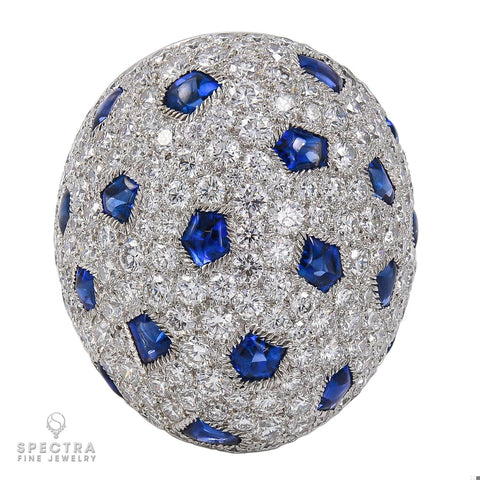 Authentic signed Cartier Panthère ring—learning to recognize genuine maker signatures is essential when navigating the secondary market
1. Cartier Love Bracelet
Why it's faked: The Love bracelet might be the most counterfeited piece of fine jewelry in existence. Iconic design, high price point ($6,500-$50,000+ retail), huge secondary market demand.
What fakes look like:
- Incorrect screw head profile (should be flush, not recessed)
- Light weight (authentic Love bracelets have substantial heft)
- Gap between halves when closed
- Shallow or inconsistent engraving
- Wrong gold color tone
Key check: Weight is hard to fake. Authentic 18k Love bracelets feel substantial—our precious metals converter can help you understand expected weights for different gold purities. Pick up a few authentic ones to calibrate your sense of weight.
2. Van Cleef & Arpels Alhambra
Why it's faked: The quatrefoil motif is instantly recognizable. Prices range $3,000-$30,000+ depending on piece. Massive demand, especially for vintage pieces.
What fakes look like:
- Poor beading quality (this is the biggest tell)
- Asymmetrical motif proportions
- Lightweight chains
- Thin, flimsy construction
- Stone setting that looks sloppy
Key check: The perlée beading around the edge. Authentic VCA beading is perfectly uniform—same size, same spacing, all the way around. This requires specialized equipment to replicate well.
3. Cartier Juste un Clou
Why it's faked: Simple design that looks easy to copy. High retail prices ($7,000-$40,000+). Strong social media presence.
What fakes look like:
- Wrong proportions (nail head too large or small)
- Light weight
- Poor finishing on the "nail point"
- Engraving quality issues
- Gold color that looks off
Key check: The proportions should be exact. Cartier's design ratios are specific. Compare to authenticated examples.
Full Cartier Authentication Guide →
4. Rolex Watches
Why they're faked: Rolex is the most recognized watch brand. Massive price premiums. Enormous secondary market.
What fakes look like:
- Varies wildly from obvious to frighteningly good
- Movement tells the story (authentic Rolex movements are exceptional)
- Weight often wrong
- Cyclops magnification incorrect
- Crown engraving details wrong
Key check: Movement inspection requires opening the case. For significant purchases, have a watchmaker verify.
5. Tiffany Return to Tiffany Collection
Why it's faked: Recognizable design, accessible price point ($150-$500 retail), massive brand recognition.
What fakes look like:
- Lightweight stamping (should feel substantial)
- Poor engraving quality
- Thin, weak chains
- Wrong silver color (too shiny/chrome-like)
Key check: Weight and engraving. Authentic Tiffany pieces have clean, crisp engraving and appropriate heft for sterling silver.
6. Hermes H Bracelets and Jewelry
Why they're faked: The H motif is iconic and recognized. Prices are high for what they are. Strong brand cachet.
What fakes look like:
- Enamel quality issues (bubbling, uneven color)
- Wrong proportions on the H
- Poor clasp construction
- Metal finishing issues
Key check: Enamel quality. Authentic Hermès enamel is smooth, saturated, and precise. Fakes often have visible imperfections.
7. Bulgari B.zero1
Why it's faked: Distinctive design that's widely recognized. Range of prices ($800-$10,000+). Easy to identify by non-experts.
What fakes look like:
- BVLGARI engraving quality issues
- Ring band proportions wrong
- Ceramic quality issues (if applicable)
- Wrong weight
Key check: The engraving. Authentic Bulgari engraving is crisp, consistent, and perfectly spaced.
8. Cartier Trinity Ring/Bracelet
Why it's faked: Classic design since 1924. Simple three-band concept looks easy to replicate. High brand premium.
What fakes look like:
- Bands don't interlock smoothly
- Gold colors not quite right (especially rose gold)
- Weight issues
- Engraving quality
Key check: The interlocking action should be smooth and fluid. The three gold colors should be distinct and accurate.
9. David Yurman Cable Bracelets
Why they're faked: Distinctive cable design is recognizable. Accessible luxury pricing ($400-$5,000). Popular gift item.
What fakes look like:
- Cable twist poorly executed
- End caps not well finished
- Silver quality issues
- Stone setting sloppy (if applicable)
Key check: The cable twist should be even and consistent throughout. End caps should be well-integrated.
10. Chopard Happy Diamonds
Why they're faked: Distinctive floating diamond concept. High prices. Recognizable from across a room.
What fakes look like:
- Floating elements don't move correctly
- Diamond quality obviously wrong
- Case proportions off
- Weight issues
Key check: The floating mechanism should work smoothly. Diamonds should be genuine and well-cut.
Where Fakes Come From
Primary sources:
- Chinese manufacturing (largest volume)
- Turkish production
- Southeast Asian workshops
- Eastern European operations
Distribution channels:
- Online marketplaces (eBay, Poshmark, etc.)
- Street vendors and tourist markets
- "Replica" websites
- Some consignment shops (knowingly or not)
- Social media sellers
Quality range:
- Obvious fakes ($20-$100) - easily spotted
- Mid-grade fakes ($100-$500) - fool casual observers
- "Super fakes" ($500+) - require expertise to identify
The Super Fake Problem
The highest-quality counterfeits are genuinely difficult to spot. They use:
- Correct weight (expensive precious metal)
- Quality construction
- Convincing engravings
- Authentic-looking packaging
- Real serial numbers (copied from genuine pieces)
What still gives them away:
- Microscopic details (loupe required)
- Construction nuances visible to experts
- Subtle proportion differences
- Engraving characteristics
- Long-term wear patterns
The implication: For high-value pieces, amateur authentication isn't enough. Expert evaluation matters.
How to Protect Yourself
Buy from reputable sources:
- Authorized retailers (new)
- Established auction houses (with guarantees)
- Dealers who specialize in signed jewelry
- Sellers with clear return policies
Do your homework:
- Learn what authentic examples look like
- Compare photos of marks and construction
- Know the market prices (too good = probably fake)
- Research the seller
Verify before committing:
- Request detailed photos of all marks
- Ask about return policies
- For significant purchases, get expert authentication
- If something feels wrong, walk away
Trust your instincts: If a deal seems too good, it is. If something feels off, investigate. If the seller won't provide information, move on.
The Price Reality
Authentic signed jewelry holds value. There are no legitimate "wholesale" deals available to the public. If someone offers you:
- Cartier Love bracelet: 50% off? Fake.
- Van Cleef Alhambra: "wholesale price"? Fake.
- Rolex: "gray market discount"? Investigate very carefully.
Market prices exist because market prices exist. Pieces below market are problems waiting to happen.
When to Get Expert Help
Seek professional authentication when:
- The piece costs more than you can afford to lose
- You're buying from an unknown source
- Something about the deal seems unusual
- You can't verify in person
- The seller can't or won't provide detailed documentation
Authentication costs are insurance. Paying $100-$200 for professional authentication on a $5,000+ piece is sound economics.
Learn what professionals look for in our authentication guide, or start with our hallmarks reference to understand the marks you should find on genuine pieces.
The Bottom Line
Counterfeiting correlates with value and recognition. The most iconic, most valuable pieces get faked the most. That doesn't mean you can't buy them—it means you need to be careful.
Buy from reputable sources. Learn what authentic examples look like. Get expert help for significant purchases. And remember: if the price seems too good, the piece probably isn't real.
Need Authentication Help?
We evaluate pieces daily and know what to look for.
Independent educational resource. Not affiliated with any brands mentioned.
Continue Reading
Get the Collector's Newsletter
Join collectors who get authentication tips, market insights, and new guide alerts. No spam, just practical knowledge.
Need Help?
Send photos of a piece you're evaluating. We'll give you a straight read—no pressure, no BS.
Contact Spectra Fine Jewelry →Ready to Browse Authenticated Pieces?
Every item at Spectra Fine Jewelry goes through our verification process before it hits the case. No guesswork. No surprises.