Paraiba Tourmaline: Why the Color Matters More Than the Carat
Published: May 16, 2026
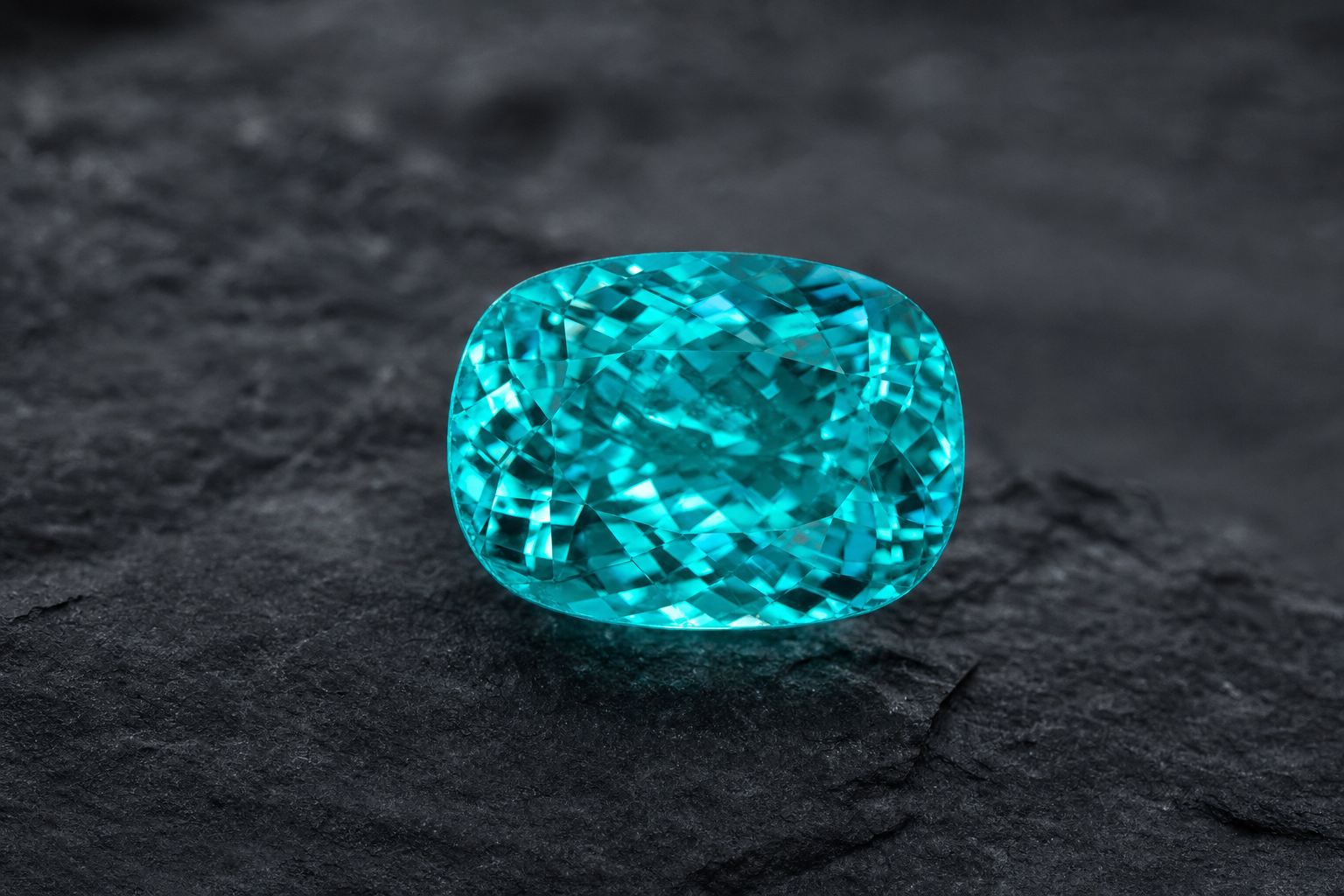
The short answer: Paraiba tourmaline's value is driven almost entirely by color intensity — the neon blue-green glow from copper and manganese in the crystal structure. Brazilian Paraiba from the original Batalha mine commands the highest premiums, but copper-bearing stones from Mozambique and Nigeria are legitimate Paraiba if the chemistry confirms it. A 0.5ct electric neon stone beats a 5ct pale one every time.
I bought my first Paraiba in 1993 from a dealer in São Paulo who had a parcel from the Batalha mine in Rio Grande do Norte. I'd seen photographs. Nothing prepared me for holding one. The color isn't blue. It isn't green. It's the Caribbean ocean backlit by a fluorescent tube. I've handled maybe 400 Paraibas since then, and I'm still not used to it.
The market has gotten complicated since Mozambique and Nigeria started producing copper-bearing tourmalines in the early 2000s. There are dealers who will tell you only Brazilian stones are "real" Paraiba. They're wrong — and they're usually the ones trying to sell you Brazilian stones at a premium. Here's how the market actually works.
What makes Paraiba tourmaline so expensive?
The color comes from copper and manganese substituting for aluminum in the tourmaline crystal lattice. Copper produces the blue-green neon glow. Manganese adds violet and purple overtones. When the copper content is high and the manganese low, you get the purest neon blue that the market calls "swimming pool" or "electric" color.
No other tourmaline species produces this. Other blue tourmalines (Indicolite) can be beautiful but they don't glow. They don't have that inner light source quality. Paraiba is the only gem I know of that looks like it's lit from within under any lighting condition — daylight, fluorescent, candlelight, all of it.
The original Brazilian deposit in Batalha was tiny — roughly the size of a few city blocks — and it was essentially exhausted by the mid-1990s. Heitor Dimas Barbosa found the deposit in 1987 after years of digging by hand based on his conviction that something extraordinary was in that hill. He was right. And now it's gone. Mozambique was discovered around 2001, Nigeria around 2003. Both produce legitimate copper-bearing tourmaline. The chemistry is the same; the origin is different.
How does origin affect Paraiba value?
Brazilian Paraiba commands the highest prices — 3 to 5 times the price of comparable Mozambique stones at the same color grade. Why? Scarcity and history. The Batalha mine is finished. Every Brazilian Paraiba in existence was mined between 1987 and roughly 1995. That's eight years of production for the entire global supply.
Mozambique produces more volume, which keeps prices somewhat lower, but top-color Mozambique Paraiba is a serious stone. I sold a 2.3ct Mozambique at $18,000 per carat last year — neon blue-green, AGL-certified copper-bearing. That's not cheap. That's a real gem.
Nigerian Paraiba is typically less saturated and often has more violet/purple tones from higher manganese content. Prices run lower, but a rare Nigerian with strong copper character can surprise you.
For any Paraiba above $5,000, you need AGL or SSEF certification confirming: (1) copper-bearing tourmaline, (2) origin. The origin call matters for pricing, but the copper-bearing confirmation is non-negotiable. There are non-copper blue tourmalines being sold as Paraiba. They're not.
Why do inclusions matter less in Paraiba?
Paraiba crystals grow with characteristic inclusions — fingerprints, healing fractures, growth tubes. The Batalha mine produced very few eye-clean stones. I've seen Brazilian Paraibas with significant inclusions sell for $80,000 per carat because the color was exceptional.
The trade accepts inclusions in Paraiba that would be dealbreakers in a sapphire or emerald of the same value. Why? Because the color is so rare that a slightly included stone with electric neon color is more valuable than an eye-clean stone with mediocre saturation. You're buying the color phenomenon, not the crystal perfection.
That said — inclusions that threaten durability (deep fractures reaching a girdle, feathers near a prong position) are a different matter. Those affect the stone's wearability and I price them accordingly. But eye-visible inclusions in a 1ct Brazilian Paraiba with proper neon color? I've never had a client complain.
What should I actually pay for a Paraiba?
Current market ranges (2025–2026, AGL or SSEF certified copper-bearing):
- Brazilian, 0.5–1ct, neon blue-green, eye-clean: $15,000–$30,000/ct
- Brazilian, 1–3ct, neon blue-green, eye-clean: $25,000–$60,000/ct
- Brazilian, 3ct+, top color, clean: $60,000–$150,000/ct (trophy territory)
- Mozambique, 1–3ct, strong neon color: $8,000–$20,000/ct
- Mozambique, top color 3ct+: $15,000–$40,000/ct
- Nigerian, strong color: $3,000–$8,000/ct
Anything without copper-bearing certification should trade at tourmaline prices, not Paraiba prices. Don't pay Paraiba money for a stone that hasn't been confirmed copper-bearing. The test costs $400. The difference can be $50,000.
Frequently Asked Questions
Is Mozambique Paraiba a "real" Paraiba tourmaline?
Yes. The gem trade — including AGL, SSEF, Gübelin, and GIA — officially recognizes copper-bearing tourmaline from Mozambique and Nigeria as Paraiba tourmaline when the chemistry confirms copper and manganese content. The defining characteristic is the copper-bearing chemistry, not the geography. Dealers who tell you only Brazilian stones are "real" are usually making an argument about value premium, not gemological classification. Brazilian stones do command higher prices due to scarcity and provenance, but a well-certified Mozambique Paraiba with strong copper character is a legitimate, valuable gem — not a substitute or an imitation.
How can I tell if a Paraiba is treated?
Most Paraibas are heat-treated to improve color — this is accepted practice and does not significantly affect value, unlike with sapphires or rubies. What does affect value is fracture-filling or clarity enhancement. AGL and SSEF check for both heat treatment and clarity enhancement. A stone with "clarity enhancement" notation (oil, resin, or glass filling) is worth significantly less than a comparable untreated stone. For Paraiba specifically, I want to know: copper-bearing confirmed, clarity enhancement status, and origin. Heat treatment status is secondary — almost all stones are heated and the market prices them the same.
What carat size matters for Paraiba investment?
Anything above 3 carats in Brazilian Paraiba with certified neon blue-green color is a trophy stone — genuinely rare, liquid at auction, and appreciating. The 1–3ct range is the sweet spot for value and wearability. Sub-1ct stones are beautiful but more common; they're jewelry gems, not investment pieces. The inflection point is real: a 3ct Brazilian at top color is not three times the value of a 1ct — it's ten times. Size plus color plus Brazilian origin plus certification creates a compounding rarity premium. If you're buying one Paraiba as a holding, I'd target 1.5ct+ Brazilian with neon blue-green, AGL-certified, over a smaller perfect stone every time.
Written by Lawrence Paul
Lawrence Paul is a fine jewelry dealer based in New York's Diamond District with over 20 years of experience buying and selling signed vintage and estate jewelry. He is President of Spectra Fine Jewelry at 44 West 47th Street, Suite GF1, New York, NY 10036.
Continue Reading
Get the Collector's Newsletter
Join collectors who get authentication tips, market insights, and new guide alerts. No spam, just practical knowledge.
Need Help?
Send photos of a piece you're evaluating. We'll give you a straight read—no pressure, no BS.
Contact Spectra Fine Jewelry →Ready to Browse Authenticated Pieces?
Every item at Spectra Fine Jewelry goes through our verification process before it hits the case. No guesswork. No surprises.