How to Read Jewelry Auction Results (What the Numbers Actually Mean)
Published: February 2, 2026
Auction results drive so much of how we think about vintage jewelry values. "This sold for $45,000 at Christie's" becomes a reference point, a justification, a benchmark.
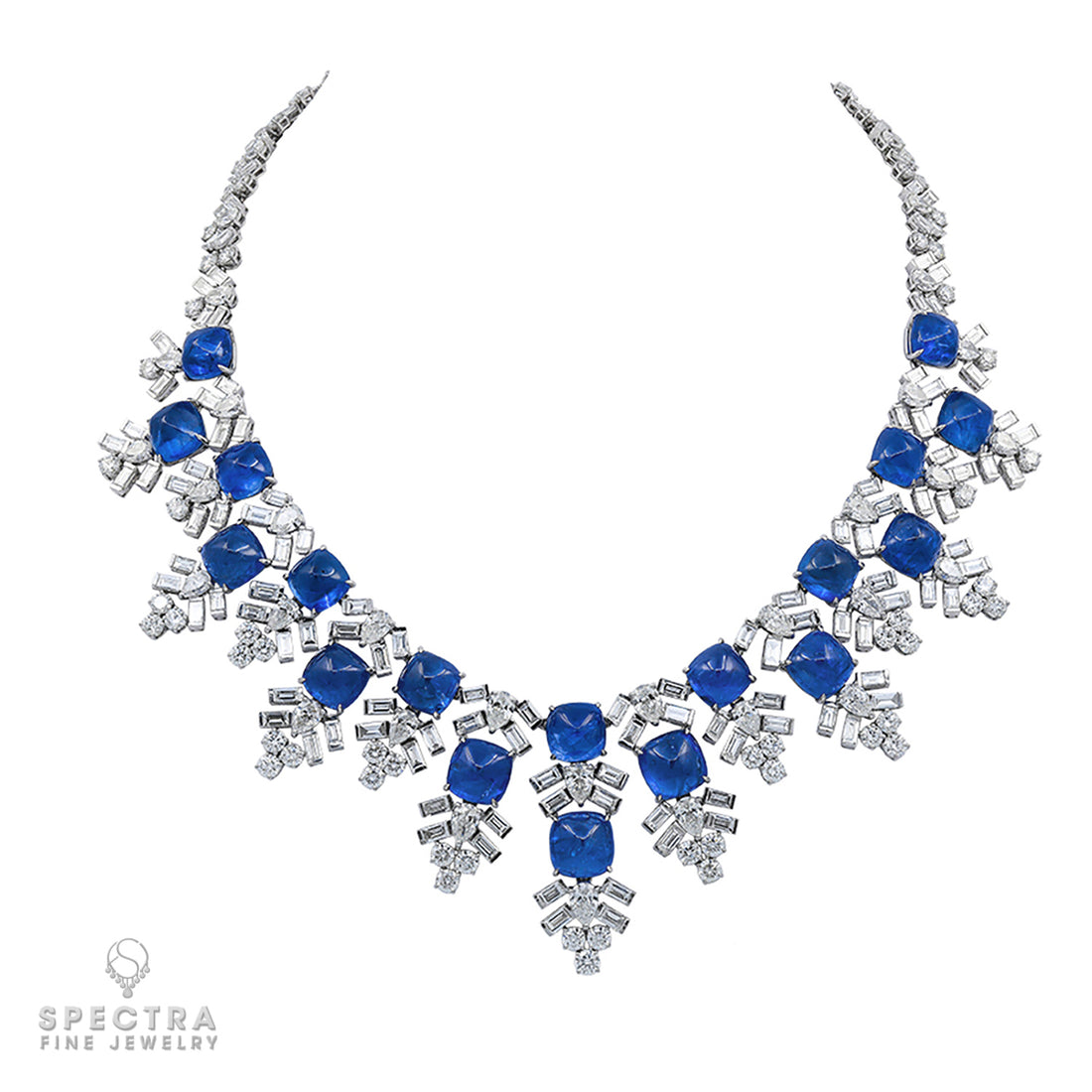 Exceptional pieces like this Harry Winston sapphire necklace set auction records—but understanding what those numbers really mean requires context
But auction results are more complicated than a single number. Understanding what auction prices actually represent—and what they don't—makes you a smarter buyer and seller.
The Anatomy of an Auction Price
When a piece "sells for $45,000" at auction, here's what that number means:
Hammer price: What the auctioneer's gavel came down at. This is typically the reported number.
Buyer's premium: What the winner actually pays—hammer price plus 20-28% premium. Your $45,000 hammer means $54,000-$57,600 out the door.
Seller's net: What the consignor receives—hammer price minus 10-25% seller's premium, minus any fees. That $45,000 hammer might net the seller $33,000-$40,000.
The gap matters: A piece that "sold for $45,000" cost the buyer $55,000+ and returned the seller $35,000. These are very different numbers.
Why Auction Prices Vary Wildly
The same piece can sell for dramatically different prices at different auctions. This isn't an accident—it's auction dynamics.
What drives prices up:
- Two (or more) determined bidders
- High-profile sale with lots of attention
- Strong provenance or celebrity connection
- Perfect timing (market peak, favorable news)
- Aggressive telephone or online bidding
What keeps prices down:
- Single interested buyer (no competition)
- Poor timing (summer doldrums, economic uncertainty)
- Limited marketing or exposure
- Buyer fatigue late in a long sale
- Condition concerns or missing documentation
The result: Identical pieces can sell for 50% different amounts depending on who showed up and what else was happening.
Unsold Lots: The Hidden Data
Auction houses publish what sold. They're less eager to discuss what didn't.
What "bought in" means: The piece didn't meet its reserve price and wasn't sold. This happens more than you'd think—20-30% of lots in some jewelry sales.
What it tells you:
- The estimate was optimistic
- Market demand for this piece type is softer
- Condition or authentication concerns may exist
- Sometimes it's just bad luck
Why it matters for valuation: If you're using auction results to justify a price, you should also consider the pieces that failed to sell at those levels.
Reading the Estimates
Pre-sale estimates are the auction house's predicted price range. They serve multiple purposes.
What estimates communicate:
- General market value range
- The auction house's assessment of quality
- Price positioning relative to other lots
What estimates actually are:
- Marketing tools (low estimates generate interest)
- Negotiated with consignors (who want high estimates)
- Educated guesses that often prove wrong
How results relate to estimates:
- Sold within estimate: Normal
- Sold above estimate: Strong demand, possibly underestimated
- Sold below estimate: Weak demand, possibly overestimated
- Bought in: No buyer at reserve level
Provenance Premium in Action
Auction results clearly demonstrate the provenance effect.
Example pattern:
- Standard vintage Cartier bracelet: $15,000-$20,000
- Same bracelet with documentation: $18,000-$25,000
- Same bracelet with famous owner provenance: $25,000-$50,000+
- Same bracelet with royal/celebrity provenance: Sky's the limit
What this means for valuation: When you see an exceptional auction result, check the provenance. The price might reflect the story more than the piece.
Single-Owner Sales vs. Mixed Sales
Auction houses hold two types of jewelry sales: mixed consignment sales and single-owner collection sales.
Single-owner sales:
- Generate more excitement
- Better marketing and presentation
- Often achieve premium prices
- Collectors want pieces from notable collections
Mixed sales:
- Standard auction environment
- Less individual attention per lot
- Prices more reflective of general market
- Better baseline for typical valuations
Using this information: If you're benchmarking against auction results, note whether records came from exceptional single-owner sales or routine mixed sales.
Online vs. Live Auction Results
The auction world has split between traditional live sales and online-only formats.
Live auction advantages:
- Room energy drives competitive bidding
- Major pieces get showcase treatment
- Telephone bidders often push prices
Online auction advantages:
- Broader geographic participation
- More accessible to casual buyers
- Lower fees (sometimes)
Price implications:
- Top-tier pieces still perform best in major live sales
- Middle-market pieces may do equally well online
- Online results are growing in relevance
Regional Variations
A piece might sell for different amounts in New York, London, Hong Kong, and Geneva.
Why regions matter:
- Different buyer bases with different preferences
- Currency fluctuations
- Regional design preferences
- Local economic conditions
- Tax implications
What to consider:
- Geneva and Hong Kong often set records for exceptional pieces
- American buyers drive certain American makers (Tiffany, David Webb)
- European buyers may pay premiums for European makers
- Asian markets favor certain styles and stones
Using Auction Data for Buying
If you're buying based on auction benchmarks:
Do:
- Look at multiple recent results, not just one
- Account for buyer's premium when comparing to dealer prices
- Consider condition differences between comps and your piece
- Factor in provenance differences
- Look at sold AND unsold results
Don't:
- Use one exceptional result as standard value
- Ignore buyer's premium
- Compare pieces from different eras or conditions
- Assume auction prices equal dealer retail
- Forget that identical pieces can sell for wildly different amounts
Understanding what makes comparable pieces truly comparable requires knowledge of marks and authentication. Our hallmarks guide and authentication guide help you evaluate pieces on equal footing.
Using Auction Data for Selling
If you're selling and using auction results to set expectations:
Do:
- Look at net-to-seller, not hammer price
- Factor in auction house fees and commissions
- Consider whether your piece would attract the same buyers
- Account for time cost (consignment to payment is months)
- Be realistic about reserve levels
Don't:
- Expect to net the hammer price
- Assume your piece will match the highest comparable
- Ignore the pieces that didn't sell
- Forget about the 4-6 month timeline
- Overlook condition and documentation differences
Building Your Price Database
Serious collectors and dealers track auction results systematically.
What to track:
- Date and auction house
- Lot description and condition notes
- Low estimate, high estimate
- Hammer price
- Sold/unsold
- Any notable provenance
Where to find data:
- Auction house websites (most maintain archives)
- Aggregators like Invaluable, LiveAuctioneers
- Price databases (subscription services exist)
- Your own records from sales you've followed
Why it matters: Over time, you develop intuition for what sells, what doesn't, and what ranges are realistic.
The Takeaway
Auction results are data points, not verdicts. They tell you what one piece sold for on one day to one buyer under specific conditions.
Used wisely, auction data helps you understand market trends and set realistic expectations. Used poorly, it leads to disappointment when your piece doesn't match that one exceptional result.
Be a student of auction results. Watch sales even when you're not buying. Notice patterns. Over time, you'll read these numbers with appropriate context—and make better decisions as a result.
Want Help Interpreting the Market?
We track auction results daily as part of our business. Happy to share what we're seeing in specific categories.
Independent educational resource. Not affiliated with any brands or auction houses mentioned.
Continue Reading
Get the Collector's Newsletter
Join collectors who get authentication tips, market insights, and new guide alerts. No spam, just practical knowledge.
Need Help?
Send photos of a piece you're evaluating. We'll give you a straight read—no pressure, no BS.
Contact Spectra Fine Jewelry →Ready to Browse Authenticated Pieces?
Every item at Spectra Fine Jewelry goes through our verification process before it hits the case. No guesswork. No surprises.