Why Serial Numbers Don't Prove Authenticity
Published: January 24, 2026
I need to address something that trips up collectors constantly: the belief that a serial number proves a piece is real.
It doesn't.
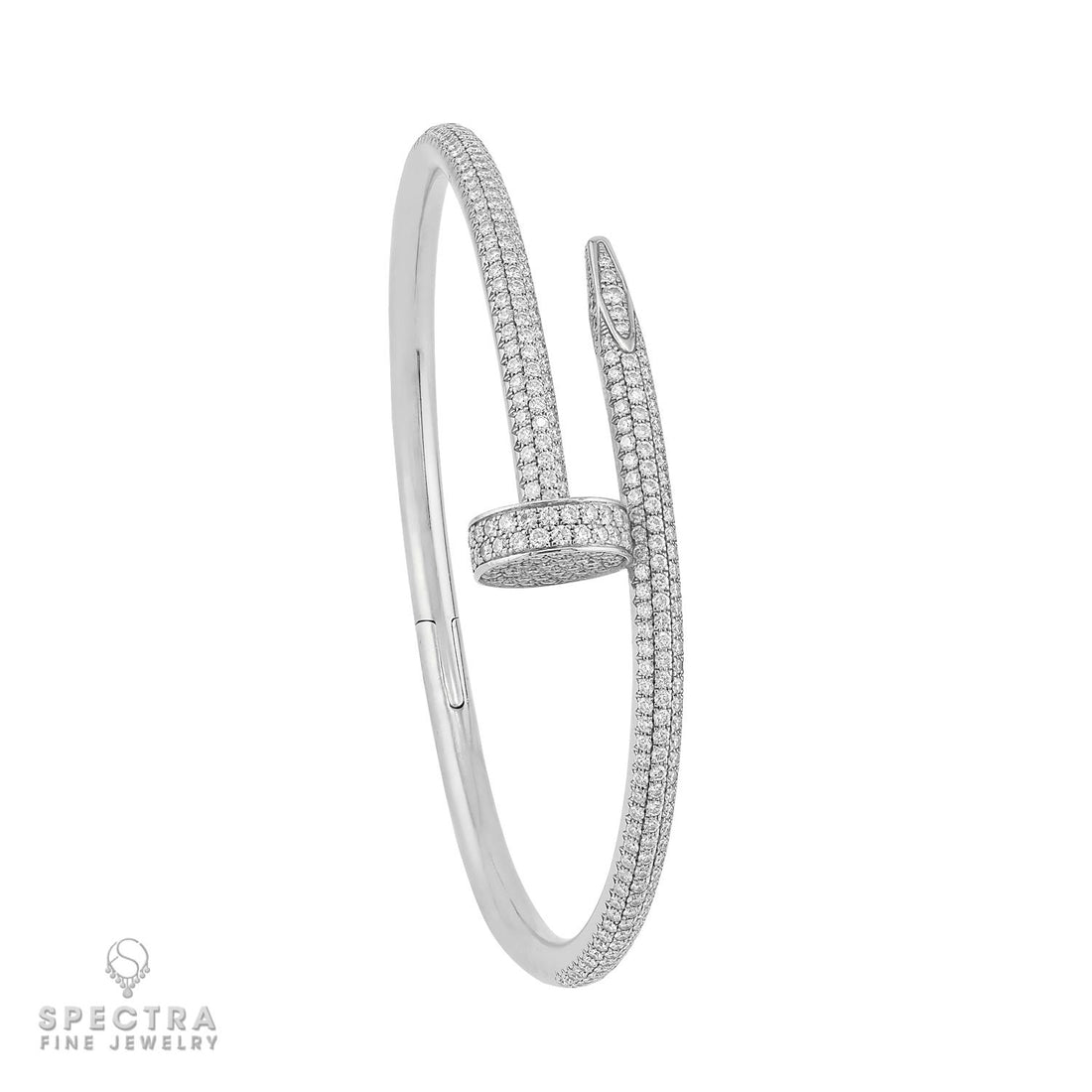 Signed Cartier Juste un Clou bracelet—while Cartier pieces carry serial numbers, these numbers alone don't prove authenticity
Serial numbers are useful. They're part of the authentication picture. But treating them as definitive proof is exactly what counterfeiters want you to do—because serial numbers are among the easiest things to fake.
Here's the reality.
The Serial Number Myth
The thinking goes like this:
- Real pieces have serial numbers
- This piece has a serial number
- Therefore, this piece is real
That logic has a fatal flaw: it assumes serial numbers can't be copied, invented, or added to fake pieces. They can. Easily.
What counterfeiters do:
- Copy serial numbers from authenticated pieces (same number, different piece)
- Invent plausible-looking serial numbers
- Study format patterns and generate numbers that look right
- Engrave serial numbers onto otherwise unmarked fakes
A serial number on a fake is just another fake mark. It's not magical verification.
What Serial Numbers Actually Tell You
A serial number provides:
Format consistency: Does this number follow the pattern the brand used during the piece's apparent era? That's useful information.
Placement logic: Is the serial where the brand typically puts it? On authentic pieces, serial number placement is consistent.
Engraving style: Does the engraving match the brand signature and other marks in depth, font, and technique?
One data point: The serial is evidence, not verdict. It should be consistent with everything else.
What Serial Numbers Can NOT Tell You
That this specific piece is the one with that number. Serial numbers can be duplicated. Multiple fakes can carry the same serial as a real piece.
That the brand will verify it. Many luxury brands don't verify serials for third parties, especially on estate pieces. Cartier, Van Cleef, and others may decline to confirm authenticity for anyone but the original purchaser.
That the piece hasn't been altered. A piece could have an authentic serial number but aftermarket modifications, replaced parts, or repairs that affect value and authenticity claims.
That you should pay more. The presence of a serial number doesn't make a piece more valuable than an equivalent piece without one (assuming both are authentic).
The Brand Verification Problem
"I'll just verify the serial with the brand."
Good luck. Here's the reality:
Cartier: Generally doesn't verify serials for non-customers or secondary market transactions. They may help if you bring a piece to a boutique, but cooperation varies.
Van Cleef & Arpels: Similar situation. They have records but don't routinely share them for estate pieces.
Tiffany: May verify pieces brought to a store. Hit or miss for online inquiries.
Bulgari: Inconsistent policies depending on region and piece type.
Rolex: Famously reluctant to verify for anyone but authorized service centers.
The brands protect their customer relationships and don't want to be the authentication police for every eBay listing. Fair enough. But it means you can't rely on brand verification as your backstop.
Serial Numbers on Fakes: How It Works
Scenario 1: Copied Serial A counterfeiter obtains a real serial number—from photos online, auction listings, previous sales—and engraves it on a fake. The number "exists" in the brand's system, but this piece isn't the one with that number.
Scenario 2: Invented Serial The counterfeiter studies serial number patterns (format, length, character types) and creates plausible numbers. Unless you have access to the brand's database (you don't), you can't verify the number was ever actually issued.
Scenario 3: Added Serial A piece without a serial (perhaps a fake or a legitimate piece that lost markings through wear/repair) gets a serial number engraved after the fact. The engraving may look new on an old piece—a red flag if you're paying attention.
What Actually Proves Authenticity
Serial numbers are one small part of authentication. What matters more:
Construction quality. How was this piece made? Does the metalwork, stone setting, clasp engineering, and overall finishing match what the brand produces?
Material verification. Does the metal test to the claimed purity? Are the stones what they're claimed to be?
Design accuracy. Did the brand actually make this design? In this era? With these features?
Wear consistency. Do the marks, the wear patterns, and the condition tell a consistent story about the piece's age?
Provenance. Where did this piece come from? Is there documentation?
Expert opinion. What does someone who handles these pieces regularly think?
A serial number should be consistent with all of the above. If everything else checks out, a matching serial number adds confidence. If everything else is wrong, a serial number doesn't save it.
For a complete framework on what to check, see our authentication guide and the hallmarks reference for understanding the official marks that should accompany serial numbers.
The "Verified Serial" Scam
Watch out for sellers who emphasize serial number verification as their primary authentication claim.
"Serial number verified authentic!" "Serial checks out!" "Confirmed serial number!"
These claims are often meaningless:
- Verified by whom?
- Against what database?
- Does "verified" just mean "the number exists" or "this is the piece with that number"?
A legitimate seller talks about construction, marks, provenance, and condition—not just serial numbers.
When Serials Are Useful
Serial numbers matter in specific contexts:
Insurance claims. If you need to prove you owned the specific piece that was stolen/lost, a documented serial number helps.
Warranty service. Brands may require serials for warranty or repair service.
Provenance tracking. Serials help establish a piece's history when combined with documentation.
Dating the piece. Serial formats changed over time; the format can help establish when a piece was made.
Consistency checking. A serial that doesn't match the era of other marks is a red flag.
For authentication purposes, they're supporting evidence—not conclusive proof.
How to Use Serial Numbers Properly
1. Don't rely on them alone. A serial is one data point among many.
2. Check format consistency. Does the number format match known patterns for the brand and era?
3. Check engraving quality. Is the engraving consistent with other marks on the piece?
4. Check placement. Is the serial where the brand typically puts it?
5. Be suspicious if it's the only mark. Authentic pieces have multiple marks—brand signature, metal marks, often hallmarks. A serial alone is odd.
6. Research the specific piece. If you can find the same serial on multiple pieces for sale, that's a problem.
The Bottom Line
Serial numbers are useful but not definitive. They can be:
- Copied from real pieces
- Invented convincingly
- Added to fakes after the fact
- Legitimate but on an altered piece
Authentication requires evaluating the whole picture: construction, materials, design, marks (including serial), wear patterns, and provenance. No single factor—including serial numbers—provides proof on its own.
When someone tells you "the serial proves it's real," they either don't understand authentication or they're hoping you don't.
Need Actual Authentication?
We evaluate pieces based on the full picture—not just serial numbers.
Contact Spectra for Expert Evaluation →
Browse Authenticated Signed Jewelry →
Independent educational resource. Not affiliated with any brands mentioned.
Continue Reading
Get the Collector's Newsletter
Join collectors who get authentication tips, market insights, and new guide alerts. No spam, just practical knowledge.
Need Help?
Send photos of a piece you're evaluating. We'll give you a straight read—no pressure, no BS.
Contact Spectra Fine Jewelry →Ready to Browse Authenticated Pieces?
Every item at Spectra Fine Jewelry goes through our verification process before it hits the case. No guesswork. No surprises.