Spinel: The Most Undervalued Gem on the Market Right Now
Published: June 13, 2026
The short answer: Spinel delivers ruby-like color at one-tenth the price and has been riding shotgun with the world's most famous "rubies" for centuries — including the British Crown Jewels. With Mogok production near zero and Mahenge output slowing, the math is shifting fast.
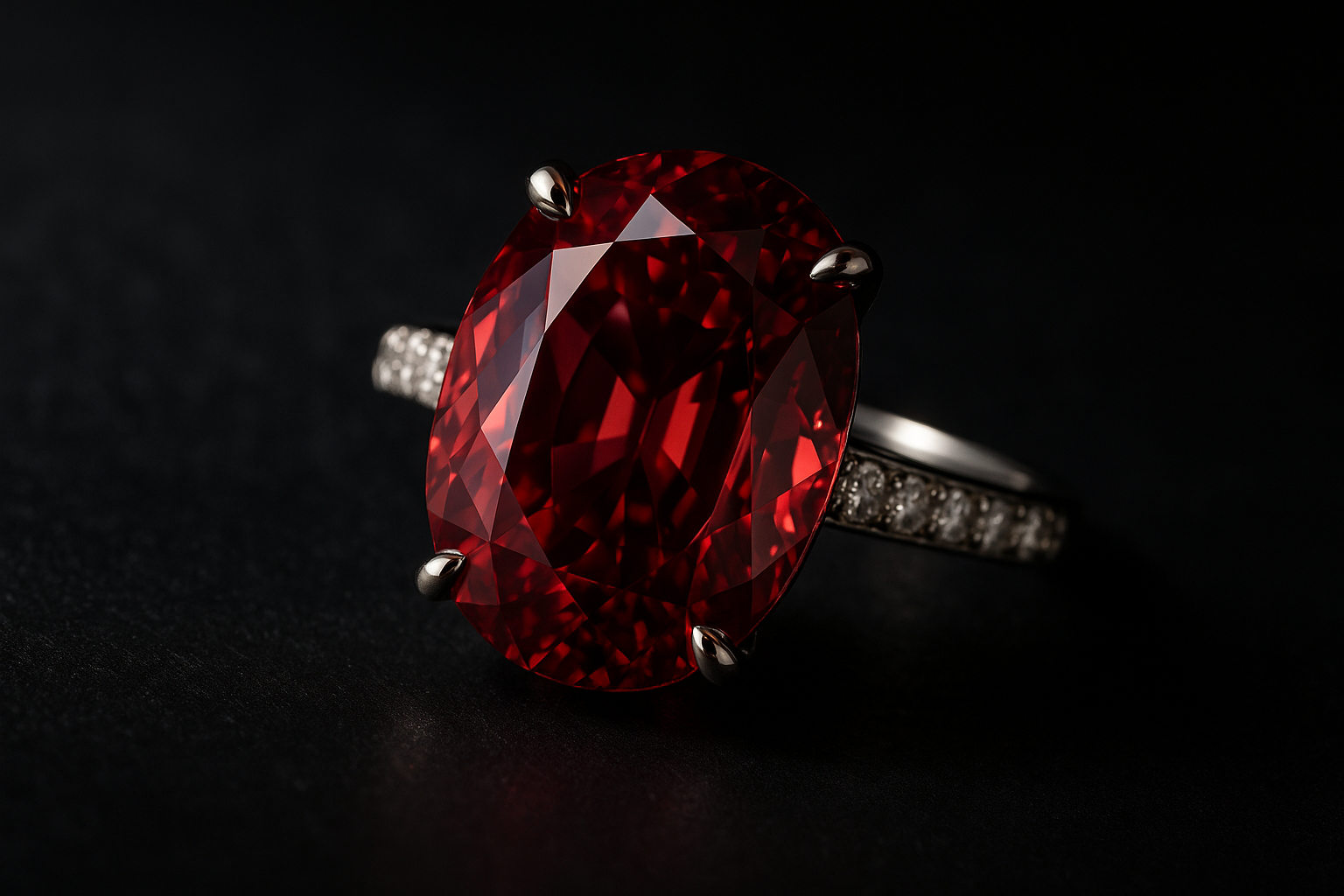
I bought a 7-carat Mahenge hot-pink spinel in Bangkok three years ago that stopped a room. Neon pink, eye-clean, perfectly proportioned cushion cut. I paid $4,800 a carat. A dealer from Geneva offered me $11,000 a carat six months later. I turned him down. Find me another gem where value doubles in under a year on the secondary market — with zero hype driving it. You can't.
Spinel is the gem that nobody talks about loud enough and everybody who knows quietly buys. I've handled stones from Mogok, Mahenge, Luc Yen, and the Pamirs. Every single one of them punched above what I paid relative to what sapphires and rubies of equivalent visual quality were trading at that same week.
The supply story is worse than most dealers admit. Mogok spinel production has been a trickle for years. The Mahenge deposit in Tanzania — which produces the electric neon pinks and hot reds that made spinel famous in the modern market — is maturing. The easy material is gone. What's coming out now is smaller, darker, or included in ways that can't be cut around. Luc Yen in Vietnam still produces, but premium colors over 5 carats are genuinely rare.
Here's what actually matters if you're buying.
Is Red Spinel Better Than Ruby?
No — but that's the wrong question. The right question is whether you'd rather have a 5-carat Mogok red spinel or a 5-carat Burmese ruby of the same visual quality. The ruby costs $150,000–$300,000 a carat at that level, unheated. The spinel costs $8,000–$15,000 a carat. They sit next to each other in the same metamorphic marble from the same valley in Myanmar — Mogok produces both.
A top red spinel glows. It has a single refractive index, so there's none of the slight haziness or extinction you sometimes get in ruby. The color is pure — no modifying brown, no dead zones under mixed lighting. I've put a 4-carat Mogok red spinel next to a 3-carat unheated Burmese ruby at the same dinner table. Three out of four people picked the spinel. They just liked the color better.
What you lose with spinel is the name. Ruby has been the king of colored stones for a thousand years. If you're buying for status and resale pedigree, buy the ruby. If you're buying for the stone itself — and you understand that the price gap between these two materials is not justified by rarity, beauty, or durability — spinel is the sharper trade.
The labs back this up. SSEF and Gübelin reports on spinel are straightforward: origin determination and treatment disclosure. Natural spinel is almost never treated — no heat, no oil, no resin. When I see a Mogok spinel with a Gübelin or SSEF origin report, I know exactly what I'm holding. Same for Mahenge material when an AGL Prestige report confirms Tanzania. These are clean stones with clean papers.
What's the Price Per Carat for Mahenge Spinel?
I track this market weekly. Here's where quality Mahenge spinel trades right now, mid-2026:
Neon pink to hot pink, 3–5 carats, eye-clean: $5,000–$12,000/carat. A 3-carat stone at $15,000 total is a genuine entry point for world-class color.
Neon pink to hot pink, 5–10 carats, eye-clean: $12,000–$25,000/carat. This is where the serious stones live. I've passed on exactly two in this bracket in five years and regretted both.
Vivid red, 3–5 carats, eye-clean: $8,000–$18,000/carat. A true red spinel over 3 carats with no brown or purple modifier is rarer than most Burmese rubies of equivalent size.
Vivid red, 5–10 carats, eye-clean: $18,000–$35,000/carat. At this level you're competing with serious collectors — the stones move privately, not at auction.
Cobalt blue spinel (Luc Yen, Vietnam), 2–5 carats: $20,000–$60,000/carat. The cobalt blues from Luc Yen are a separate conversation entirely. Different supply dynamics, different buyer pool. Small, expensive, and genuinely rare.
Compare these numbers against unheated Burmese ruby at $50,000–$300,000/carat and unheated Kashmir sapphire at $40,000–$150,000/carat. The spinel is delivering 90% of the visual impact for 10% of the price. That ratio cannot hold forever.
Why Is Spinel So Undervalued?
Three reasons, and only one of them is rational.
First, history. Before 1783, nobody distinguished spinel from ruby. Every royal treasury in Europe has "rubies" that are actually spinel — the Black Prince's Ruby in the British Imperial State Crown is a 170-carat red spinel, not a ruby. The Timur Ruby, same thing. Once science separated the two, spinel became the historical footnote and ruby got the crown. The market still treats spinel like ruby's less-important cousin, despite the fact that they form in the same geological environments and spinel is actually rarer in fine qualities above 10 carats.
Second, the trade doesn't push it. There's no De Beers for spinel. No marketing machine. No "Spinel Is Forever" campaign. The colored stone trade is fragmented and conservative. Most dealers stock what moves easily — sapphire, ruby, emerald. Spinel requires explanation. Most jewelers don't want to explain.
Third — and this is the one that matters — supply has been adequate until recently, keeping prices from spiking. That's changing. The Mahenge deposit is not infinite. Mogok has been politically and geologically difficult for two decades. New finds in Greenland and Madagascar exist, but the colors don't match the top-tier material from the classic localities.
Here's what I'd do if I were buying spinel right now:
- Target 3–7 carats. This is the sweet spot — large enough to feel important, small enough that stones still exist and prices haven't gone vertical.
- Demand origin documentation. SSEF or Gübelin origin report. For Mahenge material, an AGL Prestige report with origin determination. Do not accept a generic lab report with no origin call.
- Prioritize neon pink and vivid red. These are the Mahenge and Mogok colors that drive the market. Pastel pinks, purples, and grays are beautiful but don't have the same resale trajectory.
- Accept that fine spinel moves privately. You won't find the best stones at auction. They trade dealer-to-dealer and dealer-to-collector. Build relationships.
- Buy the best single stone your budget allows. Don't spread $30,000 across three 3-carat stones. Buy one exceptional 5-carat stone with perfect color and clarity. That's the one that doubles.
I've been doing this since 2009. I've watched Kashmir sapphire go vertical. I've watched unheated Burmese ruby leave the atmosphere. I've watched Argyle pink diamonds go from interesting to unobtainable in five years. Spinel is the same story at an earlier chapter. The stones are real. The supply is tightening. The labs are consistent. The price gap is irrational.
The window isn't closing tomorrow. But it's not staying open forever either.
Frequently Asked Questions
How do I know if a red stone is spinel or ruby?
A microscope tells you in seconds. Spinel is singly refractive — it won't show double refraction under a polariscope, which ruby always will. Spinel also forms in octahedral crystals, not the hexagonal prisms of corundum. In practice, a reputable lab report — SSEF, Gübelin, or AGL — settles it definitively. Do not rely on a jeweler's loupe. I've seen dealers with 30 years of experience miscall this. If the stone has any size or value, lab it. There is no excuse not to, and the cost of a report is trivial compared to the cost of being wrong.
Is spinel durable enough for daily wear?
Spinel ranks 8 on the Mohs scale — harder than emerald, aquamarine, and tourmaline. It has no cleavage, which means it won't split along internal planes the way diamond and topaz can. I've mounted spinel in engagement rings for clients who wanted something different, and not one has come back with a durability issue. It's genuinely tough. The only stone meaningfully harder is sapphire/ruby at 9, and diamond at 10. For an engagement ring or a pendant you never take off, spinel is an excellent choice.
Which origin produces the best spinel?
Mogok, Myanmar — for vivid reds with the slightest touch of pink that glows under any light. Mahenge, Tanzania — for electric neon pinks and hot pinks that look like they're plugged into a wall socket. Luc Yen, Vietnam — for cobalt blues that rival the finest sapphires but in sizes rarely above 3 carats. I prioritize the stone over the origin, but origin drives price and collector demand. A 5-carat Mogok red with an SSEF origin report is a trophy. A 5-carat Mahenge neon pink with AGL papers is a statement. Buy the origin that matches the color you love — and make sure the lab report confirms it.
Written by Lawrence Paul
Lawrence Paul is a fine jewelry dealer based in New York's Diamond District with over 20 years of experience buying and selling signed vintage and estate jewelry. He is President of Spectra Fine Jewelry at 44 West 47th Street, Suite GF1, New York, NY 10036.
Continue Reading
Get the Collector's Newsletter
Join collectors who get authentication tips, market insights, and new guide alerts. No spam, just practical knowledge.
Need Help?
Send photos of a piece you're evaluating. We'll give you a straight read—no pressure, no BS.
Contact Spectra Fine Jewelry →Ready to Browse Authenticated Pieces?
Every item at Spectra Fine Jewelry goes through our verification process before it hits the case. No guesswork. No surprises.