Spotting Jewelry Repairs and Alterations (What Sellers Don't Tell You)
Published: February 1, 2026
Every piece of vintage jewelry has lived a life. That life often includes repairs, resizing, stone replacements, and sometimes more extensive alterations.
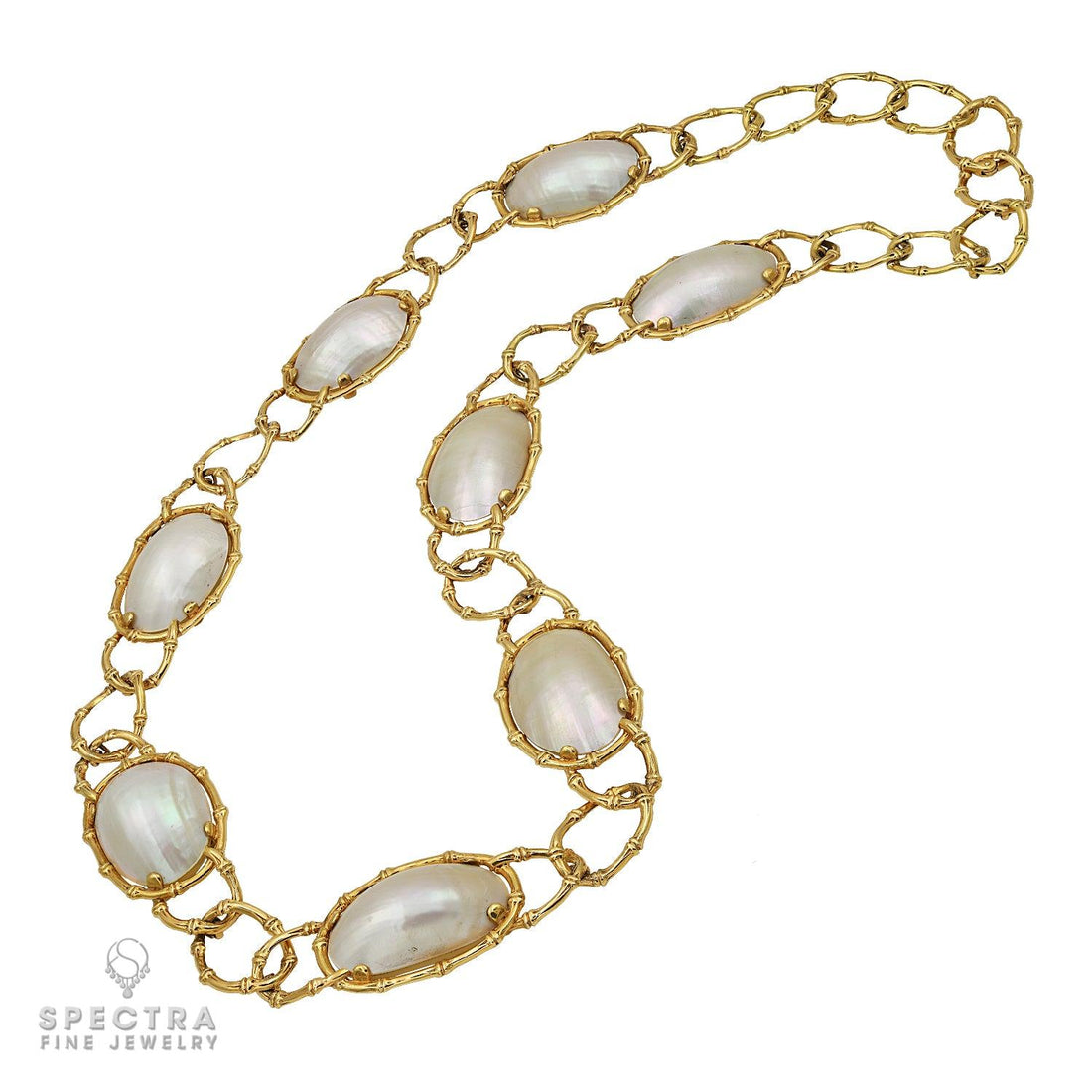 Vintage jewelry like this Van Cleef & Arpels pearl necklace has lived decades—knowing how to spot repairs and alterations protects your investment
These aren't necessarily dealbreakers. But undisclosed modifications are. Knowing how to spot them protects you from paying authentic prices for significantly altered pieces.
Why Repairs Matter
A ring that was sized up or down is still the same ring. A brooch converted from a pendant is a different piece than what originally left the workshop.
The spectrum:
- Minor repairs (stone tightening, clasp replacement) — Expected, usually fine
- Moderate repairs (sizing, prong rebuilding) — Normal, should be disclosed
- Major alterations (conversion, marriage of parts) — Significantly affects value and authenticity
- Restoration (replacing major components) — May or may not be acceptable depending on extent
The problem: Sellers don't always disclose repairs. Sometimes they don't know. Sometimes they hope you won't notice.
The Telltale Signs of Resizing
Rings get resized constantly. Here's how to spot it:
Sizing up (making larger):
- Look for a section of shank that differs in finish or color
- The interior may show a solder line or visible seam
- Metal texture may differ where material was added
- Engravings or hallmarks may be stretched or distorted
Sizing down (making smaller):
- Similar solder lines but from removing material
- Stamps may be compressed or partially missing
- The shank may feel thicker at one point
When resizing is problematic:
- Extreme resizing (more than 2-3 sizes) can compromise structural integrity
- Resizing that removed hallmarks or signatures
- Visible, poorly executed work
- Resizing of pieces not designed to be sized (eternity bands, tension settings)
What to do: Minor, professional resizing is normal. Poor work or undisclosed extreme resizing affects value. Before buying a vintage ring, know your size—our ring size guide helps you measure accurately so you can assess how much resizing a piece would need.
Solder Lines and Joint Repairs
Solder is the metal used to join components. Good solder work is nearly invisible. Bad solder work is obvious.
What professional solder looks like:
- Same color as surrounding metal
- Smooth, flush joints
- No gaps, bulges, or overflow
- Difficult to spot under normal examination
What repair solder looks like:
- Different color than base metal (often more yellow on white gold)
- Visible lumps or overflow
- Rough texture around joints
- Black or discolored areas (flux residue)
Where to look:
- Where the shank meets the setting on rings
- Chain links (especially clasp area)
- Prong bases
- Pin stems on brooches
- Where halves of bracelets connect
Replaced Stones
Stones get lost, damaged, and replaced. Original stones matter—especially for signed pieces.
Signs of stone replacement:
- One stone that looks different (color, clarity, cut style) from others in the same piece
- Prongs that look newer or more pristine than surrounding metalwork
- A stone that doesn't quite fit its setting (too loose, too tight)
- Different cutting style than period-appropriate (modern brilliant in an Edwardian piece)
- Fluorescence differences under UV light
Why it matters:
- Replaced center stones significantly impact value
- Replaced accent stones matter less but should still be disclosed
- Period-correct replacements are less problematic than obviously modern substitutions
Clasp Replacements and Additions
Clasps wear out. They get replaced. This is normal—but tells you something.
What to examine:
- Does the clasp style match the piece's era?
- Is the metal quality consistent?
- Does the clasp bear marks consistent with the piece?
- Is there visible repair work where the clasp attaches?
Common scenarios:
- Safety chain added to a bracelet (usually acceptable)
- Spring ring replaced on a chain (normal maintenance)
- Box clasp mechanism replaced (check if original design maintained)
- Complete clasp replacement with different style (affects value)
The concern: A modern clasp on an allegedly antique piece isn't inherently wrong—clasps break. But it's one more thing to evaluate.
Converted Pieces
Jewelry gets converted from one type to another. Brooches become pendants. Earrings become rings. Necklaces get shortened.
How to spot conversions:
- Mounting marks that don't match current configuration (holes where a pin mechanism was, solder marks from removed bails)
- Asymmetrical design that makes more sense as a different piece type
- Added components (new bails, pin stems, posts) that differ in metal quality or finishing
- Proportions that seem "off" for the piece type
What conversions mean:
- The piece has been significantly altered from original design
- Original maker didn't create it in current form
- Value is affected—sometimes drastically
- Authenticity claims need reconsideration
"Married" Pieces
Sometimes components from different pieces get combined into one. The jewelry world calls these "married" pieces.
What to look for:
- Inconsistent construction quality between sections
- Different metal colors or fineness
- Hallmarks that don't match between components
- Style elements from different periods
- Visible joining work between sections
Common marriages:
- Victorian pendant with Edwardian chain
- Ring with period mounting but later center stone
- Earrings made from two different singles
- Brooch with mismatched components
Why it matters: Married pieces aren't fake—they exist, they may be beautiful—but they're not what they might appear to be. They're composite pieces, and should be priced as such.
The Under-10x Rule
Professional authentication uses 10x magnification. What shows under a loupe that's invisible to the naked eye is generally acceptable.
What's visible without magnification is a problem.
Apply this to:
- Solder lines
- Metal color variations
- Setting quality
- Repair evidence
If you can see the problem across a table, it affects value. If it only appears under your loupe, it's part of the piece's normal history.
Evaluating Restoration Quality
Some pieces have been restored. Restoration can be excellent or terrible.
Signs of quality restoration:
- Work matches original construction techniques
- Period-appropriate materials used
- Invisible or nearly invisible under normal examination
- Documented and disclosed
Signs of poor restoration:
- Obviously modern techniques or materials
- Visible under normal viewing conditions
- Metal quality doesn't match
- Changes original design intent
The judgment call: A well-restored piece is better than a damaged original. But restoration affects value, and should be reflected in price.
Questions to Ask Sellers
Always ask:
- Has this piece been resized?
- Are all stones original?
- Has the clasp been replaced?
- Has this piece been converted from another form?
- Are there any repairs you know of?
- Is there any restoration I should be aware of?
Honest sellers welcome these questions. Evasive answers are themselves an answer.
The Inspection Protocol
When examining any piece:
- Overall impression: Does anything look "off" at first glance?
- Metal consistency: Same color and quality throughout?
- Construction marks: Solder lines, repairs, alterations?
- Stone examination: Do they all match? Do they fit properly?
- Functional parts: Clasps, pins, posts—original or replaced?
- Stamps and signatures: Complete, consistent with claimed origin?
Document what you find. Take photos under magnification. This matters for insurance, resale, and peace of mind.
When Repairs Shouldn't Stop You
Not all repairs are problems:
Acceptable:
- Minor sizing by a professional
- Cleaned and polished
- Prongs tightened
- Normal clasp maintenance
- Professional restoration disclosed and appropriate to piece value
Think carefully:
- Replaced accent stones
- Major sizing
- Visible but well-executed repairs
- Period-appropriate conversions
Proceed with caution or walk away:
- Undisclosed major alterations
- Replaced center stones at original-stone prices
- Poor quality work
- Married pieces sold as original
- Anything that changes fundamental character
The Takeaway
Every vintage piece tells a story. Part of that story is how it's survived to today. Repairs and alterations are chapters in that story.
What matters is knowing the full story before you buy—and paying a price that reflects reality, not fantasy.
Need a Second Opinion?
Send photos of what you're examining. We'll help you understand what you're looking at and whether concerns are warranted.
Independent educational resource. Not affiliated with any brands mentioned.
Continue Reading
Get the Collector's Newsletter
Join collectors who get authentication tips, market insights, and new guide alerts. No spam, just practical knowledge.
Need Help?
Send photos of a piece you're evaluating. We'll give you a straight read—no pressure, no BS.
Contact Spectra Fine Jewelry →Ready to Browse Authenticated Pieces?
Every item at Spectra Fine Jewelry goes through our verification process before it hits the case. No guesswork. No surprises.