Type IIa Diamonds: What the Classification Means and Why Collectors Care
Published: June 17, 2026
The short answer: Type IIa diamonds contain no measurable nitrogen impurities — they're the purest form of carbon that exists in nature. This chemical purity often produces exceptional optical transparency, and when combined with fancy color (especially pink), it can drive prices to seven figures per carat at auction.
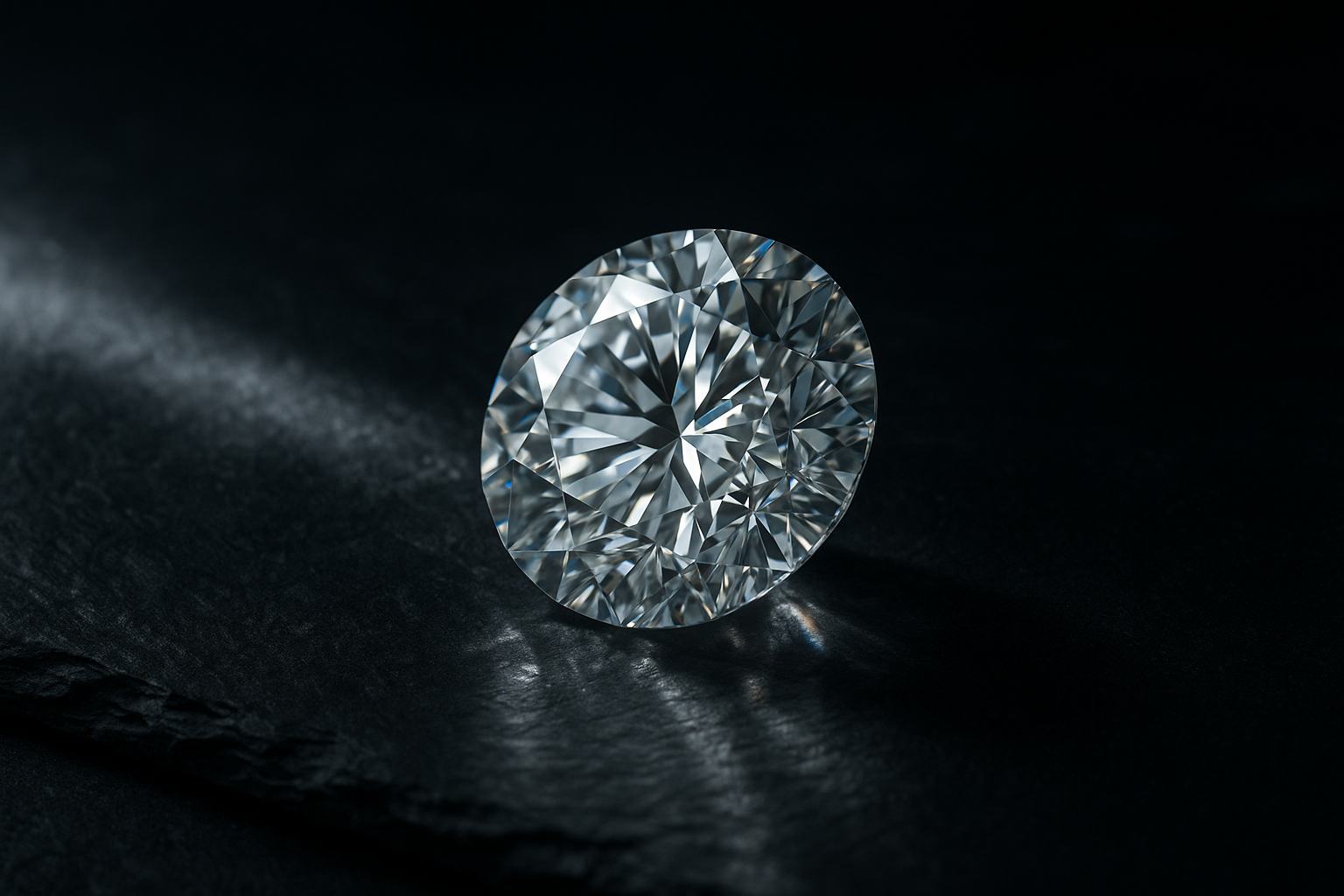
I've sold single Type IIa pink diamonds for more than most people spend on a house. Not because I'm a great salesman — because the stones demand it. There's an intensity to a Type IIa pink that other diamonds can't match. The color doesn't just sit on the surface. It comes from somewhere deeper, and the market knows the difference.
Most jewelers will tell you a diamond is a diamond. They're wrong. The Type classification system — Type Ia, Type IIa, Type IIb — isn't academic trivia. It's the fundamental chemistry of the stone, and it directly controls what you see when you hold it up to the light. If you're spending serious money, you need to know what Type you're buying.
What Makes a Diamond Type IIa?
Diamonds are carbon. But almost every natural diamond contains trace amounts of nitrogen — that's the impurity that gives most white diamonds their faint yellow or brown undertone. The GIA grades color from D to Z precisely because most diamonds have some nitrogen tint.
Type IIa diamonds contain no measurable nitrogen. Zero. They're chemically the purest diamonds in existence — 99.99% carbon, give or take. Under a Fourier-transform infrared spectrometer (the machine labs use to classify diamond Type), a Type IIa stone shows virtually no absorption in the nitrogen region of the spectrum.
Only about 1-2% of all natural diamonds are Type IIa. Most of the diamonds coming out of the ground are Type Ia — nitrogen present in aggregated clusters. That's what makes a Type IIa different. Not marketing. Chemistry.
The physical consequence of that purity: Type IIa diamonds often show exceptional optical transparency. Light moves through them with less interference. They can appear whiter, brighter, more "alive" than stones with the same color grade but higher nitrogen content. A D-color Type IIa and a D-color Type Ia both get the same letter from GIA. The Type IIa will still look different. Brighter. Colder. Harder to describe than to see in person.
Why Do Collectors Pay a Premium for Type IIa?
The premium exists because rarity collides with visual performance. A D-IF round diamond is rare. A D-IF Type IIa round diamond is exponentially rarer — and the market prices it accordingly.
The Golconda diamonds of India, mined centuries ago from alluvial deposits near Hyderabad, were almost exclusively Type IIa. The Koh-i-Noor, the Regent, the Hope — Type IIa. When a diamond comes to auction with a GIA report confirming Type IIa status and a Golconda provenance narrative, the prices don't just double. They can triple or quadruple against equivalent non-Type-IIa stones.
I've watched this play out at Christie's Geneva and Sotheby's Magnificent Jewels sales. A 50-carat D-flawless diamond might bring $2.3 million. The same weight and grade with Type IIa on the GIA report? It'll hit $4 million and the bidding won't have slowed down. The buyers — mostly from the Middle East and Asia — know exactly what sets these stones apart.
For white diamonds, the premium is a transparency story. For pink diamonds, it's something else entirely.
Are All Type IIa Pink Diamonds More Valuable?
Not automatically — but the ones that matter usually are.
Here's what most people don't know: the pink color in Type IIa diamonds comes from plastic deformation — the carbon lattice was literally twisted and sheared under immense pressure deep in the earth. That structural distortion selectively absorbs light in the green part of the spectrum, and what's left for your eye is pink.
Type Ia diamonds can also be pink, but the color mechanism is different (nitrogen-vacancy centers). The Type IIa pinks are the ones that go to Christie's and Sotheby's and hit $2.5 million per carat. The Argyle mine in Australia — closed since November 2020 — produced mostly Type Ia pinks. But the truly electric, neon pinks from Argyle often tested as Type IIa, and those are the stones that now trade at premiums that didn't exist five years ago.
The GIA report will tell you two things on any pink diamond: the color origin (natural) and the diamond Type. If it says "Type IIa" and the color grade is Fancy Vivid Pink, you're looking at a stone with serious collector demand. The price per carat gap between Type IIa and Type Ia pinks widens as saturation increases — at Fancy Vivid, it's a chasm.
What Should a Buyer Actually Look For?
If you're buying a Type IIa diamond, here's what matters:
-
The GIA report must explicitly state Type IIa. No verbal claims. No "my lab says." If the GIA report doesn't list diamond Type in the comments section, ask for a recheck — it's worth the fee.
-
For white diamonds, compare viewing conditions. A D-color Type IIa and a D-color Type Ia won't look identical side-by-side. The Type IIa will have a crisper, more transparent appearance. Make that comparison before you pay the premium.
-
For pink diamonds, Type IIa plus Fancy Vivid is the combination that commands the strongest premiums. Fancy Light and Fancy pinks also benefit, but the multiplier really kicks in above Fancy Intense.
-
Provenance matters. Type IIa diamonds from historic sources — Golconda, specific Indian mines — carry an additional premium beyond the Type classification alone. Documentation that traces a direct line from those sources is gold.
-
Watch for phosphorescence in Type IIb stones. Some diamonds classified as Type IIb (boron-containing, often blue) get mistakenly lumped into Type IIa discussions. They're not the same thing and shouldn't be priced the same.
You can buy a diamond without knowing its Type. Most people do. But when you're spending six figures or more on a white diamond or a pink, the Type classification is part of what you're actually paying for — whether you know it or not. Better to know.
Frequently Asked Questions
What does Type IIa mean on a GIA diamond report?
Type IIa is a chemical classification that means the diamond contains no measurable nitrogen impurities. It appears in the comments section of the GIA report and tells you the stone is composed of essentially pure carbon. About 1-2% of natural diamonds qualify. The classification is determined by FTIR spectroscopy, not by visual inspection, and it's one of several Type categories (Ia, IIa, IIb) that describe a diamond's atomic impurity profile. If the report doesn't mention Type, the diamond is almost certainly Type Ia — the most common category.
How much more is a Type IIa diamond worth compared to a regular diamond?
There's no fixed multiplier — the premium depends on color, clarity, and carat weight. For D-Flawless white diamonds above 10 carats, Type IIa status typically adds 30-50% at auction and can double the price when combined with Golconda provenance. For Fancy Vivid pink diamonds, the Type IIa premium can exceed 100% against equivalent Type Ia pinks. The gap widens as saturation increases. For commercial-grade diamonds under 3 carats, the premium shrinks considerably — most buyers at that level aren't paying for chemistry.
Are all famous diamonds Type IIa?
Most of them, yes. The Cullinan diamonds (including the Great Star of Africa in the British Crown Jewels), the Koh-i-Noor, the Regent, the Archduke Joseph, and the Winston Pink Legacy are all Type IIa. The Hope Diamond is Type IIb — chemically pure but with boron, which creates the blue color and the distinctive orange-red phosphorescence. The historical pattern isn't coincidence: the great diamonds survived centuries of cutting, recutting, trading, and warring precisely because their chemical purity made them exceptional stones worth fighting over. Type IIa wasn't called Type IIa in 1650. But the people who owned these diamonds knew exactly what they had.
Written by Lawrence Paul
Lawrence Paul is a fine jewelry dealer based in New York's Diamond District with over 20 years of experience buying and selling signed vintage and estate jewelry. He is President of Spectra Fine Jewelry at 44 West 47th Street, Suite GF1, New York, NY 10036.
Continue Reading
Get the Collector's Newsletter
Join collectors who get authentication tips, market insights, and new guide alerts. No spam, just practical knowledge.
Need Help?
Send photos of a piece you're evaluating. We'll give you a straight read—no pressure, no BS.
Contact Spectra Fine Jewelry →Ready to Browse Authenticated Pieces?
Every item at Spectra Fine Jewelry goes through our verification process before it hits the case. No guesswork. No surprises.