Van Cleef Alhambra: Real vs Fake — What Dealers Actually Check
Published: January 26, 2026
The Alhambra collection is Van Cleef & Arpels' most iconic design—and by far its most counterfeited. I see fake Alhambra pieces weekly. Some are obvious knockoffs. Others are sophisticated enough to fool casual observers.
After handling hundreds of these pieces, I can tell you exactly what separates authentic Alhambra from the flood of fakes. This is what we actually check.
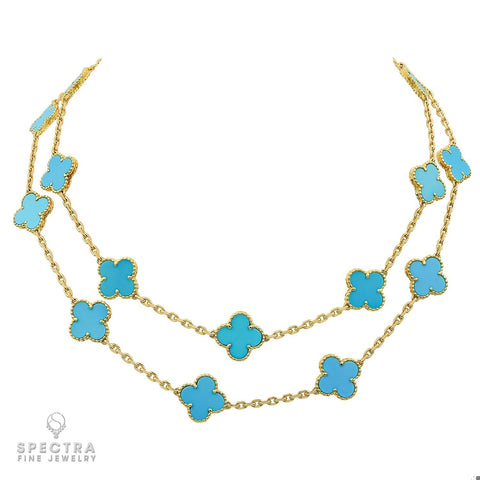 Authentic vintage Van Cleef & Arpels 20-motif turquoise Alhambra necklace showing the signature quatrefoil design
Why Alhambra Gets Counterfeited So Much
A few factors make Alhambra the perfect target:
Instantly recognizable. The quatrefoil motif is iconic. Everyone knows what it's supposed to look like—or thinks they do.
High resale value. A genuine Alhambra pendant retails around $3,000-$4,000. Vintage pieces command premiums. That's a lot of margin for counterfeiters.
Deceptively simple design. Four clovers, beaded edges, a stone in the middle. Looks straightforward. It's not.
Consistent demand. Alhambra never goes out of style. There's always a buyer looking for a deal.
The Beading Test (Most Fakes Fail Here)
The perlée beading around the edge of each motif is the single best authentication marker. VCA's beading is exceptional—and expensive to replicate properly.
What authentic VCA beading looks like:
- Perfectly uniform bead size (measure them—they should be identical)
- Even spacing between beads (no gaps or crowding)
- Smooth, rounded profile (not flattened or irregular)
- Clean edge definition (beads meet the motif cleanly)
- Consistent texture all the way around
What fake beading looks like:
- Irregular bead sizes (some larger, some smaller)
- Uneven spacing (wider gaps in some areas)
- Rough texture or visible tooling marks
- Beads that look "melted" together
- Edges that aren't crisp
This is where most counterfeits fail, even expensive ones. The beading on authentic VCA requires specialized equipment and technique. Shortcuts show.
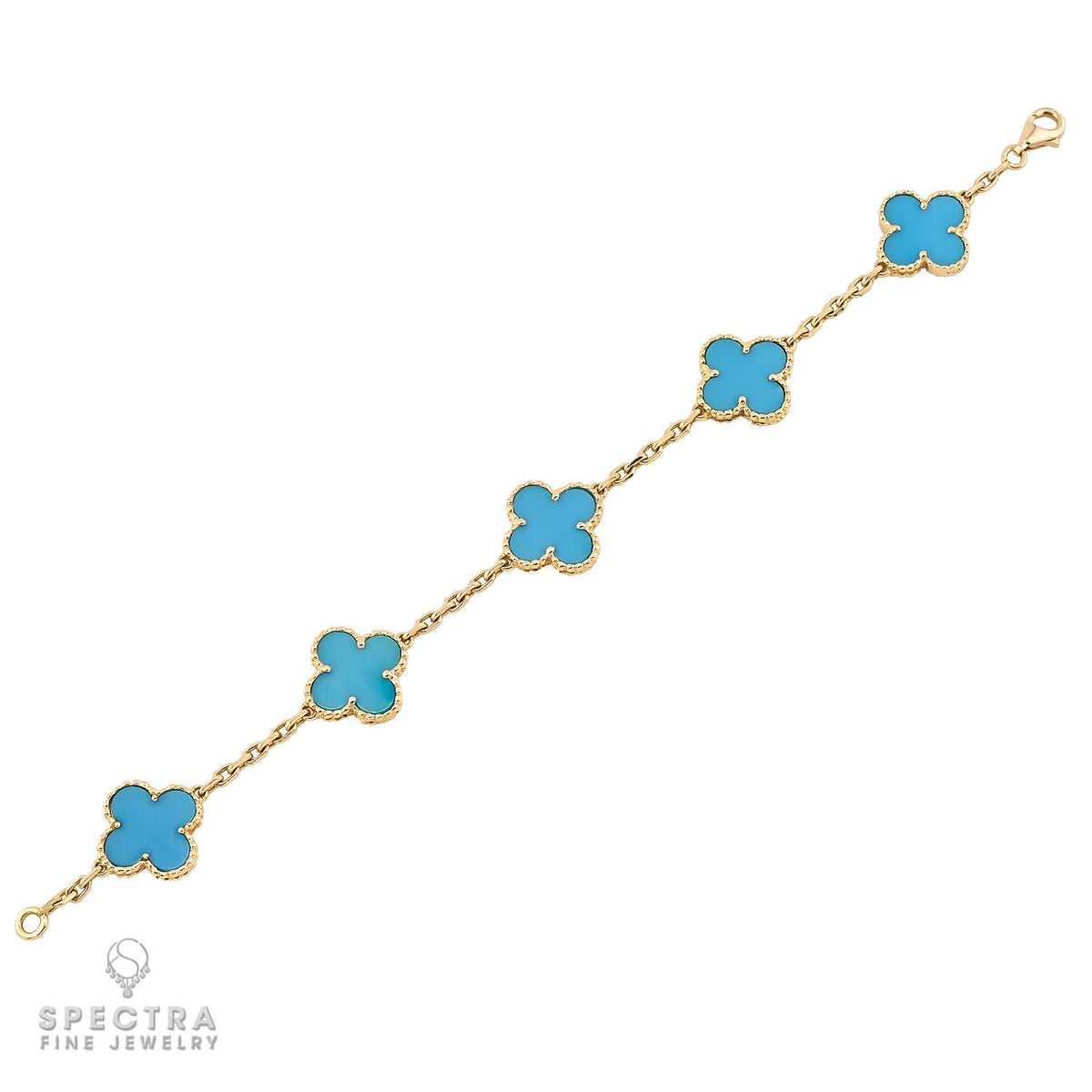 Detail of a VCA Alhambra bracelet—note the precise beading and symmetrical quatrefoil motifs
Motif Symmetry: Measure Everything
The quatrefoil shape should be perfectly symmetrical. Not almost symmetrical—perfectly symmetrical.
Check these measurements:
- Distance from center point to each "clover" tip
- Width of each clover segment
- Height vs. width of the overall motif
- Depth of the indentations between clovers
On authentic pieces, these measurements are consistent to within fractions of a millimeter. Manufacturing tolerances are extremely tight.
Fake pieces often have:
- One clover slightly larger than the others
- Asymmetrical curves
- Indentations that vary in depth
- Overall proportions that are "close but not right"
Pro tip: If something looks "off" but you can't identify what, measure. Your eye is detecting asymmetry even if you can't consciously see it.
Stone Setting and Materials
VCA uses specific materials with specific characteristics:
Mother of Pearl (Most Common)
- Should have natural iridescence and variation
- Thickness should be consistent
- Cut precisely to fit the motif with minimal visible bezel
- No chips or cracks (VCA's quality control catches these)
Onyx
- Deep, uniform black
- High polish
- Clean edges
Malachite
- Natural banding patterns (these should look organic, not painted)
- Deep green color
- Smooth surface
Carnelian
- Orange-red color with some natural variation
- Translucent quality when lit from behind
Fake materials often show:
- Stones that are too uniform (plastic or glass)
- Visible glue around edges
- Stones sitting above or below the bezel improperly
- Dyed or treated materials with unnatural colors
The Chain Tells a Story
VCA chains aren't an afterthought. They're part of the design.
Authentic VCA chains:
- Substantial weight (these aren't delicate)
- Consistent link shape throughout
- Smooth solder on every link (no lumps or visible joints)
- Professional lobster claw or hook closure
- Jump ring attaching pendant to chain is properly closed
Fake chains often:
- Feel flimsy or light
- Have inconsistent link sizes
- Show rough solder or visible joints
- Use cheap clasps that don't match the quality of the motif
- Have jump rings that aren't fully closed
Weight test: Hold an authentic VCA necklace and a suspected fake. The weight difference is often noticeable.
Clasp and Hallmark Inspection
This is where you need your loupe. The clasp area tells you a lot.
What to look for on the clasp tag:
- "Van Cleef & Arpels" signature (full name, not abbreviated)
- Metal mark (750 for 18k gold)
- Serial number
- Sometimes French hallmarks (eagle head, owl)
Font and engraving characteristics:
- Clean, crisp letterforms
- Consistent depth throughout
- Professional finish (not scratchy or uneven)
- Appropriate spacing between characters
Red flags:
- Shallow or inconsistent engraving
- Font that doesn't match known VCA examples
- Missing metal marks
- Serial numbers in wrong format for the piece's apparent age
- Stamps that look "too new" on a "vintage" piece
The Serial Number Reality
VCA serial numbers follow formats that have changed over time. A "vintage" piece shouldn't have a modern serial format.
What serials can tell you:
- Format matches the era (research what format VCA used when)
- Placement is correct for the piece type
- Engraving style matches the brand signature
What serials can NOT tell you:
- That the piece is definitely authentic (serials can be copied)
- That this specific piece is the one with that number (duplicates exist)
Serial numbers are supporting evidence, not proof. They should be consistent with everything else, but they don't stand alone.
Where to Check on Specific Pieces
Alhambra Pendant Necklace:
- Clasp tag (primary marks)
- Bail (sometimes has additional mark)
- Back of motif (may have small stamps)
Alhambra Bracelet:
- Clasp tongue
- Link nearest to clasp (sometimes)
- Inside of clasp mechanism
Alhambra Earrings:
- Clip back mechanism (inside)
- Behind the motif
- On the post (if pierced)
Magic Alhambra (larger motifs):
- Same locations, marks may be slightly larger
- Check proportion consistency across different motif sizes
The "Too Good" Fake Problem
The best counterfeits now come with:
- Convincing boxes and packaging
- "Authenticity cards" that look legitimate
- Serial numbers that check out (copied from real pieces)
- Good construction quality
What still gives them away:
- Beading quality (almost impossible to replicate perfectly)
- Metal density (weighs slightly wrong)
- Stone quality upon close inspection
- Small proportion inconsistencies
- Clasp engineering (functionality over time)
These fakes cost more to make, so they're priced closer to authentic pieces (though still below retail). The "deal" is smaller, which makes people trust them more.
Rule: If you're buying secondary market VCA, the construction has to check out independently of any paperwork or packaging.
French Hallmarks: Your Independent Verification
French hallmarks are applied by assay offices—independent of VCA. They verify metal content.
What to look for:
- Eagle head: 18k gold made in France
- Owl: 18k gold imported into France
- These appear alongside VCA markings (750 = 18k, which means 75% pure gold—see our precious metals converter for more)
Why they matter:
- Counterfeiters can fake VCA stamps, but faking French hallmarks adds complexity
- Presence of appropriate French marks is a positive indicator
- Absence doesn't mean fake (piece may be from another market)
The Practical Buying Guide
Safer sources:
- Van Cleef & Arpels boutiques (new)
- VCA authorized pre-owned
- Major auction houses with authentication guarantees
- Established dealers specializing in signed jewelry
Higher risk sources:
- Online marketplaces without authentication
- Consignment without verification
- "Estate sale" pieces without provenance
- Any seller who won't provide detailed photos
Questions to ask:
- Can I see close-ups of the beading?
- What marks appear on the clasp?
- What's the serial number format?
- Is there a return policy if authentication fails?
When to Get Professional Help
Get a professional opinion before purchasing if:
- The price seems too good (even 20-30% below market)
- You can't examine in person
- The seller can't provide detailed photos of marks
- Something feels "off" even if you can't pinpoint it
- The amount at risk makes you uncomfortable
Professional authentication typically costs $50-200. That's cheap insurance on a multi-thousand-dollar piece.
Looking for Authenticated Alhambra?
We handle Van Cleef regularly and know exactly what to look for.
Have a Piece You're Evaluating? →
Independent educational resource. Not affiliated with Van Cleef & Arpels or Richemont.
Continue Reading
Get the Collector's Newsletter
Join collectors who get authentication tips, market insights, and new guide alerts. No spam, just practical knowledge.
Need Help?
Send photos of a piece you're evaluating. We'll give you a straight read—no pressure, no BS.
Contact Spectra Fine Jewelry →Ready to Browse Authenticated Pieces?
Every item at Spectra Fine Jewelry goes through our verification process before it hits the case. No guesswork. No surprises.