Is My Vintage Tiffany Real? A Checklist
Published: January 21, 2026
Tiffany & Co. has been making jewelry since 1837. That's a lot of history—and a lot of pieces on the secondary market. Some are genuine treasures. Others are convincing fakes or pieces that aren't quite what they seem.
Here's a practical checklist for evaluating vintage Tiffany pieces. This isn't about modern Tiffany you buy from the store—it's about estate pieces, inherited jewelry, and secondary market finds.
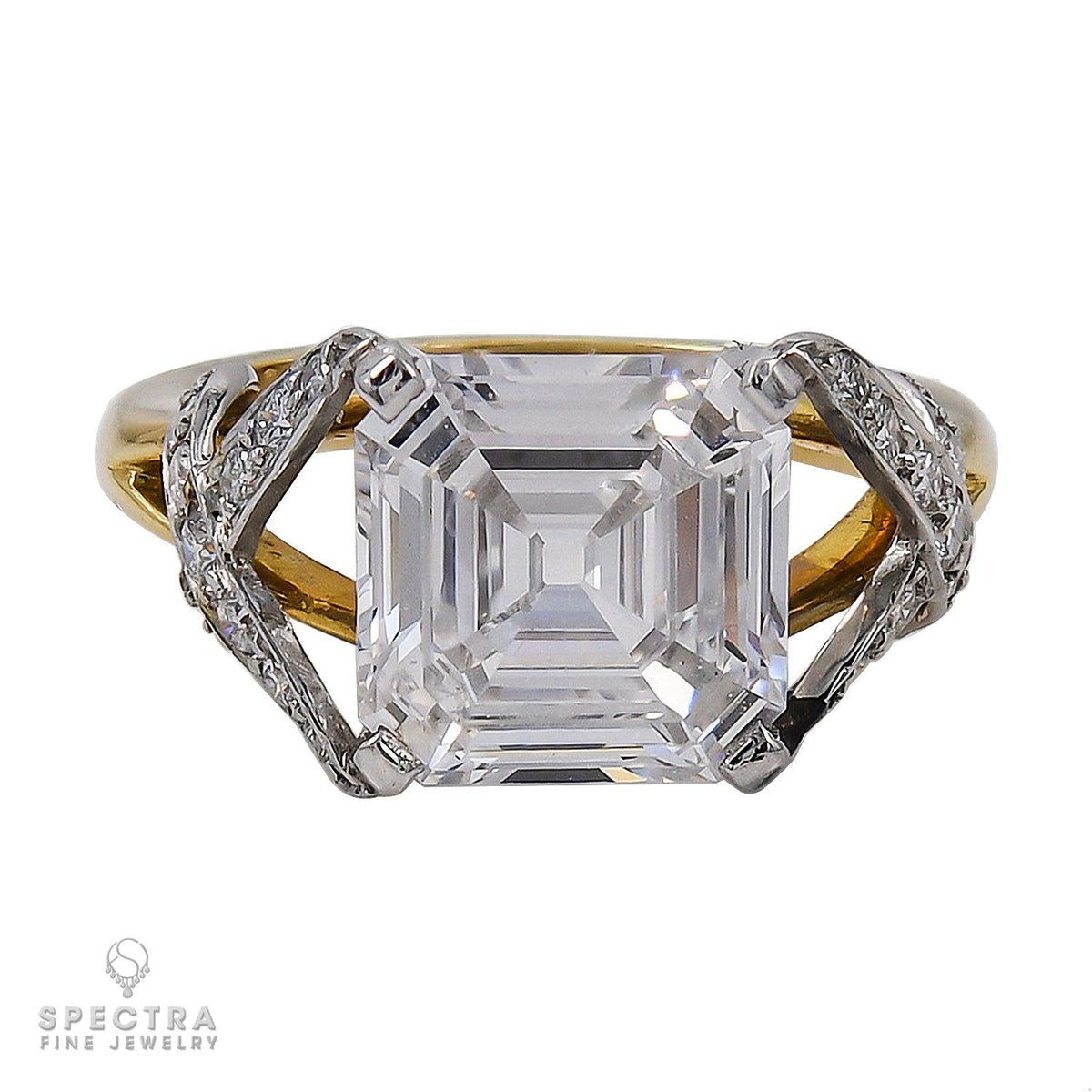 Signed Tiffany & Co. Schlumberger ring—the collaboration between Tiffany and Jean Schlumberger produced some of the most collectible American jewelry of the 20th century
The Signature Evolution
Tiffany's signature has changed over the decades. Knowing what to expect helps date pieces and spot anachronisms.
"TIFFANY & CO." The classic full signature. Used throughout the company's history. Most common form.
"TIFFANY & CO. NEW YORK" Includes location. Found on many pieces, especially mid-century.
"T & CO." Abbreviated form. Used on smaller pieces where space is limited.
"TIFFANY STUDIOS" (separate division) For lamps, decorative objects—not fine jewelry. Different production entirely.
Modern "T" logo (2014+) The standalone "T" design is recent. If you see it on a "vintage" piece, something's wrong.
Key point: The signature style should match the piece's apparent age. An "1890s" piece with a modern Tiffany font is a problem.
Where to Find Marks
Rings: Inside the shank. Look for "TIFFANY & CO." plus metal marks (750, 925, PLAT, etc.). Serial numbers on some pieces.
Bracelets: Clasp area is primary. May also appear on a tag or plate near the clasp. Chain links near closure.
Necklaces: Clasp tongue, clasp tag, jump ring area. Longer necklaces may have marks in multiple locations.
Earrings: On posts, clip backs, or behind decorative elements. May be small.
Brooches: Back of the piece, often near the pin mechanism. May include Tiffany mark plus metal marks.
Cufflinks: On the back or inside swing bars.
Metal Marks: What Tiffany Uses
Sterling Silver (Primary for Tiffany)
- "925" or "STERLING"
- Tiffany is famous for silver—far more common than gold
- Should look and feel like quality sterling
18K Gold
- "750" or "18K" or "18KT"
- Used for fine jewelry pieces
- No 14K in American Tiffany production (exception: some international pieces)
Platinum
- "PLAT" or "PT950"
- Used for diamond settings and fine pieces
- Appropriate heft and feel
Gold and Silver Combinations
- Some pieces combine metals
- Each component should be marked appropriately
What you won't see on authentic Tiffany:
- 10K or 14K gold (with very rare exceptions)
- Gold-filled or plated marks
- Questionable fineness marks
The Design Registry
Tiffany has made specific designs throughout its history. Knowing them helps authentication.
Classics to Know:
Return to Tiffany (tag/heart)
- Heart tag series began late 1960s
- Modern versions since 1997 relaunch
- Tags should be substantial sterling silver
- Check engraving quality and weight
Elsa Peretti designs (1974+)
- Bean, Heart, Bone cuff, Open Heart
- Signed "ELSA PERETTI" plus "TIFFANY & CO."
- Fluid, organic aesthetic
- Very specific design proportions
Paloma Picasso designs (1980+)
- Bold, graphic
- Signed "PALOMA PICASSO" plus "TIFFANY & CO."
- X motif, Olive Leaf, Zellige patterns
Schlumberger designs
- Jean Schlumberger pieces
- Distinctive enamel work
- High-end gold pieces
- Signed accordingly
Atlas collection (1995+)
- Roman numeral motifs
- Clean, architectural lines
Engagement rings
- The Tiffany Setting (1886+)
- Various diamond sizes and cuts—our carat calculator estimates weight from measurements
- Vintage rings often need sizing—check our ring size guide
If the design doesn't match the claimed era, investigate.
Construction Quality Checklist
Sterling Silver Pieces:
- Substantial weight (not flimsy)
- Clean, polished finish
- Smooth solder joints
- Working clasps with proper tension
- Crisp, clear engravings
- Consistent chain link sizes (if applicable)
Gold Pieces:
- Appropriate weight for stated purity
- Quality stone settings (if applicable)
- Invisible or minimal solder lines
- Functioning mechanisms
- Era-appropriate design
General:
- Marks are clear and legible
- Design is documented Tiffany
- Construction matches claimed era
- Wear is consistent with age
Common Fake Scenarios
Scenario 1: Engraved Sterling Jewelry Someone buys quality sterling jewelry from another maker and has "TIFFANY & CO." engraved. The marks look new (crisp edges, no wear), the design isn't a Tiffany design, and the construction doesn't match Tiffany standards.
How to spot it: The engraving looks too fresh. The design isn't in Tiffany's catalog. Quality may be lower than authentic Tiffany.
Scenario 2: Return to Tiffany Knockoffs The heart tag design is heavily copied. Fakes use thin, light metal with poor engraving.
How to spot it: Authentic pieces have heft. The engraving is crisp and consistent. The chain and clasp quality match the tag quality.
Scenario 3: "Tiffany Style" Sold as Tiffany Pieces sold as "Tiffany style" or "inspired by Tiffany" without Tiffany marks—but advertised ambiguously.
How to spot it: No "TIFFANY & CO." mark. If there's no signature, it's not Tiffany.
Scenario 4: Vintage Attribution A generic vintage piece misattributed as Tiffany because it "looks like something they'd make."
How to spot it: No Tiffany marks, or marks that don't match Tiffany formats. Design may be similar but not identical to documented Tiffany pieces.
The Box and Bag Problem
Original packaging adds appeal but proves nothing:
Authentic Tiffany boxes:
- Tiffany Blue color
- Quality construction
- Era-appropriate style
The problem:
- Boxes and bags can be purchased separately
- Fakes get sold with authentic packaging
- Packaging doesn't authenticate the piece
The rule: The jewelry itself must authenticate independently. Packaging is nice to have, not proof.
Vintage Tiffany Pricing Reality
Understanding market prices helps identify suspicious deals:
Sterling Silver (typical ranges):
- Simple pieces: $100-300
- Return to Tiffany items: $150-500
- Designer pieces (Peretti, Picasso): $200-1,000+
Gold Pieces:
- Simple gold items: $500-2,000
- Designer gold pieces: $1,500-10,000+
- Schlumberger and rare pieces: $5,000-50,000+
Vintage and Antique:
- Add premium for documented age
- Rare pieces command significant premiums
- Estate provenance adds value
If the price is dramatically below market, investigate thoroughly.
When in Doubt: What to Check
If something feels off:
-
Compare to documented examples. Tiffany has an archive. Auction houses have records. The design should exist.
-
Check mark consistency. Signature style, metal marks, and construction should all align with the claimed era.
-
Assess quality. Tiffany doesn't make cheap pieces. If it feels flimsy, that's a red flag.
-
Research the seller. Established dealers stand behind their pieces. Random online sellers often don't.
-
Get a second opinion. Before committing significant money, have someone knowledgeable look at it.
Tiffany Authentication Through the Brand
Tiffany will sometimes authenticate pieces:
- Bring to a Tiffany store with documentation requests
- Results vary—some pieces verified, some declined
- Modern pieces easier than vintage
- Don't expect comprehensive service for estate pieces
This is supplemental, not a guarantee of help.
Practical Authentication Checklist
Use this when evaluating a vintage Tiffany piece:
□ Marks present and readable? (TIFFANY & CO., metal marks) □ Signature style appropriate for era? □ Design is documented Tiffany? □ Construction quality matches expectations? □ Weight appropriate for size and metal? □ Wear consistent with claimed age? □ Marks show consistent wear with piece? □ Price aligns with market? □ Seller has reputation/return policy? □ Your gut says it's right?
If any answer is "no" or "uncertain," investigate further before buying.
Looking for Authenticated Vintage Tiffany?
We handle Tiffany pieces regularly and know what authentic examples look like.
Have a Piece You're Evaluating? →
Independent educational resource. Not affiliated with Tiffany & Co. or LVMH.
Continue Reading
Get the Collector's Newsletter
Join collectors who get authentication tips, market insights, and new guide alerts. No spam, just practical knowledge.
Need Help?
Send photos of a piece you're evaluating. We'll give you a straight read—no pressure, no BS.
Contact Spectra Fine Jewelry →Ready to Browse Authenticated Pieces?
Every item at Spectra Fine Jewelry goes through our verification process before it hits the case. No guesswork. No surprises.