Vintage Tiffany & Co. Jewelry: Which Eras Are Worth Collecting
Published: June 30, 2026
The short answer: The three Tiffany eras serious collectors chase are Jean Schlumberger (1956–1987) for paillonné enamel and one-off colored stone pieces, the Art Deco period (1920s–1930s) for signed platinum diamond work, and early Elsa Peretti (1974–1980s) for sterling designs that defined an entire generation of jewelry. Everything else is condition-dependent.
I bought a Schlumberger enamel bangle in 2015 off a dealer on 47th Street who didn't know what he had. The paillonné work — 24k gold leaf suspended inside translucent enamel — was intact across all 12 panels. French assay marks on the clasp. Circa 1962. I paid $28,000. Christie's sold a similar one three years later for $74,500. That's not luck. That's knowing which era to buy and why.
The people making real money in vintage Tiffany aren't the ones buying anything with a blue box. They're the ones who can tell you why a Schlumberger with Paris marks trades at a premium over New York production, or why a 1975 Peretti bone cuff in sterling matters more than one made last year. Era matters. Maker marks matter. Country of origin matters. Here's exactly what's worth your attention and what isn't.
Which Tiffany designer eras actually appreciate?
You can split Tiffany into about seven distinct collecting windows. Three matter for investment. The rest are for wearing, not for parking capital.
Jean Schlumberger (1956–1987) sits at the top because he was Tiffany's only designer given total creative control and his own atelier in the Fifth Avenue flagship. His workshop on the mezzanine operated as an independent studio — Tiffany supplied stones, he produced what he wanted, when he wanted. The output was uneven, which makes the strong pieces rarer than people realize.
His signature is paillonné enamel — a 17th-century technique Schlumberger revived by fusing translucent colored enamel over 24k gold foil. It creates a depth and glow that photography cannot capture. You need to see it in person. A good Schlumberger enamel bangle with all original paillonné intact and French maker's marks commands $35,000–$90,000 depending on color combination and provenance. I've handled six in the last five years. Three had restoration to the enamel that killed the value. The collectors who know open the clasp first thing — every serious Schlumberger piece made before the late 1960s was manufactured in France and bears French assay marks. Those marks alone add 20–30% to the price.
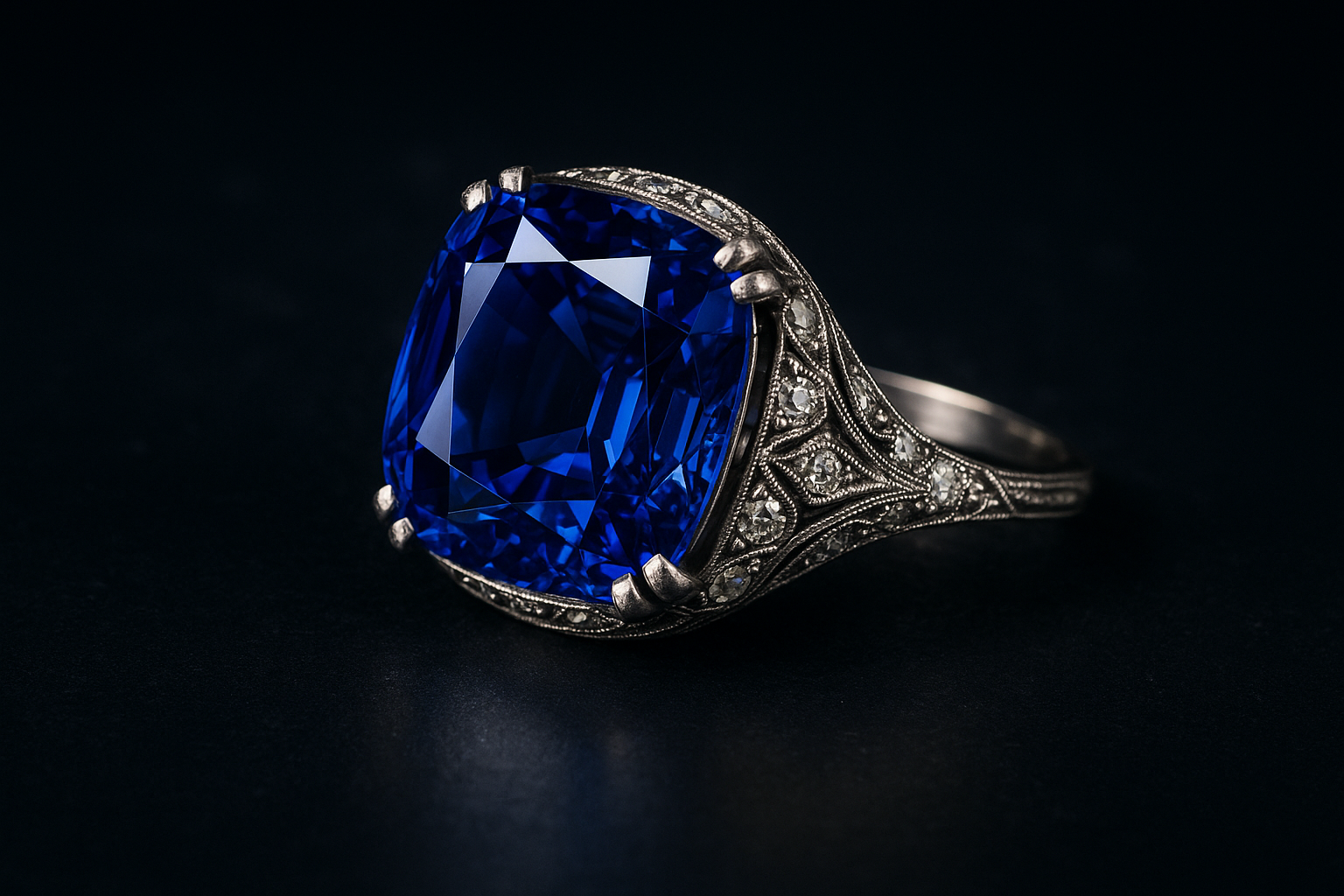
His one-off colored stone rings are the real trophies. A Schlumberger ring with a 10-carat+ unheated Ceylon sapphire, SSEF-certified, sold at Sotheby's New York in 2023 for $1.4 million against a $400,000 estimate. The stone was exceptional. The Schlumberger mounting doubled the number. That's the formula: a genuinely important colored stone inside a Schlumberger mounting beats either one alone.
Art Deco Tiffany (1920s–1935) is under-collected. Everyone chases Cartier Art Deco. Smart money looks at Tiffany's Deco output — signed brooches, line bracelets, and geometric earrings in platinum with transitional-cut and early round brilliant diamonds. Tiffany's Deco aesthetic was cleaner and more architectural than Cartier's. Less ornate. That restraint reads extremely well today. A signed platinum Tiffany Deco bracelet with 15–20 carats of European-cut diamonds, original clasp, original box — you can still find these at auction in the $30,000–$80,000 range. The equivalent Cartier is $100,000–$200,000. The gap isn't about quality. It's about market awareness. That gap will close.
Early Elsa Peretti (1974–1980s) is a different animal. This is not high jewelry — it's sterling, it's accessible, and the volume was enormous. But the early production pieces, specifically the first-generation bone cuffs with the original Peretti signature mark and early Diamonds by the Yard necklaces on the original fine chain, have quietly tripled in the last 10 years.
What distinguishes early Peretti: the "Peretti" signature stamp and Tiffany & Co. mark on the early bone cuffs are deeper and sharper than later production; the Diamonds by the Yard bezels on the first generation are slightly heavier; and the chains are fractionally finer. A 1975 bone cuff in sterling, unworn with original suede pouch, is a $3,500–$5,000 piece now. It was $800 in 2010. The percentage move beats gold, beats the S&P, beats most colored diamonds.
What kills vintage Tiffany value?
Restoration work to enamel is the number one value destroyer across all eras. Schlumberger paillonné cannot be replicated by any modern workshop — the technique and materials are different. A restored enamel panel changes color and texture under UV light. Dealers who don't disclose it burn relationships permanently. I've rejected two Schlumberger bracelets in the last 18 months because the enamel had been retouched and the sellers "forgot" to mention it.
Non-original stones are the second biggest problem. Schlumberger rings with replaced center stones trade at a 40–60% discount to intact originals. Same for Art Deco Tiffany brooches where the original diamond melee has been swapped out. Check the backs of pieces for casting porosity or modern repair marks. Pre-1940s work was hand-fabricated — you should see tool marks, not casting seams.
Missing original boxes knock 15–25% off at auction. The Tiffany blue box is marketing, but the period-correct fitted case is provenance. Keep it.
Polishing is a trap. Heavy-handed polishing rounds edges, softens stamps, and removes the crispness that defines period work. Buyers who want "shiny" don't belong in vintage. Buyers who want original surfaces do.
How should a new collector start?
Start narrow. Pick one designer era. Learn its production marks, its period hardware, its original stone types, and its known fakes. Spend six months doing nothing but looking at authenticated examples at auction previews, museum collections, and reputable dealer showcases. Do not buy a single thing during that six months.
Then buy one definitive piece from a dealer who will stand behind it — not eBay, not an estate sale, not an auction where you can't examine the piece in hand. Your first Schlumberger should come from someone who can explain exactly why the enamel is original, what the French marks indicate, and what condition issues exist. If they can't answer those three questions in 30 seconds, walk.
What's undervalued right now?
Paloma Picasso's early Tiffany work (1980–1985), specifically the original X collection pieces in 18k with bold colored stone combinations. The market hasn't figured out that early Picasso Tiffany is the bridge between Peretti's accessibility and Schlumberger's color work. A Picasso X ring with an original cabochon amethyst or citrine, full marks, period-correct box — $1,500–$4,000. In 10 years, when the generation that grew up with the X collection has real money, those numbers will look very different.
Donald Claflin's work for Tiffany (1965–1975). Claflin did whimsical gem-set animal brooches and rings that are unmistakable once you've seen them — carved stone bodies, gold legs, gem eyes. He was the bridge between Schlumberger's sculptural approach and the more commercial work that followed. Prices are still reasonable: $3,000–$12,000 for strong examples. That's a fraction of what comparable Schlumberger animal brooches trade at, and the quality gap between them is smaller than the price gap suggests.
You don't need millions to build a real Tiffany collection. You need to know the difference between an era that means something and an era that's just old.
Frequently Asked Questions
How much does vintage Tiffany jewelry appreciate in value?
Most vintage Tiffany doesn't appreciate at all — it depreciates like any other pre-owned jewelry. The pieces that gain value are specific: Schlumberger with intact paillonné enamel and French assay marks, Art Deco platinum pieces that remain unpolished, and early Peretti sterling with original signatures. A top-tier Schlumberger enamel bangle purchased for $40,000 in 2015 might sell for $75,000–$90,000 today. A 1975 Peretti bone cuff bought for $800 in 2010 now trades at $3,500–$5,000 in unworn condition. But these are the exceptions. The vast majority of vintage Tiffany — particularly 1990s–2010s production with no designer attribution — tracks gold weight plus a modest brand premium. Do not buy vintage Tiffany as an investment unless you can identify exactly which pieces belong in the appreciating category and explain why. Most people can't.
Is Tiffany & Co. Schlumberger worth the premium over other vintage Tiffany?
Yes, and the premium exists for reasons that aren't going away. Schlumberger had more creative autonomy than any designer in Tiffany's history — the Mezzanine atelier, his own team, carte blanche to use Tiffany's stones. His technical ceiling was higher too. Genuine paillonné enamel in the Schlumberger tradition cannot be replicated by any commercial workshop today. The manufacturing base in France during his peak period (1950s–1970s) produced work at a quality level that simply costs too much to achieve now. When you buy a Schlumberger piece with intact enamel and French marks, you're buying work that cannot be replaced at any price — not because the design is copyrighted, but because the craftsmen, techniques, and material tolerances no longer exist. That's the definition of lasting value in vintage jewelry.
How do you verify an authentic vintage Tiffany piece without papers?
Start with the hallmarks. Pre-1950s pieces should have hand-struck marks — look for slight inconsistencies in depth and alignment that indicate a stamp, not a casting. Post-1950 pieces began incorporating laser engraving. Cross-reference the maker's mark pattern against the piece's claimed era. Schlumberger pieces with French manufacture will have French assay marks — an eagle's head for 18k gold, a hexagonal lozenge for platinum — plus the Schlumberger signature and a Tiffany stamp. The signature should be crisp and proportional. Fakes tend to have stamped signatures that are too deep, too even, or in the wrong font. Tiffany's retail archives can verify original purchase records for pieces with serial numbers. For anything above $15,000, pay a lab like SSEF or Gübelin to examine the piece — not for a gemstone report, but for the mounting itself. They can identify modern casting, laser welding, and other signs of reproduction that you'd need a microscope to catch. If the seller won't let you send the piece out for independent examination, don't buy it. That rule has never failed me.
Written by Lawrence Paul
Lawrence Paul is a fine jewelry dealer based in New York's Diamond District with over 20 years of experience buying and selling signed vintage and estate jewelry. He is President of Spectra Fine Jewelry at 44 West 47th Street, Suite GF1, New York, NY 10036.
Continue Reading
Get the Collector's Newsletter
Join collectors who get authentication tips, market insights, and new guide alerts. No spam, just practical knowledge.
Need Help?
Send photos of a piece you're evaluating. We'll give you a straight read—no pressure, no BS.
Contact Spectra Fine Jewelry →Ready to Browse Authenticated Pieces?
Every item at Spectra Fine Jewelry goes through our verification process before it hits the case. No guesswork. No surprises.