What a 18-Carat White Diamond Is Really Worth — Reading a Real 2026 Auction Lot
Published: July 12, 2026
The short answer: A top-tier 18-carat D-color round brilliant with Flawless or Internally Flawless clarity trades between $2.5M and $5.5M at auction, or roughly $135,000–$305,000 per carat, depending on exact clarity, cut precision, and whether it carries a brand name or comes from a private collection.
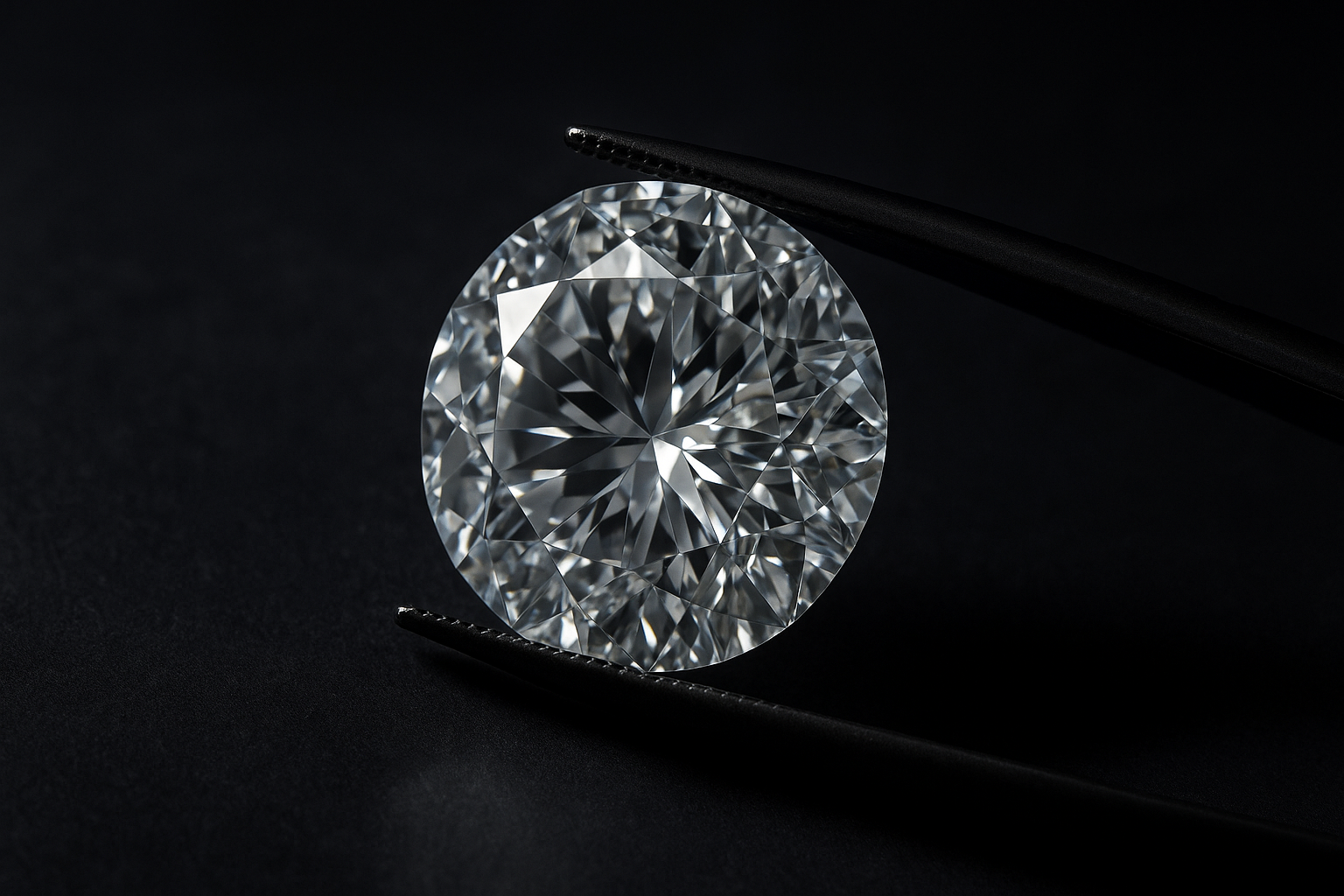
I stood in the Christie's Geneva saleroom last auction season watching a pair of 18.38-carat D-color round brilliants cross the block. One was Flawless. The other, Internally Flawless. Same weight. Same color. Both top-tier D. But the gap between Flawless and Internally Flawless at this level? It's not subtle — it's six figures.
The trade talks about 18-carat diamonds like they're interchangeable units of luxury, but anyone who's actually bought or sold one knows better. Two stones with the same GIA report can land millions apart. Here's what determines which side of the spread you're on.
What Makes an 18-Carat White Diamond Valuable?
The GIA 4Cs are the foundation, but at 18 carats in D-E-F color, you're not playing the standard board game. You're playing poker with the market's biggest players.
First, color. D-color is the non-negotiable floor for serious auction interest. The D-E-F range rules here. Go below F at 18 carats and you're bleeding value — the stone is too large to hide warmth, and the discount compounds with carat weight. An H-color 18-carat round will trade at a 40–60% discount to a D, and it'll sit on the market longer.
Second, clarity at the top end creates winners and losers. That Christie's pair — Flawless vs. IF — tells the whole story. Both are rare. But Flawless at 18 carats means exactly zero inclusions under 10x magnification. That's not a report line, that's a manufacturing achievement. The premium over IF can run 15–25% at auction, more in private sale if both sides know what they're holding.
Third, cut quality separates the serious stones from the showpieces. A round brilliant with an Excellent triple rating (cut, polish, symmetry) from GIA commands a premium because 18 carats of D-color rough that yields an ideal cut is genuinely scarce. Round brilliants waste more rough than fancy shapes. An 18-carat D Flawless round with Excellent/Excellent/Excellent is a different asset class than one with Very Good proportions.
What Do 18-Carat White Diamonds Actually Sell For at Auction?
Christie's and Sotheby's are where these stones find their price floor. Private sales typically run 20–40% above auction results because the buyer controls the process — no competing bidder, no room dynamics, no buyer's premium.
The 2026 Geneva market for 18-carat D-color rounds:
- D/Flawless, triple Excellent, Type IIa: CHF 4.8–5.5M (roughly $5.9–$6.8M at 0.8048 CHF/USD)
- D/IF, triple Excellent: CHF 3.8–4.5M ($4.7–$5.6M)
- D/VVS1, Excellent cut: CHF 3.0–3.6M ($3.7–$4.5M)
- E/IF, Very Good cut: CHF 2.2–2.8M ($2.7–$3.5M)
- F/VVS2: CHF 1.6–2.2M ($2.0–$2.7M)
These are hammer prices. Add Christie's buyer's premium — 27% on the first CHF 1.2M, 22% on the next band to CHF 6.5M — and your all-in cost on a CHF 4.5M stone pushes past CHF 5.5M. At Sotheby's, premium structures differ slightly but the math is similarly unforgiving.
The pair I mentioned — 18.38 carats each, one Flawless, one IF — hammered in line with the upper band. Two D-color rounds of that weight, cutting from the same rough crystal, carrying sequential GIA cert numbers. That provenance added a layer beyond the certs.
How Does Clarity Change the Price at This Size?
At 18 carats, clarity isn't linear. The spread between VVS1 and VVS2 is modest. Between VVS1 and Internally Flawless, the market takes a real jump — maybe 20%. Between IF and Flawless, another 15–25%. These aren't gentle curves. They're cliffs.
Here's why: at 18 carats, a Flawless D-color round brilliant is a statistical anomaly. Natural diamond growth almost always produces internal characteristics visible under 10x magnification. To cut 18 carats of D-color rough into a perfect round with zero inclusions is something maybe a dozen stones in the world achieve in any given year. Buyers at this level aren't paying for a diamond. They're paying for the fact that the stone basically shouldn't exist.
VVS1? Beautiful stone, sells well, moves through trade channels normally. Flawless? That's a trophy. Treat the pricing accordingly.
What Should You Actually Check Before Buying?
-
GIA report number — verify it. Go to GIA's website, pull the full report, read every line. No screenshot from a WhatsApp message counts.
-
Type IIa confirmation. D-color rounds of this size should be Type IIa — chemically pure, no nitrogen. If the report doesn't say it, ask why. Some D-color stones are Type Ia and while they're still D, the market values Type IIa higher.
-
Fluorescence. None preferred. Medium blue fluorescence can drop value 10–15% at this level. Strong blue? Hard pass unless the discount is steep.
-
Cut proportions. Table 55–60%, depth 59–62.5%, no painting or digging. Get the ASET image. If the seller won't provide it, find another stone.
-
Auction vs. private. Auction gives you price discovery and a third-party sale record. Private gives you control and privacy. Know which matters to you before you bid.
-
Buyer's premium math. Never forget it. A CHF 4M hammer at Christie's Geneva is roughly CHF 4.8M all-in. That extra CHF 800K is real money, and it doesn't appear in any per-carat headline.
An 18-carat D Flawless isn't an investment in the S&P 500 sense. It doesn't pay dividends. It generates nothing but a GIA cert and the knowledge that you own something the earth produced exactly once. If that's not why you're buying it, buy two 9-carats and call it a day.
Frequently Asked Questions
How much is an 18-carat diamond worth per carat?
At the top end — D color, Flawless clarity, triple Excellent cut — expect $275,000–$305,000 per carat at auction, meaning a stone in the $5M–$5.5M range. Drop to D/IF and you're at $220,000–$260,000 per carat. Once you slide below F color or VVS2 clarity, per-carat pricing falls to $90,000–$140,000. The curve is steep because rough quality and yield constraints make clean D-color material exponentially rarer at higher carat weights.
Does an 18-carat diamond hold its value?
Yes, at the D-E-F Flawless-to-VVS2 level, these stones have held and appreciated over 15-year windows. The auction record for white rounds gets reset every few years because supply of clean, large D-color rough isn't growing. But liquidity matters — you can't sell an 18-carat Flawless in a week unless you accept a wholesale haircut. These are generational holdings, not flips. The buyers who do best hold for 7–10 years minimum.
What's more important for an 18-carat diamond — color or clarity?
Color wins. A D/VVS1 will outsell an F/IF every time at this size. Large stones show body color more than small ones, and a D that faces up ice-white in any lighting condition commands the room. That said, Flawless clarity on a D is the unicorn combination — the pairing that creates auction headlines and private offers at 30% above IF. But if you're choosing between stretching for Flawless or buying the best D you can afford, buy the D. Color at 18 carats is the base of the pyramid.
Written by Lawrence Paul
Lawrence Paul is a fine jewelry dealer based in New York's Diamond District with over 20 years of experience buying and selling signed vintage and estate jewelry. He is President of Spectra Fine Jewelry at 44 West 47th Street, Suite GF1, New York, NY 10036.
Continue Reading
Get the Collector's Newsletter
Join collectors who get authentication tips, market insights, and new guide alerts. No spam, just practical knowledge.
Need Help?
Send photos of a piece you're evaluating. We'll give you a straight read—no pressure, no BS.
Contact Spectra Fine Jewelry →Ready to Browse Authenticated Pieces?
Every item at Spectra Fine Jewelry goes through our verification process before it hits the case. No guesswork. No surprises.