What Is AGL Certified? A Dealer's Explanation
Published: May 21, 2026
The short answer: AGL (American Gemological Laboratories) is one of the three lab authorities that serious colored stone dealers actually trust — alongside SSEF and Gübelin. An AGL certificate tells you origin, treatment type, and treatment quantity on a scale the trade understands. It's the document I reach for when I'm buying a Colombian emerald or an unheated Kashmir sapphire and I need answers, not marketing.
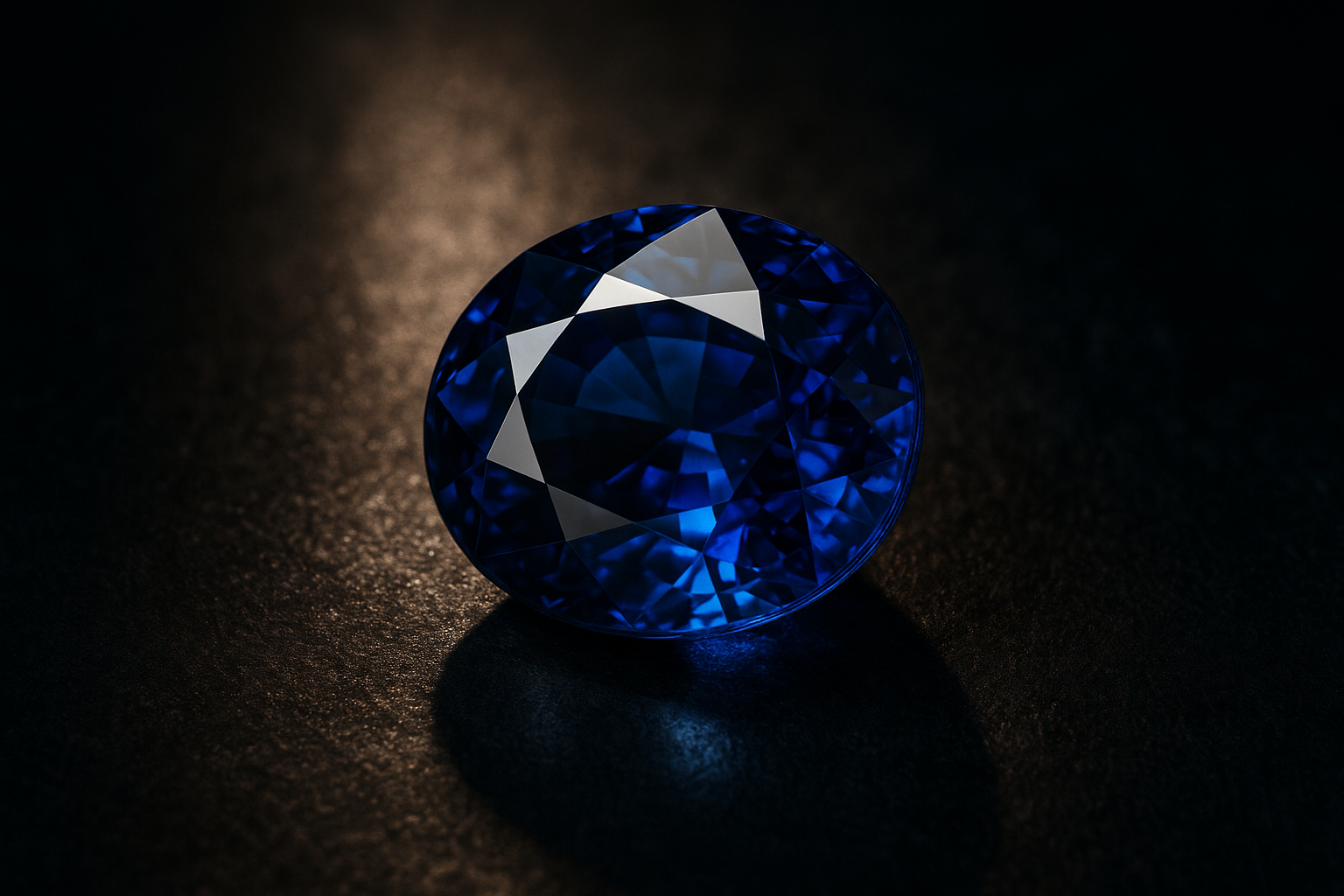
I've sent hundreds of colored stones to AGL since 2009. Their lab is in New York — right here on Fifth Avenue, a few blocks from my office on West 47th Street. That proximity matters. When I've got a client waiting on a 6-carat unheated Burmese ruby and I need a report that actually means something, I walk it over myself.
Cap Beesley founded AGL in 1977, and he built the lab around a single idea: colored stones need their own grading language. Diamonds have the 4Cs. Colored stones have origin, treatment, and color — three things that don't fit on a GIA diamond report. AGL built their entire system around them.
The short of it: if you're buying a colored stone from a dealer who takes themselves seriously, and the cert says AGL, you're holding a document the trade respects.
What Does an AGL Certificate Actually Tell You?
Three things, always: origin, treatment, and color.
Origin tells you where the stone came from — Kashmir, Burma, Colombia, Ceylon. AGL's origin calls carry weight because their reference collection is one of the deepest in the business. I've had stones where SSEF said one thing and AGL said another, and the AGL call held up when the stone was resubmitted to Gübelin for a tiebreaker.
Treatment is where AGL really separates itself. They don't just tell you if a stone is treated. They tell you what the treatment is, and — critically — how much. A stone with "minor" oil in an emerald is a completely different proposition from "moderate" resin. That distinction can mean $15,000 per carat or $5,000 per carat. I've bought emeralds specifically because the AGL report showed trace-level traditional oil — something a generic "clarity enhanced" note from a lesser lab would completely flatten.
Color grading uses their proprietary Color/Type system. It's not for everyone — you need to learn how to read it — but once you do, it's precise.
Which Stones Should Get an AGL Certificate?
Emeralds, sapphires, rubies, Paraíba tourmalines, and spinel. The major colored stones.
I send every Colombian emerald over 3 carats to AGL. The treatment disclosure alone justifies the cost. When I'm buying a Kashmir sapphire at auction — say, the 16.28-carat unheated Kashmir at Christie's Geneva last year — I want AGL papers on it before I raise a paddle. Actually, I want SSEF and AGL. For stones of that magnitude, dual certification is the standard.
Smaller commercial goods under a carat? Not worth it. A $600 AGL report on a $400 stone is bad math.
When I use AGL vs. other labs, practically speaking:
- Emeralds — AGL first. Their treatment breakdown is the best in the business
- Kashmir sapphires — SSEF + AGL. Both for provenance-level stones
- Burmese rubies — SSEF for origin, AGL for treatment confirmation
- Paraíba tourmalines — AGL or Gübelin. Copper-bearing determination needs a top-tier lab
- Small stones under 1 carat — skip it. The economics don't work
How Does AGL Compare to SSEF and Gübelin?
They're the big three. Think of them as peers, not competitors — different strengths, same tier.
SSEF in Switzerland is the gold standard for sapphire and ruby origin, especially Kashmir and Burma calls. If a stone gets "Kashmir — no indications of heating" from SSEF, that's the strongest paper in the industry.
Gübelin, also Swiss, is the prestige choice. Their reports command a premium at auction. A Gübelin-certified Kashmir sapphire consistently outperforms the same stone with other certs — sometimes 10-15% more at hammer.
AGL is the New York option, and for American dealers, that's meaningful. Turnaround is faster. Communication is direct. I can call the lab and talk to a gemologist about my stone. Try doing that with Gübelin from a different time zone.
I use all three. The stone and the sale determine which lab gets the work. I never send a colored stone to GIA for origin or treatment — their colored stone reports don't carry the same authority with serious buyers. For diamonds, GIA is the standard. For colored stones, the conversation is SSEF, Gübelin, and AGL. Everything else is a step down.
What Does an AGL Report Cost and How Long Does It Take?
A Full Color/Origin Report runs roughly $250-600 depending on stone type and size. The Prestige Report — their top-tier document with photographic documentation and detailed treatment analysis — costs more, typically $400-1,000.
Turnaround is usually 2-3 weeks. Rush service is available if you need it faster, and if you're a regular client (I am), the lab will work with your timeline.
You're paying for a gemologist's opinion backed by the largest colored stone reference collection in North America. That's cheap insurance on a $50,000 stone.
Frequently Asked Questions
Can AGL tell if a sapphire has been heated?
Yes — and this is one of AGL's core competencies. Their treatment analysis identifies thermal enhancement through microscopic inclusion analysis and spectroscopy. The report will state "no indications of thermal enhancement" for unheated stones, or specify the type of heating observed. For high-value sapphires and rubies, unheated status confirmed by AGL, SSEF, or Gübelin is essentially non-negotiable. A "no heat" stone with AGL papers trades at a significant premium over a heated equivalent — sometimes 3x to 5x for Kashmir or Burmese material.
Is AGL certified by any governing body?
No lab in this tier is "certified" by a higher authority — there isn't one. You don't certify AGL, SSEF, or Gübelin. Their credibility comes from decades of accurate grading, the quality of their reference collections, and the fact that the international colored stone trade accepts their reports without question. What matters is whether the trade trusts the lab, and on that front, AGL has earned its seat at the table since 1977. When Christie's and Sotheby's list an AGL report in a catalog description, that tells you everything you need to know.
Can I submit a stone to AGL myself, or do I need to go through a dealer?
You can submit directly as a private client — AGL accepts walk-in and shipped submissions from the public. But practically speaking, if you've never done it before, let your dealer handle it. I submit stones regularly, I know which report type fits the stone, and I can flag specific concerns with the gemologist. If you walk in cold, you'll fill out a form and wait. If your dealer submits, you get the benefit of an established relationship and someone who can interpret the results for you. That last part matters more than you'd think — a treatment grade that looks alarming on paper can actually be standard and benign for that stone type, and that's the kind of thing a good dealer explains before you panic.
Written by Lawrence Paul
Lawrence Paul is a fine jewelry dealer based in New York's Diamond District with over 20 years of experience buying and selling signed vintage and estate jewelry. He is President of Spectra Fine Jewelry at 44 West 47th Street, Suite GF1, New York, NY 10036.
Continue Reading
Get the Collector's Newsletter
Join collectors who get authentication tips, market insights, and new guide alerts. No spam, just practical knowledge.
Need Help?
Send photos of a piece you're evaluating. We'll give you a straight read—no pressure, no BS.
Contact Spectra Fine Jewelry →Ready to Browse Authenticated Pieces?
Every item at Spectra Fine Jewelry goes through our verification process before it hits the case. No guesswork. No surprises.