Zambian Emeralds vs. Colombian Emeralds: What Dealers Actually Think
Published: June 21, 2026
The short answer: Colombian emeralds command the premium — warmer green with a slight blue undertone, and the name alone carries weight. But top Zambian material now rivals Colombian in saturation and clarity, often at 40–60% less per carat. Smart dealers buy both, and the origin debate matters far less than crystal quality and treatment level.
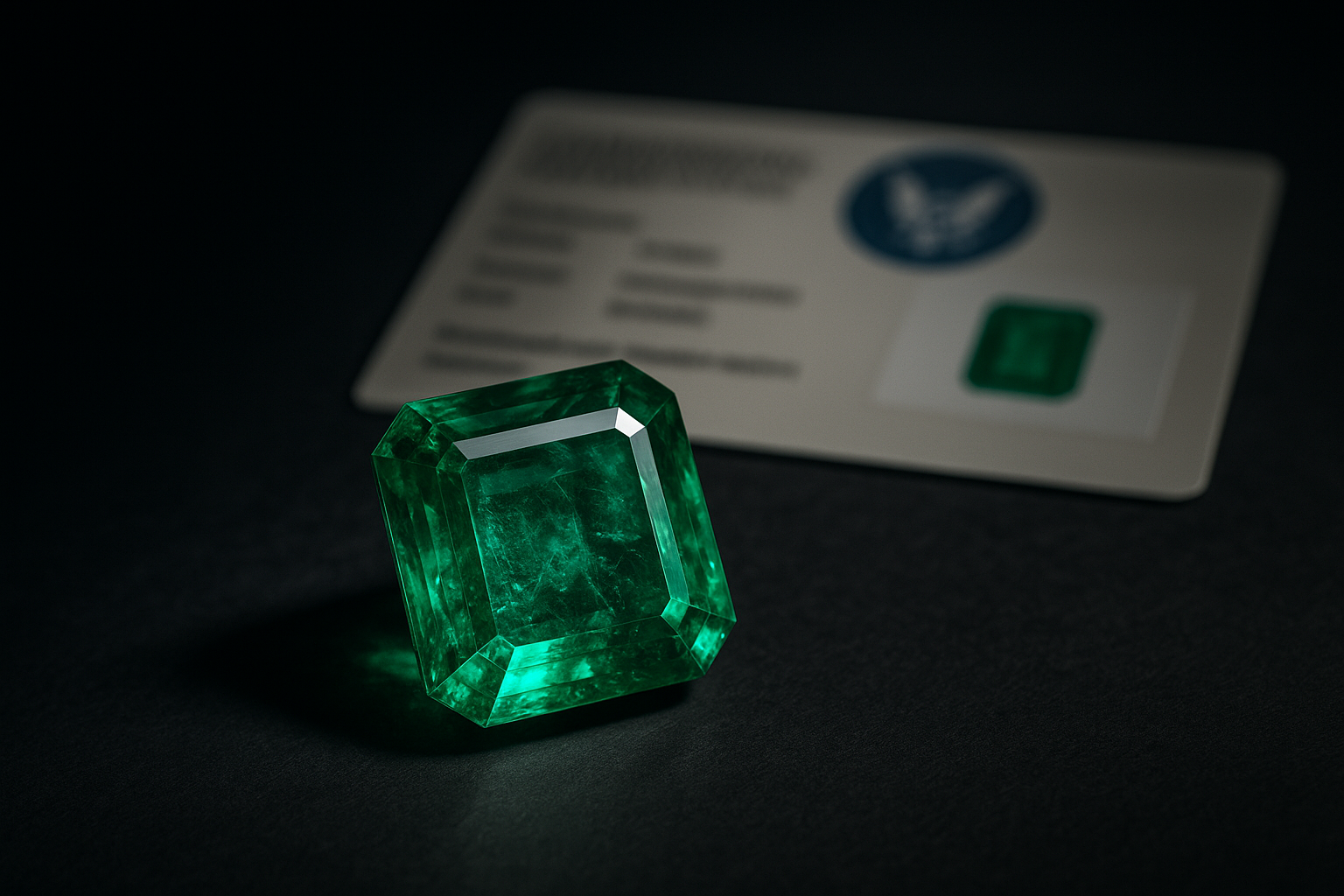
I've bought emeralds in Bogotá and I've bought them in Lusaka. I've sat across from Colombian dealers in the Jiménez Avenue district who'll tell you nothing else matters, and I've worked with Zambian cutters who'll put a 10-carat Kagem stone on the table that makes half the Colombian material in the room look sleepy. Here's the truth the labs won't print on a certificate: origin is a starting point, not a verdict.
The market has spent 500 years teaching everyone that Colombian means best. Muzo, Chivor, Coscuez — those names hit different at auction. And for good reason. Colombian emeralds typically show that slightly bluish-green hue, what the trade calls verde esmeralda, with a warmth that Zambian stones rarely match. But I've seen too many dealers pay a Colombian premium for a stone that a Zambian origin piece beats on every optical metric that actually matters — saturation, clarity, brilliance.
If you're buying emeralds in 2026 and you're not evaluating Zambian and Colombian side by side on the same tray, you're leaving money on the table. Or worse, you're buying a certificate instead of a gemstone.
What Actually Makes Colombian Emeralds More Valuable?
Three things: color character, history, and auction performance.
Colombian emeralds form in black shale — that's the geological signature. Trace chromium and vanadium give them the classic green, and the black shale host rock leaves organic inclusions that labs can identify. That slightly bluish secondary tone? That's what Colombian buyers chase. It's subtle, but once your eye learns it, you see it instantly.
At auction, the numbers tell the story. A fine 5-carat Colombian emerald with no or minor oil and an SSEF or Gübelin report will trade at $30,000–$60,000 per carat without anyone blinking. Top Muzo origin stones with exceptional saturation and minimal treatment have hit $100,000+ per carat at Christie's and Sotheby's. The math isn't complicated — Colombian is what the global buyer, particularly the Asian market, wants to see on the origin line.
But here's what most articles won't tell you: plenty of Colombian material is heavily treated. Cedarwood oil is traditional and respected — I use it myself on important stones. But a lot of what you'll see in the market has been through resin treatments like Palma, Permasafe, or Excel, and the treatment disclosure isn't always what it should be. Origin doesn't protect you from a heavily treated stone. The lab report does. That's why I tell every client the same thing: for colored stones, the relevant labs are SSEF, Gübelin, and AGL. GIA is the standard for diamonds — it's not the authority for emerald origin or treatment determination. Get the wrong lab and you're paying for a report that serious buyers won't trust.
Why Are Dealers Quietly Buying More Zambian Emeralds?
Because the quality-to-price ratio has shifted, and some of the best green in the market right now comes out of Kagem.
Zambian emeralds formed differently — in metamorphic rock, not sedimentary. They get their color from chromium, vanadium, and iron, which tends to produce a slightly darker, more saturated green. Less of that bluish Colombian undertone, more of a pure green that leans ever so slightly toward what I'd call a forest quality. Some dealers describe it as "cooler" — I'd say it's more intense.
The real advantage: Zambian rough tends to be cleaner. Fewer inclusions, better crystal, and a higher percentage of stones that can cut to eye-clean or near-eye-clean without needing fracture-filling that makes a lab report read like a pharmacy receipt. I've handled 15-carat Zambian stones with clarity you'd associate with tourmaline, not emerald. You don't see that from Colombia often.
And the price? A fine Zambian emerald in the 3–10 carat range with minor or no oil and an SSEF report will trade at roughly 40–60% of what the equivalent Colombian stone commands. That's not because the stone is 40–60% worse. It's because the market hasn't caught up. Savvy dealers I know in New York, Geneva, and Hong Kong are accumulating top Zambian material quietly. They're not talking about it publicly — and that should tell you something.
Does Origin Actually Affect the Way an Emerald Looks?
Not the way most buyers think. Origin predicts, it doesn't determine.
Put an exceptional Zambian emerald, an exceptional Colombian emerald, and an exceptional Afghan emerald on a white tray in daylight, and I promise you — without a lab report in front of you, you'll get it wrong sometimes. I've seen dealers with 30 years in the trade misattribute origin by eye. The overlap zone between top-tier Zambian and good-to-fine Colombian is real and it's larger than the origin purists want to admit.
What you can evaluate without a lab: saturation (is the color intense and even?), clarity (how many visible inclusions, and do they threaten durability?), and brilliance (does the stone return light or does it go dead in the center, what we call a window?). A well-cut Zambian emerald with strong saturation and high clarity will outperform a sleepy, included Colombian stone every single time — regardless of what the origin line says.
This is where treatment matters more than origin. A Colombian emerald doesn't look Colombian if it's been flooded with resin. A Zambian emerald with nothing more than traditional cedarwood oil in surface-reaching fissures will hold its value and its appearance for decades. The stone I'd rather own is the one that needs less intervention, not the one with the more famous birthplace.
How Should You Actually Choose Between Them?
-
Start with the lab report, not the origin. SSEF or Gübelin for emeralds — no exceptions. AGL is also respected for colored stones. GIA is your diamond lab, not your colored stone lab. Check treatment type and degree before you check where the stone came from.
-
Evaluate color first, origin second. Look for even saturation without extinction zones (dark patches). Check for a window — hold the stone flat and see if the center goes pale. That's a cutting problem, and it kills value regardless of origin.
-
Size changes the equation. Under 3 carats, I'd lean Zambian for value — you'll get better clarity at the same price point. At 5–15 carats, the Colombian premium gets serious, and that's where Zambian gives you the biggest discount relative to quality. Above 20 carats, exceptional Colombian is genuinely rare, and the premium is justified if the stone is clean.
-
Consider who's going to want it later. If you're buying for resale into the Asian auction market, Colombian origin with SSEF or Gübelin paperwork is still the safer bet — that's what the Hong Kong and mainland China buyers ask for first. If you're buying for a private client who cares about the object more than the certificate, Zambian gives you significantly more stone for the money.
-
Don't buy treatment you can't see. Minor oil is fine — traditional cedarwood oil in surface fissures is normal and stable. Moderate to significant resin? That's a different conversation, and I'd want a serious discount regardless of whether the stone is Colombian, Zambian, or from the moon.
Here's the bottom line: I've sold Colombian emeralds for prices that still make me wince thinking about what I paid, and I've sold Zambian emeralds for prices that made me wish I'd bought three more from the same parcel. The market is slowly waking up to top Zambian material, but the gap between what a stone is and what it costs is still wide enough to drive a dealer's entire buying strategy through. Buy the stone, not the origin — but know exactly what the origin means when it's time to sell.
Frequently Asked Questions
Is it true that Zambian emeralds are always darker than Colombian emeralds?
Not always, but it's a fair generalization. Zambian emeralds tend toward a deeper, more saturated green with less of the bluish secondary tone that defines classic Colombian material. The iron content in Zambian rough contributes to this — it pushes the color toward a pure green that some describe as "forest" or "bottle" green. That said, I've handled Zambian stones from Kagem's higher-grade production that show remarkable brightness and a slightly open color you'd swear was Colombian. The best Zambian material blurs the line. The average Zambian material is indeed darker, and a cutter who knows what they're doing will orient the stone to maximize face-up brightness rather than just saving weight. That's the difference between a commercial cut and a stone that sells.
Do Colombian emeralds always cost more than Zambian emeralds of the same quality?
At equivalent quality — same saturation, clarity, cut, and treatment level — the Colombian stone will trade at a premium, typically 40–100% more depending on size and the specific origin within Colombia (Muzo commands the highest premium, followed by Chivor and Coscuez). But "equivalent quality" is the tricky phrase. Zambian emeralds, carat for carat and dollar for dollar, often exceed Colombian stones at the same price point because you're getting better clarity and comparable saturation for less money. The premium is a market reality, not a quality judgment. An SSEF report reading "Colombia, no indications of clarity modification" on a fine 8-carat stone is a financial statement as much as a gemological one — and the market prices it accordingly.
Which origin holds value better over time?
Colombian emeralds have the deeper auction track record, the stronger brand recognition in Asian markets, and the 500-year head start on collector desirability. For stones above 5 carats with minimal treatment and strong lab documentation (SSEF or Gübelin), Colombian origin is still the safer store of value. However, Zambian emeralds are gaining ground — prices for top Kagem material have appreciated steadily over the past decade, and the gap is narrowing. The real value risk isn't origin — it's buying a heavily treated stone from any origin and watching the treatment degrade over time. A lightly treated Zambian emerald with an SSEF report will outperform a heavily resined Colombian stone over any holding period. Treatment stability trumps origin prestige in the long run, and that's something the certificate tells you directly if you're reading the right lab.
Written by Lawrence Paul
Lawrence Paul is a fine jewelry dealer based in New York's Diamond District with over 20 years of experience buying and selling signed vintage and estate jewelry. He is President of Spectra Fine Jewelry at 44 West 47th Street, Suite GF1, New York, NY 10036.
Continue Reading
Get the Collector's Newsletter
Join collectors who get authentication tips, market insights, and new guide alerts. No spam, just practical knowledge.
Need Help?
Send photos of a piece you're evaluating. We'll give you a straight read—no pressure, no BS.
Contact Spectra Fine Jewelry →Ready to Browse Authenticated Pieces?
Every item at Spectra Fine Jewelry goes through our verification process before it hits the case. No guesswork. No surprises.