Cartier Authentication Guide
What collectors need to know about the most faked luxury jewelry brand.
Last updated: January 28, 2026
Cartier: What Collectors Actually Need to Know
Cartier is probably the most collected—and most faked—jewelry brand in the world. The name carries serious weight, which is exactly why you need to be careful.
I see Cartier pieces every week. Real ones, questionable ones, and outright fakes that someone paid real money for. The good news: authentic Cartier has consistent tells if you know where to look. The bad news: so do the fakers, and they're getting better.
Here's what actually matters.
Cartier History: The Brief Version
1847: Louis-François Cartier takes over a jewelry workshop in Paris.
1899: The house moves to Rue de la Paix, establishing its legendary address.
1904: Santos watch created for aviator Alberto Santos-Dumont—first modern wristwatch.
1909: New York boutique opens (later London, other cities).
1969: Love bracelet introduced—becomes the iconic piece.
1988: Cartier joins Richemont group.
Today: Global luxury house, prices reflect brand premium.
Why history matters: Cartier's history affects authentication. A "1920s" piece should have 1920s characteristics. Period-appropriate marks, construction techniques, and designs matter.
What "Signed Cartier" Usually Means
When a piece is described as "signed Cartier," it should have:
- The Cartier name engraved somewhere (clasp, inner shank, back plate)
- Metal fineness marks (750, 18K, 950 Pt, etc.)—if you're unsure what these numbers mean, our precious metals converter explains the purity standards
- Often a serial number (though not always, and format varies by era)
- Sometimes French hallmarks (eagle head for 18k, owl for import)
The name alone isn't enough. You need the supporting evidence—the metal stamps, the construction quality, the right finishing, appropriate wear patterns—to tell a coherent story.
Where to Look for Cartier Marks
Knowing where stamps are usually found helps you quickly locate authentication points on any piece.
Rings: Inside the shank, usually near where sizing would happen. Older pieces might have marks that got worn or partially removed during resizing.
Bracelets: Clasp tongue is the most common spot. Also check inside links near the clasp, or under any prominent motif. Love bracelets have marks on the interior curve.
Necklaces: Clasp tag/tongue, back of pendant, near the jump ring connection.
Earrings: Back of the earring, inside clip mechanisms, on the post.
Watches: Case back, between lugs, inside the case (requires opening).
Iconic Cartier Collections
Love Collection
Introduced: 1969 by Aldo Cipullo Design: Screw motif bracelet (originally required screwdriver to remove) What to look for:
- Screw heads flush with surface (not recessed or protruding)
- Substantial weight (18k gold is heavy)
- Two halves meet precisely when closed
- "Cartier" signature + 750 + serial on interior
- Correct size for the wearer (Love bracelets come in specific sizes—check our ring size guide for wrist measurement tips)
Price range (secondary market):
- Yellow gold bracelet: $5,000-$8,000
- White gold/rose gold: $5,500-$9,000
- With diamonds: $8,000-$30,000+
- Vintage (pre-1990s): Premium pricing
Juste un Clou
Design: Nail motif What to look for:
- Correct proportions (nail head to shaft ratio)
- Quality finishing on "nail point"
- Proper weight for size
- Clean engravings
Price range:
- Ring: $1,500-$4,000
- Bracelet: $4,000-$40,000+
Panthère
History: Running since 1914 in various forms Design: The spotted panther What to look for:
- Three-dimensional sculpture quality
- Enamel spot quality (if applicable)
- Eye stones properly set
- Articulation smooth (if applicable)
Price range: Highly variable, $5,000-$500,000+ depending on piece type and era
Tank (Watches)
Introduced: 1917 Design: Rectangular case inspired by tank treads What to look for:
- Case proportions correct for the reference
- Crown with cabochon (usually sapphire or spinel)
- Dial printing quality
- Movement (requires opening case)
Price range: $1,500-$50,000+ depending on reference and complications
Trinity
Introduced: 1924 Design: Three interlocking bands (yellow, white, rose gold) What to look for:
- Smooth interlocking action
- Correct gold colors (rose gold especially)
- Weight appropriate
- Marks inside each band
Price range: $800-$3,000 (rings), bracelets higher
The Serial Number Question
Cartier uses serial numbers, but here's what people get wrong:
Serial numbers vary by era and product line. There's no single "Cartier serial number format" that applies to everything from 1920 to today.
Absence isn't automatically suspicious. Older pieces, serviced pieces, and some product lines may not have visible serials—or they may be worn away.
Presence isn't proof. Serial numbers can be added. If everything else is wrong, a serial number doesn't save it.
What to look for: Consistency. The engraving depth and style should match the brand signature. The placement should be logical. The number shouldn't look like it was added later to an otherwise unmarked piece.
Full guide to Cartier serial numbers →
French Hallmarks on Cartier
Many authentic Cartier pieces (especially those made for or sold in France) carry French hallmarks. Understanding gold hallmarks by country and platinum hallmarks is essential for authentication:
- Eagle head: 18k gold, French origin
- Owl: Import mark (pieces entering France from elsewhere)
- Dog head: Platinum (older mark)
- Rhinoceros head: Platinum (more recent)
These marks are independent verification of metal content—applied by French assay offices, not by Cartier. Seeing them is a good sign, but their absence doesn't mean "fake" (the piece might have been made for another market).
What Authentic Cartier Construction Looks Like
This is where experience matters. Authentic Cartier pieces have:
Clean, precise finishing. The back looks almost as good as the front. Solder seams are minimal and clean. Settings are symmetrical.
Quality clasp engineering. Springs have tension. Mechanisms click properly. Box clasps have solid engagement.
Appropriate heft. Cartier doesn't make flimsy pieces. Gold thickness is consistent with the brand's standards.
Era-appropriate design. A "1970s Cartier" that looks exactly like a 2020 design is a problem. Styles evolved.
Red Flags (What Makes Me Pause)
- Crisp stamps on a heavily worn piece. Stamps should age with the metal.
- "Cartier" signature but no metal marks. Real pieces have both.
- Cartier signature on a style they didn't make. Know your design history.
- Perfect box and papers for a piece that looks wrong. Fakers know packaging sells.
- Replaced clasps without disclosure. Common in bracelets—changes where marks appear.
- Price too good. If it seems like a deal, it probably isn't one.
Common Authentication Mistakes
Mistake 1: Trusting serial numbers alone
Serial numbers can be faked or copied. They're supporting evidence, not proof.
Mistake 2: Believing the box proves authenticity
Boxes can be purchased separately. The jewelry must authenticate independently.
Mistake 3: Accepting "Cartier said it's real"
Cartier doesn't routinely verify pieces for third parties. Claims of brand verification are often exaggerated.
Mistake 4: Ignoring construction quality
The way a piece is made matters more than what's written on it.
Mistake 5: Falling for "estate" provenance
"From an estate" doesn't mean authentic. Evaluate the piece, not the story.
The Replaced Clasp Problem
This is important: clasps get replaced. It happens on authentic pieces—clasps wear out, break, or get serviced.
When a clasp is replaced, marks can move or disappear. A piece might have an original body with an aftermarket or service clasp that carries different stamps (or none).
This doesn't make the piece fake. But it's something to disclose, understand, and potentially factor into value. Ask about service history.
Cartier Pricing Reality
Secondary market Cartier varies widely. Use our value estimator to get a ballpark figure, and check the jewelry era timeline to understand how age affects value.
Factors affecting price:
- Collection/design (Love commands premiums)
- Material (gold color, diamonds)
- Size
- Condition
- Documentation/provenance
- Vintage vs. recent production
General ranges (secondary market, authenticated):
- Simple gold rings: $800-$3,000
- Love ring: $1,500-$4,000
- Love bracelet: $5,000-$12,000+
- Panthère pieces: $5,000-$100,000+
- Watches: $1,500-$50,000+ (depending on model)
The deal that isn't: If someone offers a Love bracelet at 50% below market, it's fake or something's wrong.
Frequently Asked Questions
Is my Cartier real? Maybe. You need to evaluate construction, marks, materials, and consistency. No single factor proves authenticity.
Will Cartier authenticate my piece? Sometimes they'll help at boutiques, especially for service. But they don't routinely verify pieces for third parties.
Is the serial number enough? No. Serial numbers can be copied or added. They're one data point among many.
Why doesn't my vintage piece have a serial number? Older pieces and some product lines don't have serials, or they may have worn away.
Is my Love bracelet worth what I paid? Resale value depends on market conditions, condition, and authentication. Expect 60-80% of retail for well-maintained, authenticated pieces.
What's the difference between "Cartier style" and "signed Cartier"? "Cartier style" means it looks similar but isn't signed. Only pieces with actual Cartier signatures are "signed."
Are Cartier fakes common? Extremely. Love bracelets may be the most counterfeited jewelry pieces in existence.
What Dealers Look For
When evaluating Cartier, experienced dealers check:
- Overall quality impression — Does it feel like Cartier?
- Mark examination — Signature, metal marks, serials, hallmarks
- Construction details — Finishing, solder, mechanisms
- Weight — Appropriate for stated materials
- Design accuracy — Does it match known Cartier designs?
- Consistency — Do all elements tell the same story?
If any element is wrong, the whole picture needs reevaluation.
Where to Buy (and Where Not To)
Safer:
- Directly from Cartier (new)
- Authorized Cartier pre-owned programs
- Established dealers who specialize in signed jewelry and offer return policies
- Auction houses with authentication guarantees
Riskier:
- Online marketplaces (eBay, Poshmark, etc.) without authentication
- Random consignment shops
- "Friend of a friend" deals
- Any seller who won't provide detailed photos of marks
What I Tell Buyers
If you're spending real money on Cartier:
- Buy from someone who'll stand behind it. Return policies matter.
- Ask for detailed photos of every stamp. If they won't provide them, walk away.
- Be realistic about condition. Vintage pieces show wear. That's normal.
- Service history is worth asking about. Authorized service can replace parts.
- When in doubt, get a second opinion before you finalize.
Examples from Our Collection
These authenticated Cartier pieces from Spectra Fine Jewelry illustrate what collectors should look for:
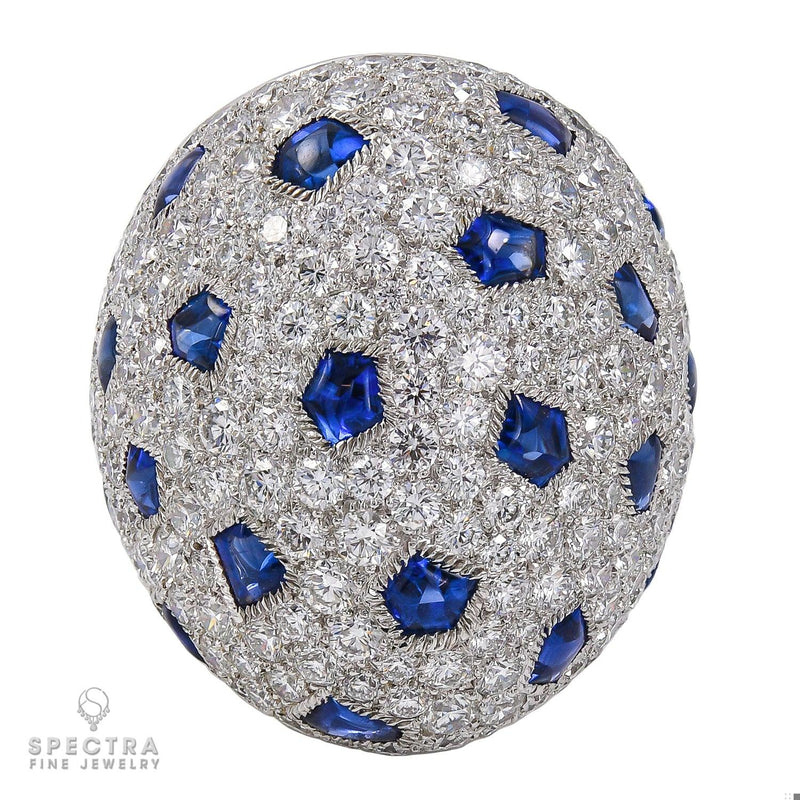 Panthère de Cartier Diamond Sapphire Ring in 18K white gold. Note the iconic panther motif with pavé-set diamonds (4.5 cts, G-H VS) and sapphire accents. This contemporary piece exemplifies Cartier's legendary artistry—flawless finishing, substantial 25-gram weight, and proper Cartier signature with serial number.
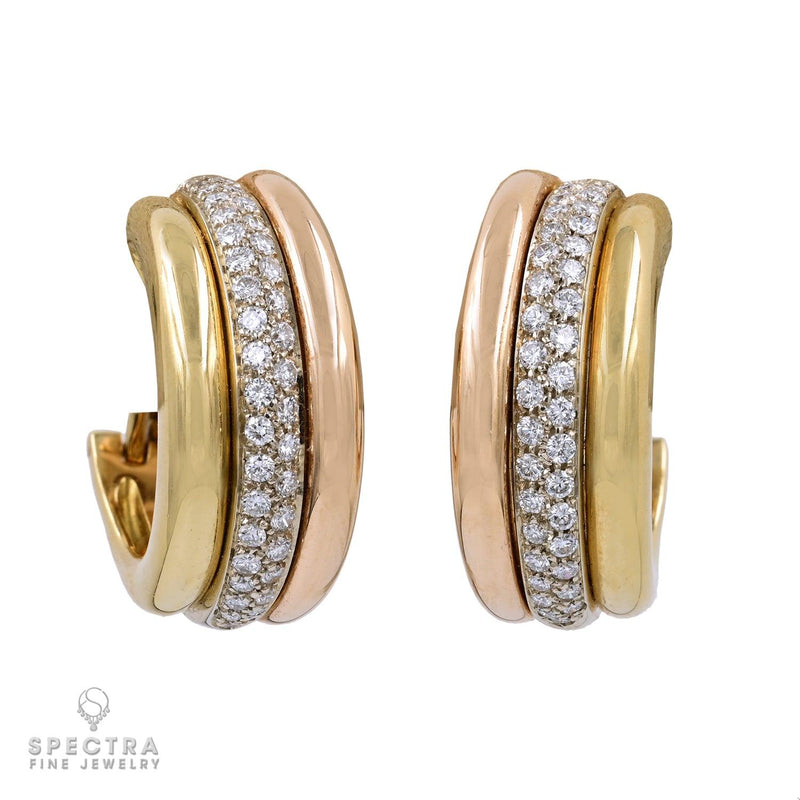 Cartier Trinity Vintage Diamond Pavé Fluted Half Hoop Earrings. Classic 1980s-era design with the tricolor gold signature. Look for the fluted texture consistency, secure clip mechanism, and period-appropriate hallmarks.
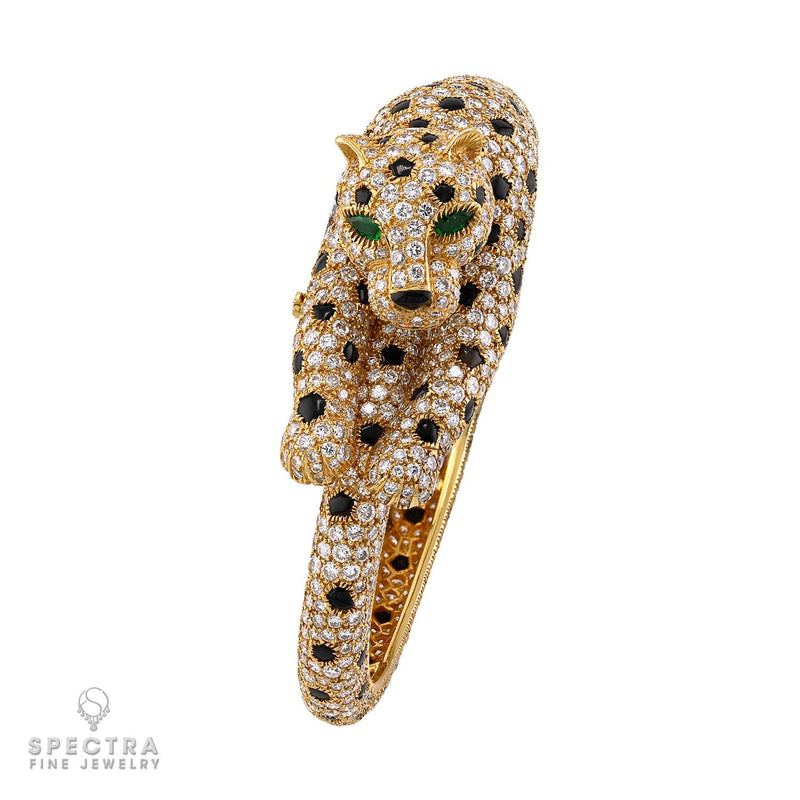 Cartier Panthère Diamond, Onyx & Emerald Bangle. A museum-quality piece featuring Cartier's signature spotted panther. Authentication points: emerald eyes properly cabochon-cut, onyx spots precisely inlaid, articulated design moves smoothly, substantial construction.
Images courtesy of Spectra Fine Jewelry. All pieces authenticated and available for purchase.
Currently Available at Spectra
We keep authenticated Cartier pieces in rotation. Every item goes through our verification process before it hits the case.
Have a Piece You're Unsure About? →
Related Reading
- How to Spot a Fake Cartier Love Bracelet →
- How to Read a Cartier Serial Number →
- Cartier Signatures by Era →
- French Hallmarks Guide →
Independent educational resource. Not affiliated with Cartier or Richemont.
Verify Your Cartier
Frequently Asked Questions About Cartier
More on Cartier
About This Guide
This guide was written by the authentication specialists at Signed Vintage Jewelry, a Diamond District resource backed by Spectra Fine Jewelry's 30+ years of expertise in signed and estate pieces. Our team examines hundreds of pieces monthly.
Get the Collector's Newsletter
Join collectors who get authentication tips, market insights, and new guide alerts. No spam, just practical knowledge.
Need Help?
Send photos of a piece you're evaluating. We'll give you a straight read—no pressure, no BS.
Contact Spectra Fine Jewelry →Ready to Browse Authenticated Pieces?
Every item at Spectra Fine Jewelry goes through our verification process before it hits the case. No guesswork. No surprises.