Cartier Signatures by Era: A Visual Reference
Cartier's signature styles have evolved over more than 170 years. Knowing what to expect from different periods helps authenticate pieces and catch anachronisms.
This guide shows how Cartier marked pieces across eras.
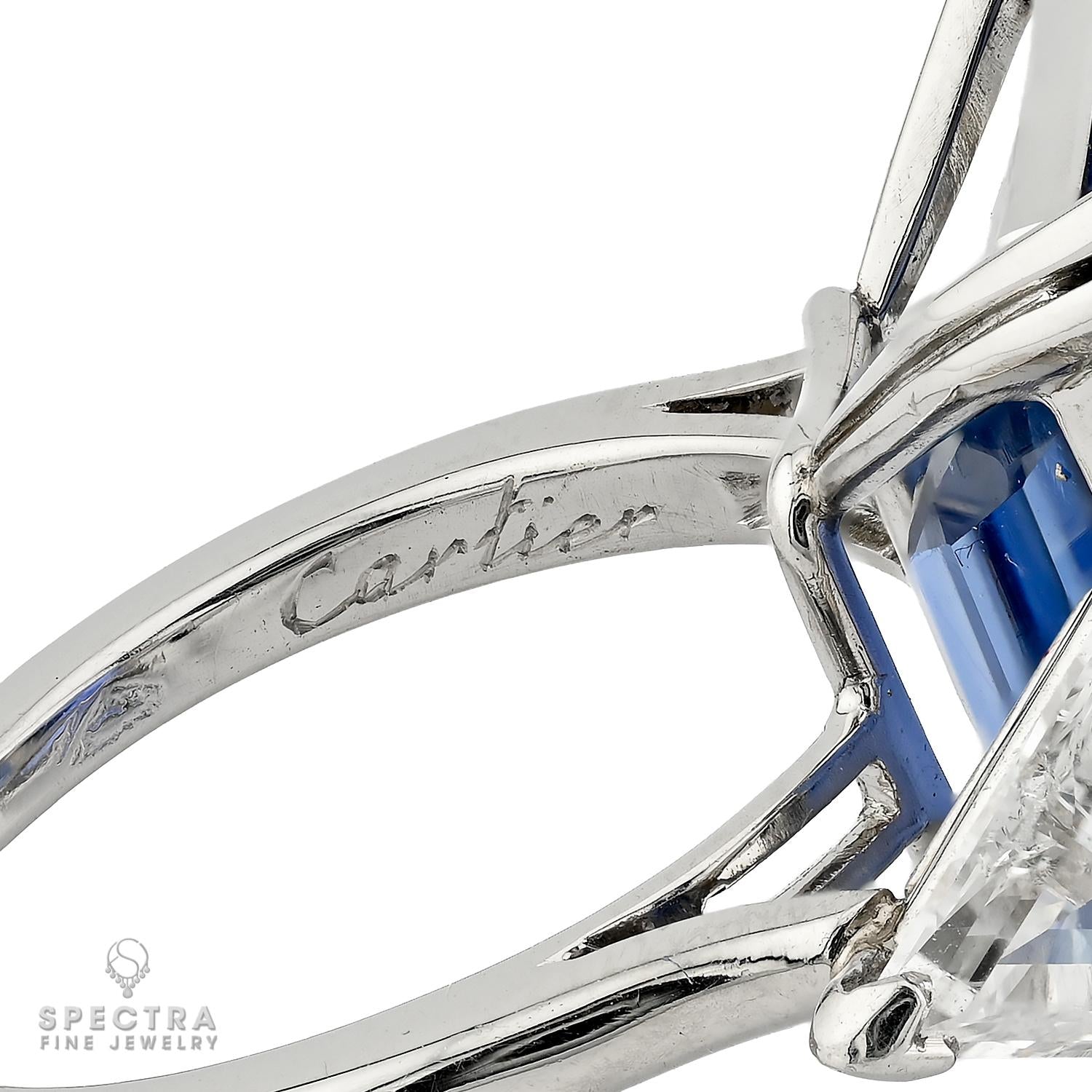 Modern Cartier signatures are precisely engraved with consistent depth and clean letterforms. This example shows the elegant script used on contemporary pieces. Photo: Spectra Fine Jewelry
Why Signature Style Matters
A signature style that doesn't match the piece's apparent age is a red flag. Either:
- The piece isn't from the era claimed
- The signature was added or altered later
- Something else is wrong
Learning period-appropriate signatures helps you spot inconsistencies.
Early Cartier (1847-1900)
Context: Louis-François Cartier founded the house in 1847. Early pieces are rare and highly valuable.
Signature characteristics:
- Full name: "Cartier"
- Often with location: "Cartier Paris"
- Hand-engraved
- Script or serif fonts
- May include "Paris" in flowing script
Mark placement:
- Hidden locations (back, inside)
- Near French hallmarks
- Maker's mark (registered poinçon)
What you'll typically see:
"Cartier"
   or
"Cartier Paris"
Early pieces are primarily French-made with French hallmarks.
Belle Époque / Edwardian Era (1900-1914)
Context: Cartier expands internationally. London boutique opens 1902, New York 1909.
Signature characteristics:
- Clean, refined lettering
- "CARTIER" in capital letters becomes more common
- Location identifiers: "PARIS," "LONDON," "NEW YORK"
- Matching French or British hallmarks based on origin
- Serial numbers begin appearing systematically
Typical presentations:
"CARTIER"
"CARTIER PARIS"
"CARTIER LONDON"
"CARTIER NEW YORK"
Associated marks:
- French eagle head (Paris pieces)
- British hallmarks (London pieces)
- Maker's marks registered in each country
Art Deco Era (1920s-1930s)
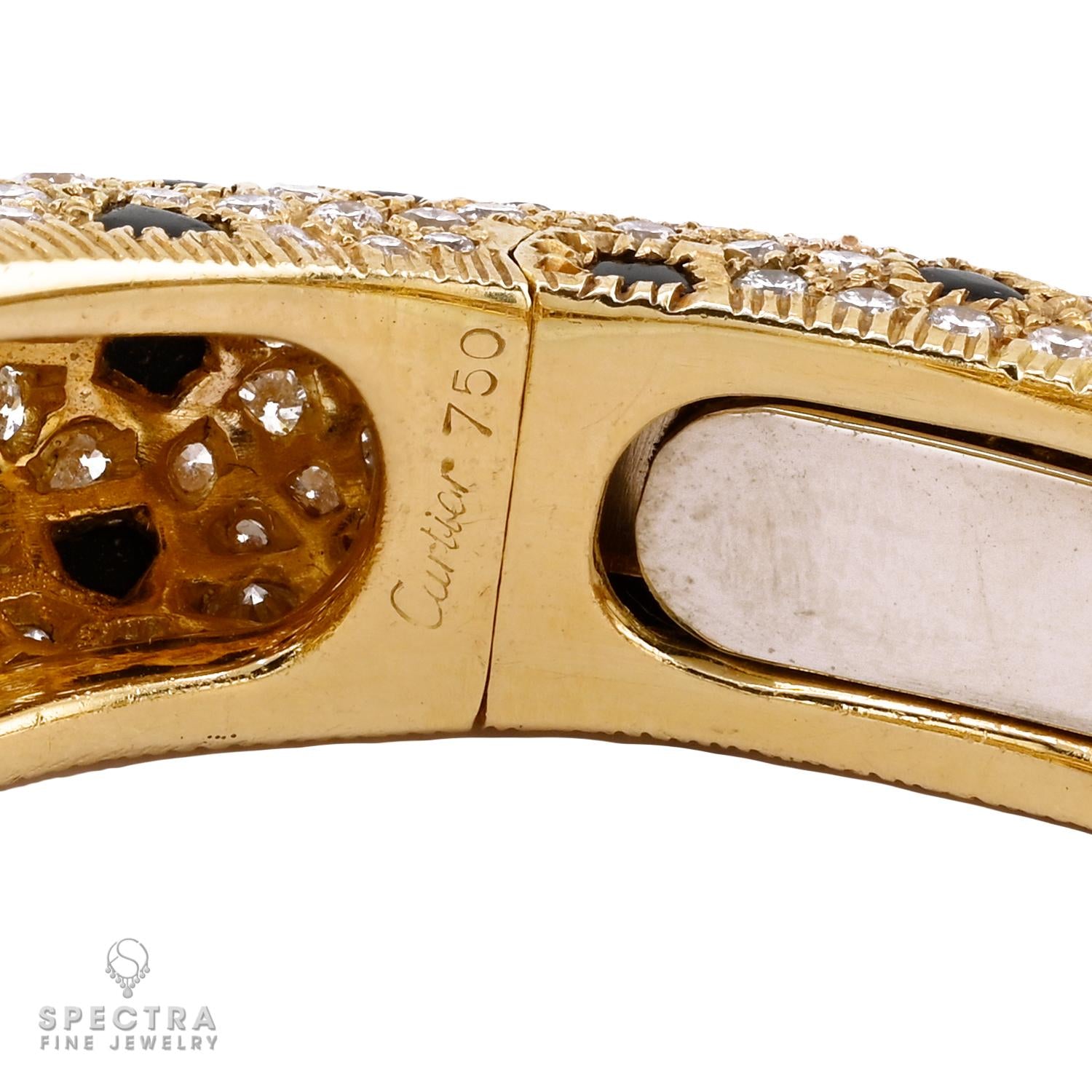 Cartier marks follow French hallmarking conventions when made in France: "CARTIER" signature with eagle head (18K gold) and maker's lozenge. Photo: Spectra Fine Jewelry
Context: Cartier's design apex. Geometric designs, colored stones, platinum work.
Signature characteristics:
- Clean sans-serif and serif combinations
- "CARTIER" typically in capitals
- Location often included
- Serial numbers more standardized
- French hallmarks on French pieces
Common formats:
"CARTIER"
"750" (or "18K")
[Serial number]
[French hallmarks if applicable]
Platinum pieces: Look for "PLAT" or platinum hallmarks (dog head in France).
Retro Era (1940s)
Context: Wartime limitations. More gold (platinum restricted), bolder designs.
Signature characteristics:
- Similar to Art Deco but continuing evolution
- More gold pieces (yellow and rose gold)
- "CARTIER" with metal marks
- Serial numbers standard
Material notes: Expect more gold pieces, less platinum during WWII years.
Mid-Century (1950s-1960s)
Context: Post-war prosperity. New design directions.
Signature characteristics:
- "CARTIER" standard
- Clear metal marks (750, 18K)
- Location less consistently included
- Serial number format evolving
Watch signatures: Cartier watch cases may show different marks than jewelry. Case makers sometimes marked separately.
Modern Era Introduction (1969-1980s)
Context: Love bracelet launched 1969. Cartier standardizes modern production.
Signature characteristics:
- "Cartier" in distinctive flowing script (the modern logo)
- "CARTIER" in capitals also used
- Consistent serial number formats
- Metal marks standard (750, 18K)
Love bracelet specifics:
Interior marking:
"Cartier" (script)
"750" or "18K"
Serial number
Size
Both halves of Love bracelets should be marked.
Contemporary Era (1990s-Present)
Context: Richemont ownership (since 1988). Standardized global production.
Signature characteristics:
- Consistent global standards
- "Cartier" script logo standard
- Alphanumeric serial numbers
- Clear metal marks (750)
- Computer-controlled engraving
Current typical format:
"Cartier" (script logo)
"750"
Serial number (letter + numbers)
Size (where applicable)
Quality notes: Modern Cartier signatures are laser or machine engraved with extreme precision. Inconsistent engraving depth or quality suggests problems.
Signature Comparison Chart
| Era | Typical Format | Engraving Style | Serial Numbers |
|---|---|---|---|
| Pre-1900 | "Cartier Paris" | Hand-engraved | Rare/none |
| 1900-1920 | "CARTIER" + location | Hand/early machine | Beginning |
| 1920-1940 | "CARTIER" | Machine | Standard |
| 1940-1960 | "CARTIER" | Machine | Standard |
| 1969-1990 | "Cartier" script | Machine | Standardizing |
| 1990-present | "Cartier" script | Laser/precision | Alphanumeric |
Red Flags by Era
"Vintage" piece with modern signature: A piece claimed to be from 1950 but carrying modern script logo format is suspicious.
Modern signature on worn piece: Crisp, laser-engraved signature on a piece showing significant wear elsewhere suggests the signature was added later.
Wrong location for era: "Cartier New York" on a piece with French hallmarks from before 1909 is impossible (NY boutique didn't exist yet).
Font inconsistencies: Cartier's fonts have specific characteristics. "CARTIER" that looks off in spacing, weight, or letterform is worth investigating.
French Hallmarks Across Eras
French-origin Cartier pieces show era-appropriate hallmarks:
Pre-1838: Older hallmark system, complex variety
1838-1919: Eagle head for 18k gold (various shield shapes) Maker's mark (diamond lozenge)
1919-Present: Modern eagle head Updated maker's mark formats
When evaluating, the hallmarks and signature style should both be appropriate for the same era.
What Original Cartier Engraving Looks Like
Consistent depth: Every letter the same depth. No variation.
Clean edges: Letterforms have crisp, clean edges—not fuzzy or rough.
Correct font: Cartier uses specific fonts. Characters should match known examples.
Appropriate technique: Hand-engraving (older) looks different from machine (mid-century) looks different from laser (modern).
Proper spacing: Character spacing is consistent and deliberate.
Common Forgery Tells
Wrong font: The "C" in Cartier, the "r" tail, the "i" dot—these have specific characteristics fakers often get wrong.
Inconsistent depth: Forged signatures often vary in depth (deeper in some areas, shallower in others).
Wrong technique: A "1920s piece" with laser-precision engraving is anachronistic.
Scratchy appearance: Amateur engraving looks scratched rather than cleanly cut.
Wrong placement: Signatures should appear in standard locations for the piece type.
Building Your Eye
To recognize authentic Cartier signatures:
-
Study authenticated examples
- Auction catalogs (major houses)
- Cartier boutique pieces
- Museum collections
-
Compare systematically
- Letter shapes
- Spacing
- Depth and technique
- Overall character
-
Know the eras
- What style matches what period
- What hallmarks accompany what signatures
-
Practice with magnification
- Loupe examination reveals details
- Photos under magnification help comparison
Quick Reference: What to Check
When examining a Cartier signature:
□ Font style appropriate for claimed era? □ Engraving technique matches the period? □ Depth consistent throughout? □ Spacing correct? □ Placement appropriate for piece type? □ Accompanying hallmarks match the era? □ Serial number format (if present) matches the era? □ Overall quality consistent with Cartier standards?
Need Help Evaluating a Cartier Signature?
Send photos. We'll tell you what we see.
Browse Authenticated Cartier →
Related Guides
French Hallmarks Explained → Understanding the eagle head, owl, and maker's lozenge on French pieces.
Where to Find Hallmarks → Standard locations for marks on rings, bracelets, and necklaces.
How to Authenticate → The full authentication workflow for signed jewelry.
Visual Hallmark Reference → See what authentic marks actually look like.
Independent educational resource. Not affiliated with Cartier or Richemont.
Identify & Date Your Piece
Need Help?
Send photos of a piece you're evaluating. We'll give you a straight read—no pressure, no BS.
Contact Spectra Fine Jewelry →Ready to Browse Authenticated Pieces?
Every item at Spectra Fine Jewelry goes through our verification process before it hits the case. No guesswork. No surprises.