Jewelry Hallmark & Maker's Mark Glossary
A comprehensive reference for the terms collectors actually use. Bookmark this.
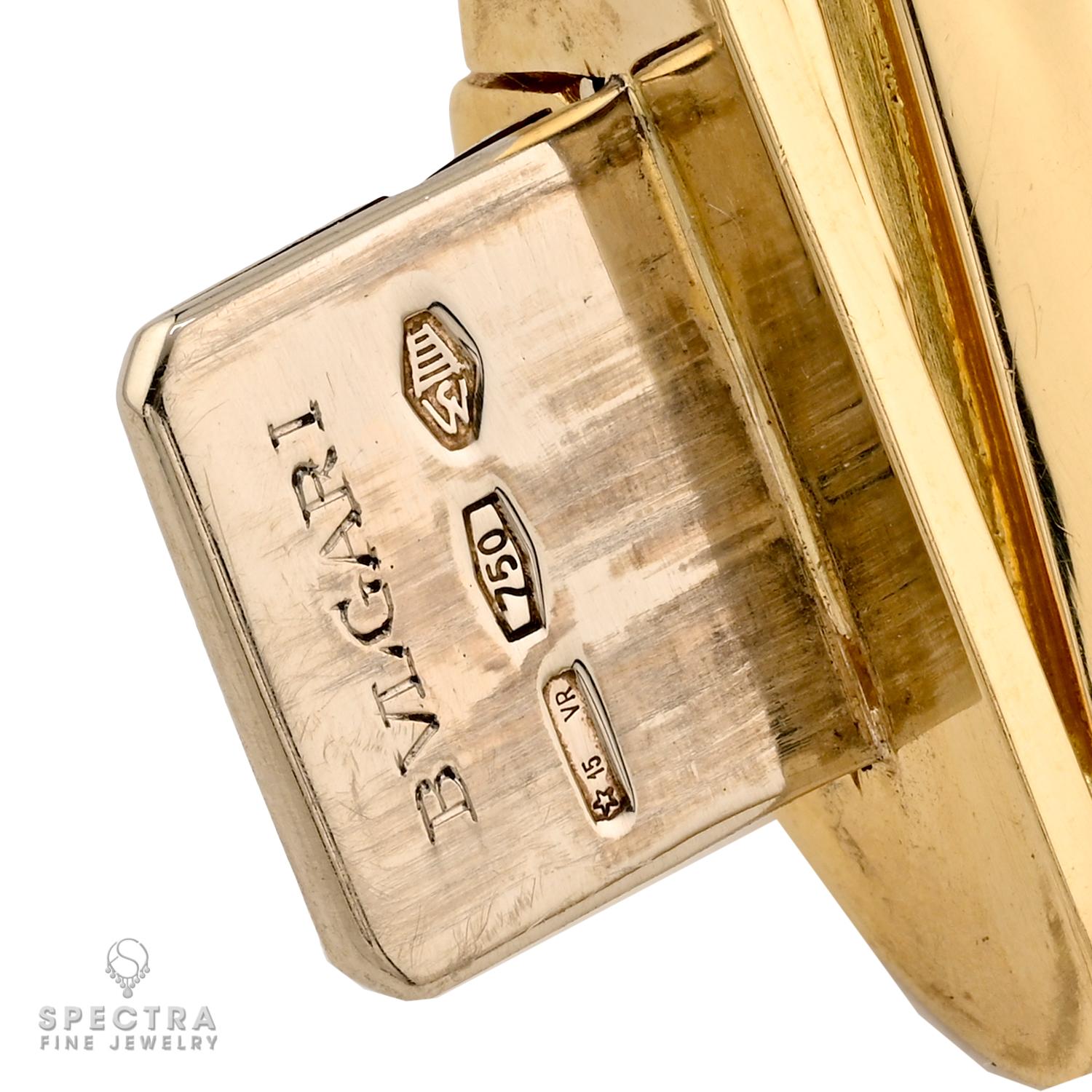 A well-marked piece tells a complete story: This Bulgari necklace shows the maker's mark, 750 fineness (18K gold), and Italian star hallmark with provincial code. Understanding these marks is essential for authentication. Photo: Spectra Fine Jewelry
A
Alloy A mixture of metals. Pure gold is too soft for jewelry; it's alloyed with other metals (copper, silver, zinc, nickel) for durability. The alloy composition affects color, hardness, and durability.
Antique Generally refers to pieces 100+ years old. Some use 75 years as a threshold. Legally, customs definitions vary by country.
Assay The process of testing metal to determine its purity. An assay office performs this testing and applies hallmarks to items that meet legal standards.
Assay Office An independent institution authorized to test and hallmark precious metals. UK assay offices include London, Birmingham, Sheffield, and Edinburgh. France has the Bureau de Garantie.
Assay Office Mark A symbol indicating which assay office tested and hallmarked an item. Examples: leopard's head (London), anchor (Birmingham), rose (Sheffield), castle (Edinburgh).
B
Bail The loop or connector that attaches a pendant to a chain. May be fixed or hinged. Sometimes carries marks.
Baguette A rectangular step-cut gemstone shape. Common in Art Deco jewelry and as accent stones.
Base Metal Non-precious metals like brass, copper, or nickel. Items made of base metal should not carry precious metal hallmarks.
Bezel The metal frame that holds a stone in place. A bezel setting surrounds the stone's girdle.
Bezel Setting A setting where metal completely surrounds the girdle of a stone, holding it securely. Common in contemporary and vintage designs.
Birmingham UK assay office, established 1773. Mark: anchor.
Box Clasp A clasp mechanism where a tongue inserts into a box and clicks into place. Common on bracelets and necklaces.
Britannia Silver A high-purity silver standard (95.8% silver, fineness 958). Higher than sterling (92.5%). Used in UK hallmarking.
Brilliant Cut A round diamond or gemstone cut with 57-58 facets designed to maximize light return and sparkle.
Burnishing A finishing technique using a smooth tool to compress and polish metal surfaces, creating a bright finish.
C
Cabochon A gemstone cut with a smooth, domed top and flat bottom (unfaceted). Common for opaque stones like turquoise, coral, and star sapphires.
Calibré Cut Gemstones cut to exact dimensions to fit a specific setting, often in rows or geometric patterns.
Carat (Gemstones) Unit of weight for gemstones. 1 carat = 0.2 grams = 200 milligrams. Abbreviated "ct." If you know a diamond's dimensions, our carat calculator can estimate its weight.
Carat/Karat (Gold) In gold, carat (or karat) refers to purity. 24 carat = pure gold. 18 carat = 75% gold (18/24 = 0.75). Our precious metals converter handles conversions between different purity systems.
Cartouche An oval or oblong design element, often used as a space for engraving or decoration. Common in Egyptian-revival and Art Deco designs.
Cast Jewelry made by pouring molten metal into a mold. Lost-wax casting is common for complex shapes.
CCM (Common Control Mark) An international conformity mark applied under the Vienna Convention on the Control of the Fineness and the Hallmarking of Precious Metal Objects. Recognized among member countries.
Chasing A metalworking technique where tools are used on the front surface to push metal into decorative patterns.
Cloisonné An enamel technique where thin metal wires form compartments (cloisons) that are filled with enamel and fired.
Clip Back An earring back mechanism using a hinged clip that grips the earlobe. Common on vintage and contemporary earrings.
Collet A band of metal encircling a gemstone to hold it in place. Similar to a bezel but often refers to a simpler, open-backed setting.
Condition The state of preservation of a piece. Factors include wear, damage, repairs, alterations, and overall integrity.
Convention Mark See CCM. A standardized mark for international trade in precious metals among participating countries.
Crown The upper portion of a faceted gemstone, above the girdle. Also, a UK hallmark element.
Culet The small flat facet at the bottom point of a brilliant-cut gemstone. Modern cuts often have no culet or a very small one.
D
Date Letter A letter indicating the year an item was hallmarked. Used primarily in UK hallmarking. Letter styles and shields change annually, allowing pieces to be dated precisely.
Deploying/Deployant Clasp A folding clasp mechanism that opens to allow the bracelet or watch strap to expand. Common on watch bracelets.
Duty Mark Historical mark indicating that tax (duty) was paid on an item. No longer used in modern hallmarking but found on antique pieces.
E
Eagle Head (Tête d'Aigle) French hallmark for 18k gold (750 fineness) made in France. One of the most common marks on French jewelry.
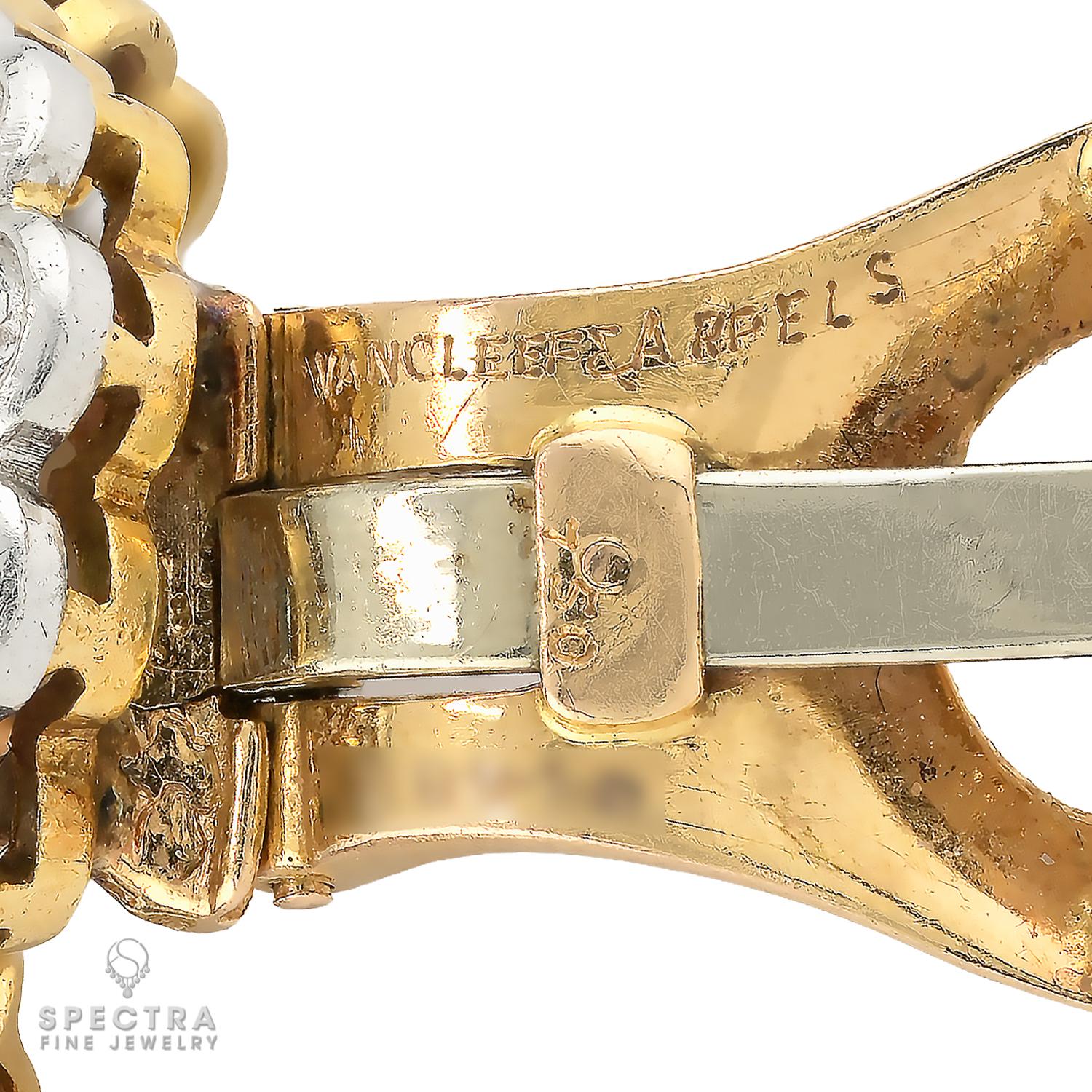 Van Cleef & Arpels earrings showing French hallmarks including the eagle head (tête d'aigle) for 18K gold. Photo: Spectra Fine Jewelry
Van Cleef & Arpels earrings showing French hallmarks including the eagle head (tête d'aigle) for 18K gold. Photo: Spectra Fine Jewelry
Edinburgh Scottish assay office. Mark: castle.
Electroplating Process of using electric current to deposit a thin layer of metal (gold, silver, rhodium) onto a base metal.
Enamel Colored glass fused to metal at high temperatures. Types include cloisonné, champlevé, plique-à-jour, and guilloché enamel.
En Tremblant "Trembling" in French. A setting where elements (often flowers or leaves) are mounted on springs to create movement.
Estate Jewelry Previously owned jewelry, regardless of age. The term doesn't imply specific age, quality, or provenance.
F
Facet A flat polished surface on a cut gemstone. A brilliant-cut diamond has 57-58 facets.
Filigree Delicate ornamental work of fine wire, typically gold or silver, formed into intricate patterns.
Findings The functional components of jewelry: clasps, earring backs, jump rings, chains, pins, etc.
Fineness The purity of a precious metal, typically expressed in parts per thousand. Examples: 750 (18k gold = 75% gold), 585 (14k gold), 925 (sterling silver), 950 (platinum).
Fineness Mark A stamp indicating metal purity. May be numeric (750, 925) or use traditional symbols.
Flush Setting A setting where the stone is set level with the metal surface around it.
French Hallmarks France uses a system of punch marks including the eagle head (18k gold), owl (import mark), and various marks for silver and platinum.
G
Gallery The metalwork beneath a ring's center stone, between the setting and the shank. Often decorative.
Gilding Covering a surface with gold or gold-colored material. Can be gold leaf, gold plating, or vermeil.
Girdle The widest part of a gemstone, where the crown meets the pavilion. The edge where the stone is typically held by settings.
Gold Precious metal. Pure gold is 24 karat. Common jewelry purities: 22k (916), 18k (750), 14k (585), 10k (417), 9k (375).
Gold-Filled (GF) A layer of gold bonded to a base metal core. Not solid gold. Must be at least 5% gold by weight. Different from gold plating (thinner layer) and solid gold.
Gold Plated A thin layer of gold electroplated onto a base metal. Not solid gold. Layer is thinner than gold-filled.
Gold Washed An extremely thin layer of gold applied to base metal. Less durable than gold plating.
Grain Setting A setting technique using small beads of metal (grains) to hold stones in place.
Granulation An ancient technique of decorating metal with tiny spheres (granules) of gold or silver fused to the surface.
Guilloché A decorative engraving technique creating repetitive patterns of interlacing lines. Often seen beneath translucent enamel (guilloché enamel).
H
Hallmark In the strict sense: a set of official marks applied by an independent assay office guaranteeing metal purity. In casual use: any stamp or mark on jewelry (though technically incorrect).
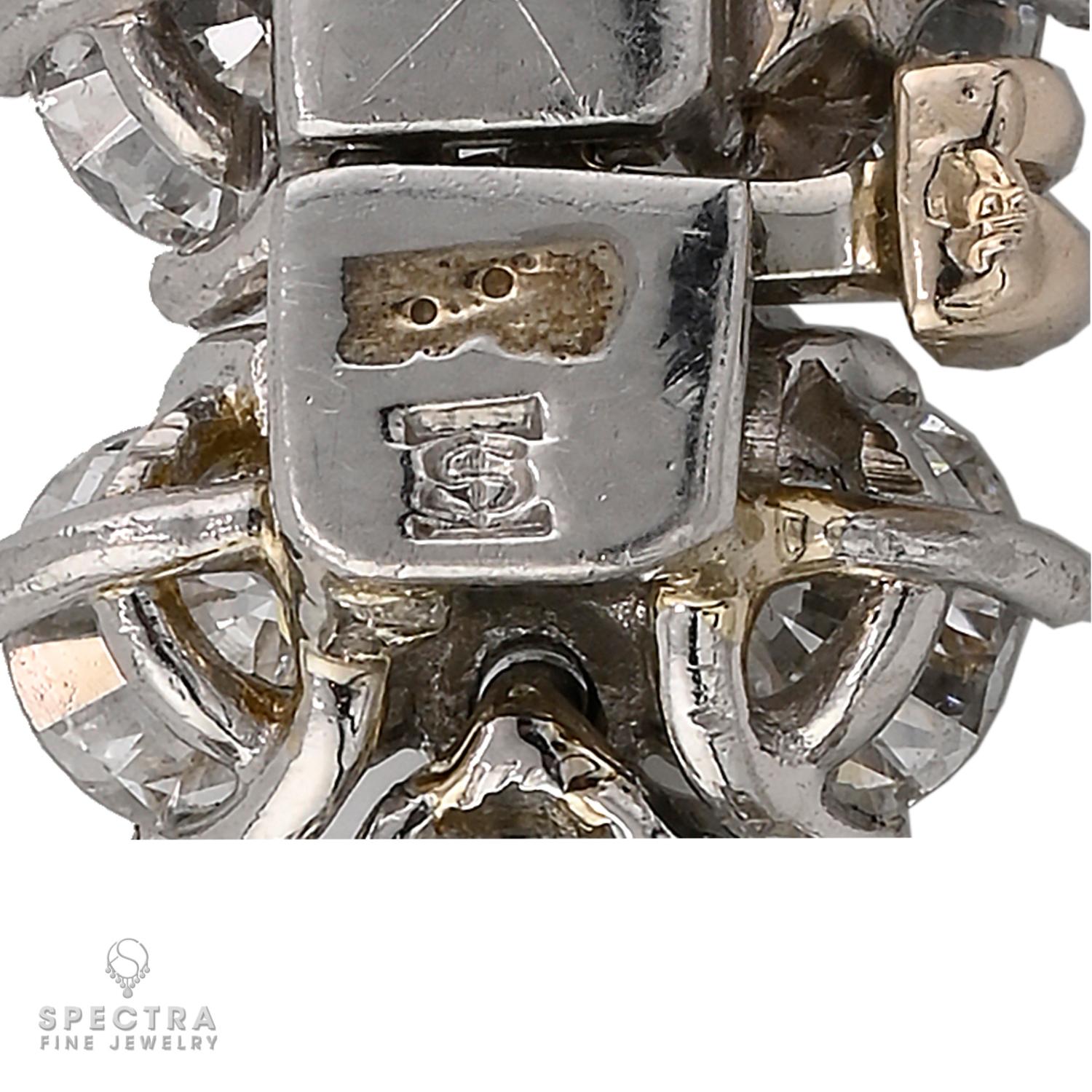 Harry Winston platinum necklace showing proper hallmarks: the French dog's head mark (for platinum), maker's initials, and serial numbers. Photo: Spectra Fine Jewelry
Harry Winston platinum necklace showing proper hallmarks: the French dog's head mark (for platinum), maker's initials, and serial numbers. Photo: Spectra Fine Jewelry
Hallmarking Convention International agreement (Vienna Convention) establishing mutual recognition of hallmarks among participating countries.
Hardness Resistance to scratching. Measured on the Mohs scale (1-10). Diamond = 10, gold = 2.5-3.
Head The part of a ring that holds the center stone. Also called a setting or mounting.
I
Import Mark A mark applied when precious metal items enter a country. France uses the owl mark for gold imports. UK has specific import marks.
Inclusion Material trapped inside a gemstone during formation. Can be crystals, feathers, clouds, or other features. Affects clarity grading.
J
Jump Ring A small metal ring used to connect components in jewelry. Can be open (not soldered) or closed (soldered shut).
K
Karat American spelling of carat when referring to gold purity. See Carat.
L
Lapidary The art of cutting, polishing, and engraving stones. A lapidary is a person who works with stones.
Lion Passant UK hallmark symbol for sterling silver (925). A walking lion facing left.
Lobster Claw Clasp A spring-loaded clasp shaped like a lobster claw. Common on chains and bracelets.
London UK assay office, oldest in England. Mark: leopard's head.
Loupe A small magnifying glass used to examine jewelry and gemstones. Typically 10x magnification.
Luster The quality of light reflection from a surface. In pearls, high luster means bright, mirror-like reflections.
M
Maker's Mark A stamp identifying the manufacturer, workshop, or person who made or submitted an item. Different from brand signatures—a maker's mark is often a symbol or initials registered with an assay office.
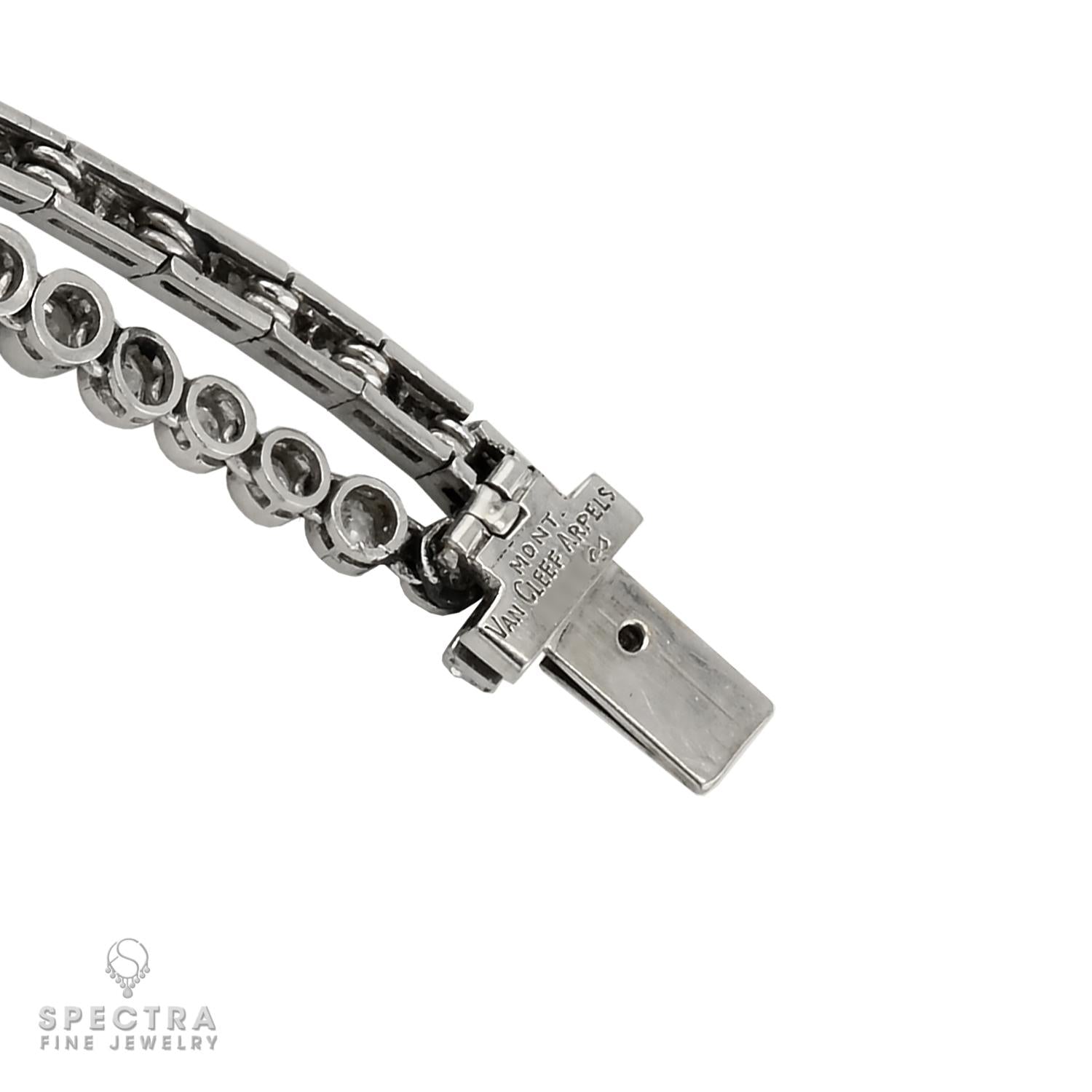 Van Cleef & Arpels platinum necklace showing the maker's mark engraved on the clasp: "VAN CLEEF ARPELS" and "MONT." (monture). Photo: Spectra Fine Jewelry
Van Cleef & Arpels platinum necklace showing the maker's mark engraved on the clasp: "VAN CLEEF ARPELS" and "MONT." (monture). Photo: Spectra Fine Jewelry
Marquise A boat-shaped or pointed oval gemstone cut. Also called navette.
Matte Finish A non-reflective, textured metal surface. Achieved through sandblasting, brushing, or chemical treatment.
Melee Small diamonds, typically under 0.20 carats, used as accent stones.
Milgrain A decorative edge detail consisting of tiny beads or grains of metal. Common in vintage and antique designs.
Millesimal Fineness Expressing metal purity in parts per thousand. 750 = 750 parts gold per 1000 = 75% = 18 karat.
Mine Cut An antique diamond cutting style predating the modern brilliant cut. Cushion-shaped with a high crown and small table.
Mounting The metal framework of a piece of jewelry that holds gemstones. Also called a setting.
Mystery Set Van Cleef & Arpels' patented technique for setting stones invisibly, with no visible metal between them.
N
Navette A boat-shaped or pointed oval form. Also called marquise. Common in antique jewelry.
O
Old European Cut An antique round diamond cut with a small table, high crown, and large culet. Predecessor to the modern brilliant cut.
Old Mine Cut An antique cushion-shaped diamond cut with a small table, high crown, and visible culet. Popular in the 18th and 19th centuries.
Open Back Setting A setting where the back of the stone is open/exposed. Allows light through and permits cleaning.
Owl Mark (Hibou) French hallmark applied to gold items imported into France. Indicates the piece was assayed upon entry.
P
Palladium Precious metal in the platinum group. Lighter than platinum. Fineness marks: 950 (95%), 500 (50%).
Patina The surface appearance that develops on metal over time due to age, wear, and oxidation. Often valued in antique pieces.
Pavilion The lower portion of a faceted gemstone, below the girdle.
Pavé A setting style where small stones are set close together, covering the surface with minimal visible metal.
Pinchbeck A copper-zinc alloy that resembles gold. Named after inventor Christopher Pinchbeck (1670-1732). Used in Georgian jewelry.
Platinum Precious metal. Denser than gold. Common fineness marks: 950 (95%), 900 (90%), 850 (85%).
Platinum Marks UK: orb symbol. France: dog's head (older), rhinoceros (newer). Often accompanied by numeric fineness (950, 900).
Plique-à-jour An enamel technique creating a stained-glass effect where enamel fills cells with no metal backing.
Poinçon French term for a punch or hallmark. Poinçon de maître = maker's mark.
Prong Setting A setting using metal claws (prongs) to hold a gemstone. Common: four-prong, six-prong.
Provenance The documented history of ownership of a piece. Strong provenance adds value and authenticity confidence.
Purity See Fineness.
Q
Quality Mark Any mark indicating metal purity or quality. May be numeric or symbolic.
R
Registered Mark A maker's mark officially registered with an assay office or government body.
Repoussé A metalworking technique where metal is hammered from the back to create raised designs on the front.
Retro Jewelry style from the 1940s characterized by bold, three-dimensional designs, often in rose or yellow gold.
Rhinoceros Mark French hallmark for platinum (newer system).
Rhodium A platinum-group metal used to plate white gold and silver for a brighter, more durable finish.
Rhodium Plating Electroplating with rhodium. Common on white gold to enhance whiteness and durability. Wears over time and may need reapplication.
Rose Cut An antique cutting style with a flat bottom and faceted dome top. No pavilion.
Rose Gold Gold alloyed with copper to produce a pink/rose color. The copper content determines intensity of color.
Rose Mark Sheffield assay office symbol (UK).
S
Safety Clasp A secondary closure on bracelets that prevents loss if the main clasp opens accidentally.
Satin Finish A brushed metal finish with fine parallel lines creating a soft sheen.
Shank The band portion of a ring that circles the finger. Sizing the shank properly is crucial—see our ring size guide for measurement tips.
Sheffield UK assay office. Mark: rose (Yorkshire rose).
Signed Jewelry bearing a maker's, designer's, or brand name. "Signed Cartier" means the piece carries the Cartier name/signature.
Silver Precious metal. Common standards: Sterling (925), Britannia (958), coin silver (900).
Solder Metal alloy used to join metal pieces. Visible solder lines can indicate repairs or construction method.
Sponsor's Mark In UK hallmarking, the mark identifying who submitted the item for assay. May be a maker, importer, or retailer. Part of the hallmark stack.
Stacking Ring A ring designed to be worn with multiple others on the same finger.
Sterling Silver Silver alloy of 92.5% silver, 7.5% other metals (usually copper). Marked 925 or with the lion passant (UK).
Step Cut A cutting style with rectangular facets arranged in parallel rows. Emerald and baguette cuts are step cuts.
Stone Setting The technique and metalwork used to secure gemstones in jewelry.
T
Table The large flat facet on the top of a faceted gemstone.
Tarnish Surface discoloration on silver or other metals due to chemical reaction with sulfur compounds. Can be removed by polishing.
Tension Setting A setting where the stone is held in place by pressure from the metal band, appearing to float.
Toggle Clasp A clasp using a bar that fits through a ring to secure.
Touchstone A dark stone historically used to test gold purity by examining the color of streaks left on it.
Tremblant See En Tremblant.
Troy Ounce Unit of weight for precious metals. 1 troy ounce = 31.1 grams. Different from avoirdupois ounce (28.35 grams).
U
Ultraviolet (UV) Light Used in gemology to reveal fluorescence and detect treatments or synthetic stones.
Unsigned Jewelry without a visible maker's mark or brand signature.
V
Vermeil Sterling silver with a gold plating (minimum 2.5 microns thick, minimum 10k gold in US). Not solid gold.
Victorian Jewelry from the reign of Queen Victoria (1837-1901). Divided into Early (Romantic), Mid (Grand), and Late (Aesthetic) periods.
Vienna Convention See Hallmarking Convention.
Vintage Generally refers to pieces 20-100 years old. Usage varies; no strict legal definition.
W
White Gold Gold alloyed with white metals (nickel, palladium, silver) to create a silvery appearance. Often rhodium plated. Not platinum.
X
XRF (X-Ray Fluorescence) Non-destructive testing method used to determine metal composition. Shoots X-rays at the metal surface and analyzes the fluorescent radiation returned. Standard authentication tool for professionals.
Y
Yellow Gold Gold alloyed with copper and silver to maintain a yellow color while adding durability. Color intensity varies by alloy ratio and karat.
Z
Zolotnik Historical Russian unit for measuring gold purity. 96 zolotniki = pure gold. 56 zolotniki = 14K (585 fineness), 72 zolotniki = 18K (750 fineness). Used until Soviet standardization.
Additional Specialist Terms
Acid Testing Traditional method for testing gold purity using nitric acid. Different acid strengths react differently with different karat golds. Requires scratching the piece (mildly destructive).
À Jour "Open to the light" in French. A setting technique where the back is open, allowing light to pass through gemstones. Also spelled "ajour."
Articulated Jewelry with moving, jointed parts that allow flexibility. Common in snake chains, panel bracelets, and figural pieces.
Bloomed Gold Gold with a matte, slightly frosted surface achieved through acid treatment or controlled oxidation. Popular in Victorian-era jewelry.
Bombé A domed or convex design. Bombé rings feature dramatically curved surfaces, often set with pavé stones.
Bright Cut An engraving technique where faceted cuts create reflective surfaces that catch light. Common in antique jewelry.
Channel Setting Stones set in a groove between two metal walls, with no prongs between individual stones. Common for baguettes and calibré-cut stones.
Champlevé Enamel technique where recesses are carved or etched into metal and filled with enamel. The surrounding metal forms the design outline.
Coin Silver Silver alloy of 90% silver, 10% copper. US standard before sterling became prevalent. Marked "coin" or "900."
Conversion Jewelry altered from its original form. A brooch converted to a pendant, earrings made from a broken pair, etc. Affects value and authenticity assessment.
Depose French for "registered" or "patented." Indicates a registered design, common on French and Swiss pieces.
Die Struck Jewelry created by stamping metal blanks with hardened steel dies under high pressure. Creates crisp detail and dense metal structure.
Fire Scale (Firestain) Purple-gray discoloration on sterling silver caused by oxidation during heating (soldering, annealing). May appear after polishing removes the silver surface.
Florentine Finish A crosshatch pattern of fine lines engraved or pressed into metal, creating a textured, non-reflective surface.
Gypsy Setting A flush or nearly flush stone setting where the metal rises around the stone. Common in Victorian men's rings.
Invisible Setting (Mystery Setting) Patented by Van Cleef & Arpels in 1933. Stones set with no visible metal, using grooves cut into the stones themselves to slide onto a metal framework.
Kitemark Diamond-shaped British design registration mark used 1842-1883. Encodes registration date and material category.
Marriage A piece assembled from components originally belonging to different items. A "married" ring might have an antique mounting with a modern stone.
Niello A black metallic alloy (silver, copper, lead, sulfur) used as inlay in engraved metal. Creates strong contrast. Common in Russian, Siamese, and Indian work.
Parure A matched set of jewelry, typically including necklace, earrings, bracelet, and brooch. A demi-parure is a partial set.
Pennyweight (dwt) Unit of weight used in the jewelry trade. 20 pennyweights = 1 troy ounce. 1 pennyweight = 1.555 grams.
Period Piece Jewelry actually made during the era its style represents (as opposed to later reproductions).
Pseudo-Mark A fake hallmark designed to deceive. Often mimics marks from other countries or eras. Particularly common on 19th-century pieces trying to appear older.
Rolled Gold A sheet of gold mechanically bonded to a base metal core. Similar to gold-filled but may be thinner. Not solid gold.
Rolled Gold Plate (RGP) Thinner than gold-filled. Less than 5% gold by weight. Not solid gold.
Serti Invisible See Invisible Setting. The Van Cleef & Arpels term for their patented technique.
Single Cut A simplified diamond cut with 17-18 facets (vs. 57-58 in a full brilliant). Common for small accent stones in vintage jewelry.
Swiss Cut A diamond cut with 33 facets. More facets than a single cut but fewer than a full brilliant.
Transitional Cut Diamond cutting style between old European cut and modern brilliant (roughly 1920s-1940s). Shows characteristics of both styles.
Wirework Jewelry made primarily from wire, twisted, coiled, or woven into patterns. Includes filigree and cannetille work.
Common Fineness Quick Reference
| Mark | Metal | Purity |
|---|---|---|
| 999 | Gold/Silver/Platinum | 99.9% (pure) |
| 990 | Gold | 99.0% |
| 958 | Silver | 95.8% (Britannia) |
| 950 | Platinum | 95.0% |
| 925 | Silver | 92.5% (Sterling) |
| 900 | Silver/Platinum | 90.0% |
| 750 | Gold | 75.0% (18k) |
| 585 | Gold | 58.5% (14k) |
| 417 | Gold | 41.7% (10k) |
| 375 | Gold | 37.5% (9k) |
UK Assay Office Marks
| Office | Symbol | Established |
|---|---|---|
| London | Leopard's head | 1300 |
| Birmingham | Anchor | 1773 |
| Sheffield | Rose | 1773 |
| Edinburgh | Castle | 1457 |
French Hallmarks Quick Reference
| Mark | Metal | Meaning |
|---|---|---|
| Eagle head | Gold 750 | Made in France |
| Owl | Gold 750 | Imported to France |
| Dog head | Platinum | Older system |
| Rhinoceros | Platinum | Current system |
| Minerva 1 | Silver 950 | First standard |
| Lozenge + initials | Any | Maker's mark |
Need Expert Help?
This glossary covers the basics. If you're evaluating a specific piece and need help interpreting marks, we're here.
Contact Spectra Fine Jewelry →
Related Guides
Understanding Hallmarks → What hallmarks mean—and what they can't tell you.
Gold Hallmarks by Country → UK, French, Italian, US marks decoded.
Platinum & Silver Hallmarks → White metal marking systems explained.
Where to Find Hallmarks → Know exactly where to look on each jewelry type.
Visual Hallmark Reference → See what authentic marks actually look like.
This glossary is provided for educational purposes. Definitions reference UK hallmarking guidance, gemological standards, and standard industry terminology. Independent educational resource—not affiliated with any brands mentioned.
Frequently Asked Questions
About This Guide
This guide was written by the authentication specialists at Signed Vintage Jewelry, a Diamond District resource backed by Spectra Fine Jewelry's 30+ years of expertise in signed and estate pieces. Our team examines hundreds of pieces monthly.
Need Help?
Send photos of a piece you're evaluating. We'll give you a straight read—no pressure, no BS.
Contact Spectra Fine Jewelry →Looking for Authenticated Pieces?
Browse verified signed jewelry at Spectra Fine Jewelry.