Gold Hallmarks by Country
A comprehensive guide to international gold hallmarks and purity marks
Understanding gold hallmarks is essential for authentication. Different countries have different systems, marks, and standards. This guide covers the major hallmarking systems you'll encounter in vintage and contemporary jewelry.
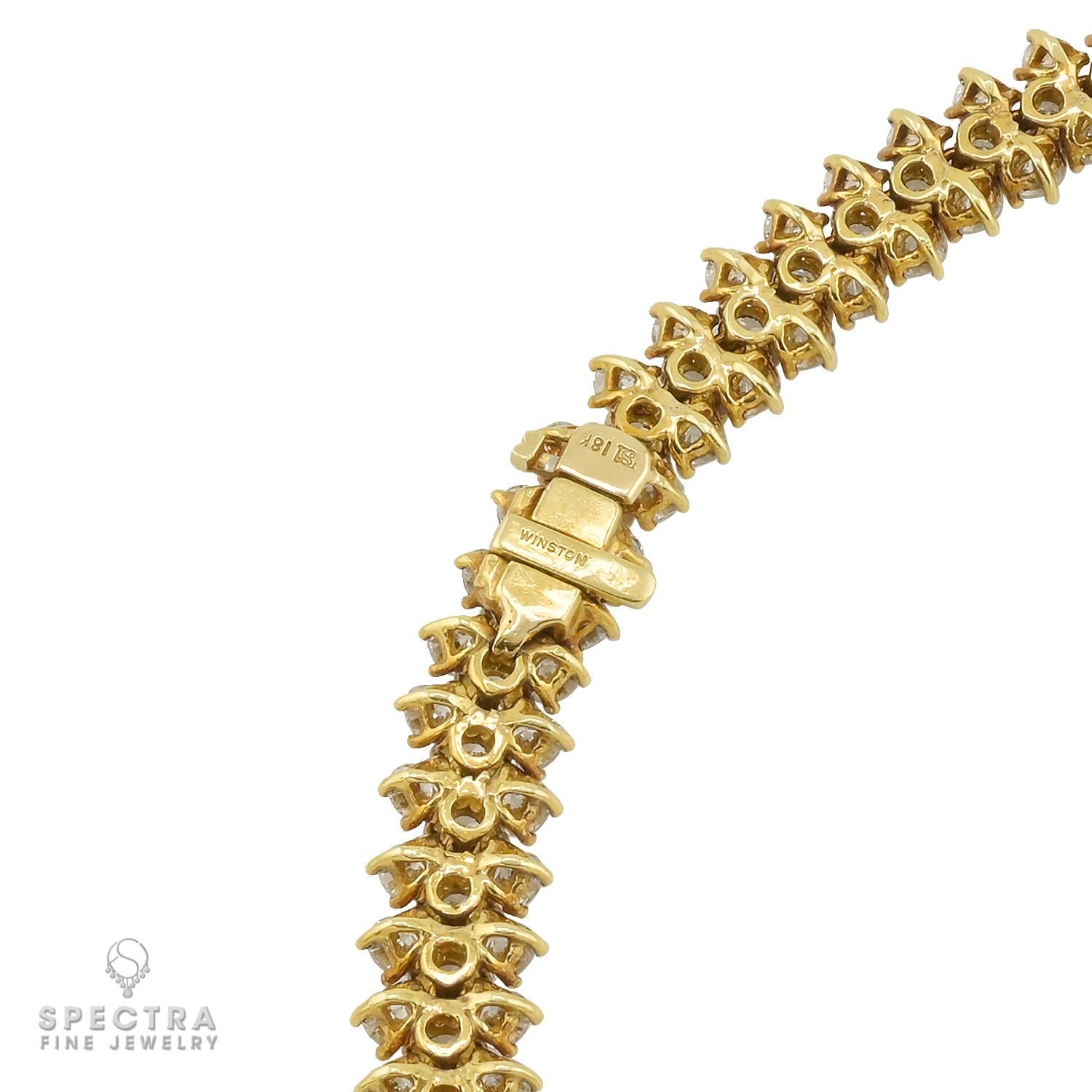 Harry Winston diamond necklace in 18K yellow gold showing maker's mark and fineness stamps. The hallmarks on high jewelry often appear on clasps or hidden areas. Photo: Spectra Fine Jewelry
Understanding Gold Purity
Before diving into country-specific marks, let's clarify the purity systems:
Karat System (US Standard)
| Karat | Gold Content | Decimal |
|---|---|---|
| 24K | 99.9% | .999 |
| 22K | 91.67% | .916 |
| 18K | 75% | .750 |
| 14K | 58.3% | .585 |
| 10K | 41.7% | .417 |
| 9K | 37.5% | .375 |
Need to convert between karat and fineness, or calculate the pure gold content in a piece? Our precious metals converter handles the math.
Fineness System (European Standard)
Fineness is expressed as parts per thousand of pure gold:
- 999 = 24K (pure gold)
- 916 = 22K
- 750 = 18K
- 585 = 14K
- 417 = 10K
- 375 = 9K
United Kingdom
The UK has one of the oldest and most comprehensive hallmarking systems, dating back to 1300.
Required Marks (Modern)
- Sponsor's/Maker's Mark — Initials in a specific shape
- Fineness Mark — Number indicating gold content
- Assay Office Mark — Where the piece was tested
- Date Letter — Year of hallmarking (optional since 1999)
UK Assay Office Marks
- Leopard's Head — London
- Anchor — Birmingham
- Rose — Sheffield
- Castle — Edinburgh
Gold Standards
- 375 — 9 carat (minimum standard)
- 585 — 14 carat
- 750 — 18 carat
- 916 — 22 carat
- 990 — 23.88 carat
Historical UK Marks
- Crown — Indicated gold (pre-1975)
- 22 or 18 — Karat numbers (pre-1975)
- Date letters changed annually, each assay office had its own cycle
France
France has used a sophisticated hallmarking system since 1797.
The Eagle Head
The most important French gold mark:
- Eagle Head (facing right) — 18K gold (750)
- Used since 1838
- The most common mark on French jewelry
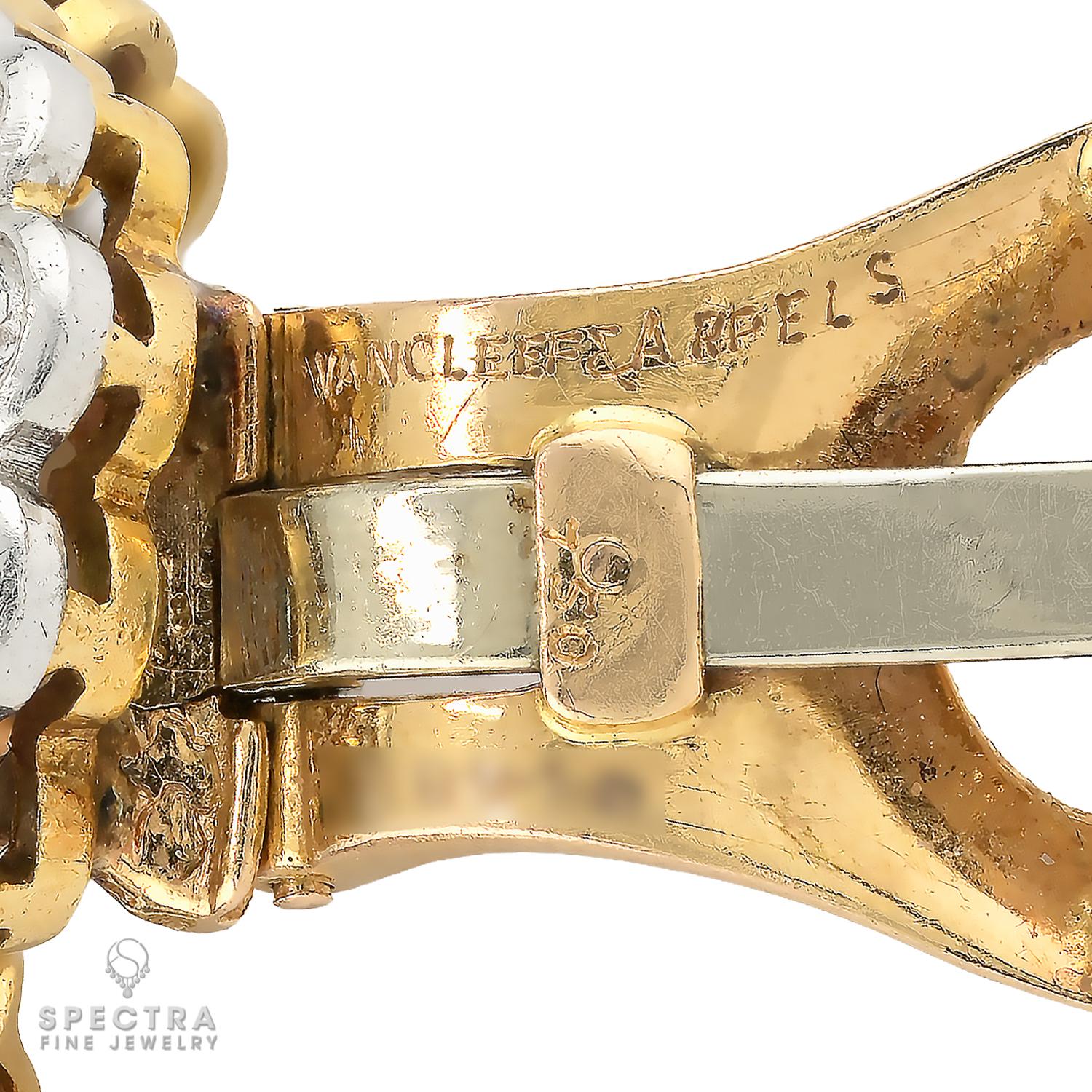 Van Cleef & Arpels earrings showing French 18K gold hallmarks including the eagle head mark and maker's lozenge. Photo: Spectra Fine Jewelry
Other French Gold Marks
- Owl — Imported gold, tested in France
- Weevil (Charançon) — Small items, 18K
- Horse Head — 18K gold (1838-1919)
- Rhinoceros Head — Lower gold standards
Maker's Marks
French makers register a lozenge-shaped mark containing:
- Initials
- A symbol (often a design element)
- Registered with the Bureau de Garantie
Regional Marks
French hallmarks include numbers indicating the assay office:
- 1 — Paris
- Other numbers for regional offices
Italy
Italy uses the fineness system with distinctive star marks.
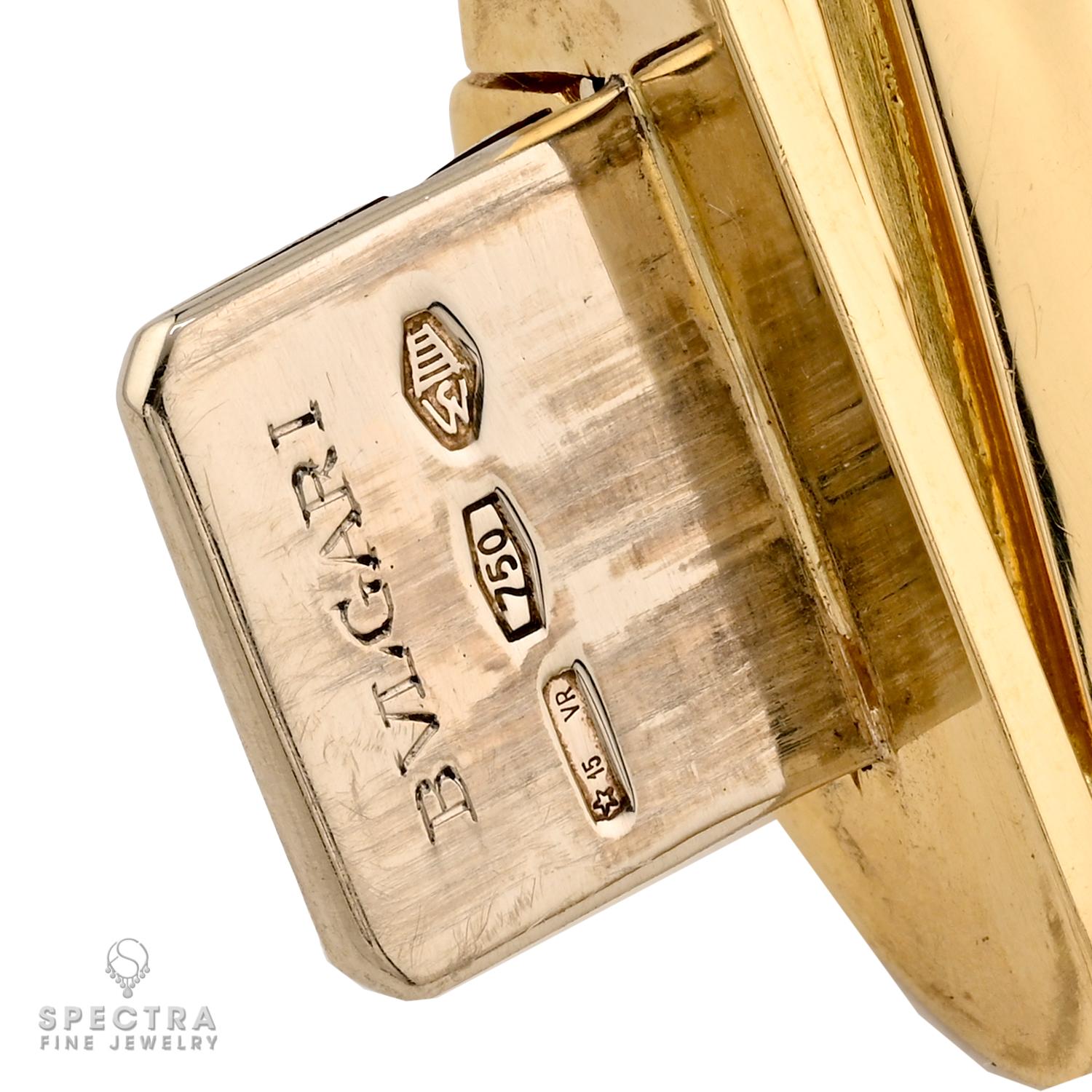 Bulgari necklace clasp showing Italian hallmarks: "BVLGARI" maker's mark, "750" fineness (18K gold), and the Italian star mark with provincial code (★15 VR for Vicenza). Photo: Spectra Fine Jewelry
The Star System
Italian gold carries:
- Star symbol (★) with a number
- Fineness number (750, 585, etc.)
- Provincial code (two letters)
Common Italian Marks
- 750 — 18K gold (Italian standard for fine jewelry)
- 585 — 14K gold
- 375 — 9K gold
Provincial Codes
- AR — Arezzo (major jewelry center)
- VI — Vicenza (another major center)
- MI — Milano
- Other two-letter codes for each province
Important Notes
- Italian marks are laser engraved on modern pieces
- Older pieces may have stamped marks
- The star mark indicates Italian manufacture
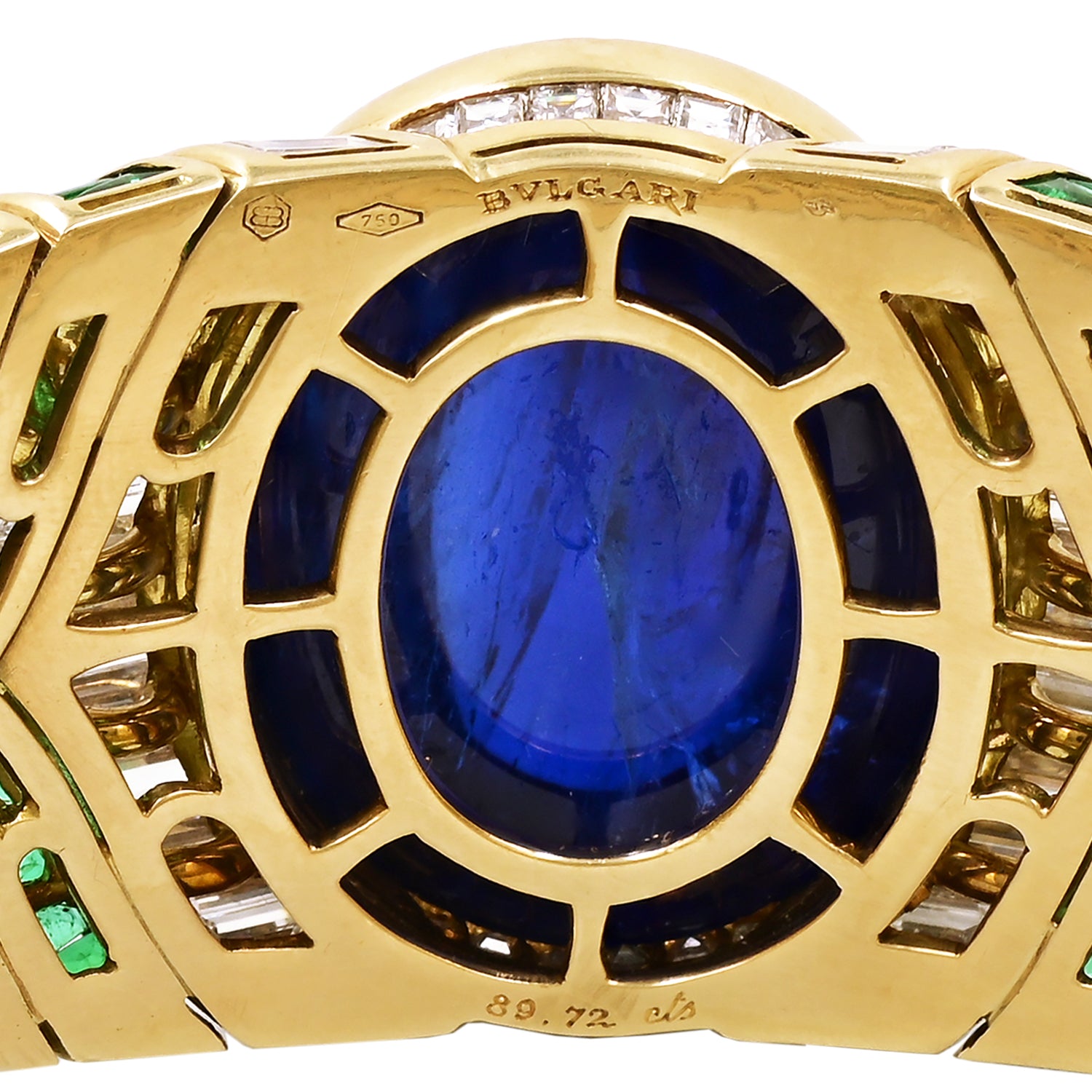 Another example of Bulgari Italian gold hallmarking on a sapphire and emerald bangle. Photo: Spectra Fine Jewelry
United States
The US has less formal hallmarking requirements than European countries.
Legal Requirements
- Karat mark required if gold content is claimed
- National Gold and Silver Stamping Act (1906)
- Tolerance: marked karat minus 0.5K maximum
Common US Marks
- 14K or 14KT — 14 karat
- 18K or 18KT — 18 karat
- 10K — Minimum for "gold" in US
- 585 or 750 — Fineness marks (less common)
Maker's Marks
- Maker's trademarks are voluntary
- Major brands (Tiffany, etc.) use proprietary marks
- Registered with US Patent and Trademark Office
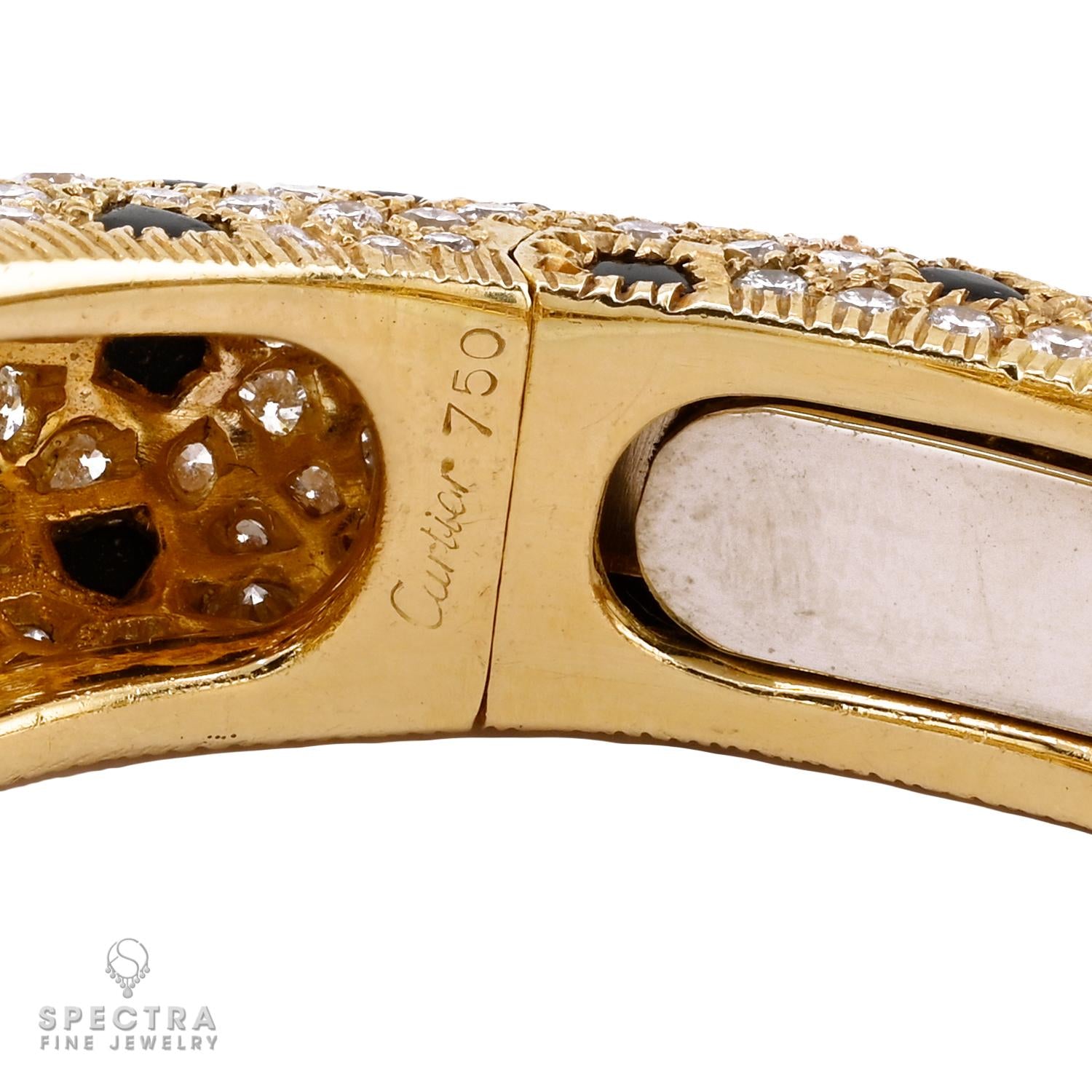 Cartier Panthère bangle showing the French maker's marks. While Cartier is internationally recognized, their marks follow French hallmarking conventions with eagle head and maker's lozenge. Photo: Spectra Fine Jewelry
Important Notes
- GF — Gold Filled (not solid gold)
- GP or GE — Gold Plated/Electroplated
- 1/20 12K GF — Example of gold fill marking
Switzerland
Swiss hallmarking is primarily for precious metal content.
Swiss Gold Marks
- St. Bernard dog head — Swiss gold mark
- 750, 585, 375 — Fineness marks
- Maker's marks registered with cantonal authorities
Watchcase Marks
Swiss watches have specific hallmarks:
- 18K 0.750 — Common on watch cases
- Cantonal assay marks
- Maker's stamps
Germany
Germany uses the fineness system without mandatory government hallmarks.
Common Marks
- 750 — 18K gold
- 585 — 14K gold
- 333 — 8K gold (German minimum standard)
- Crescent and Crown — Traditional German mark (voluntary)
Important Notes
- German gold standards are lower than many countries
- 8K (333) is common and legal
- Maker's marks are voluntary but common
Russia/Soviet Union
Russian gold has distinctive historical marks.
Pre-Revolutionary (Pre-1917)
- Kokoshnik (woman's head) — Assay mark
- Zolotnik system — Russian purity measure
- 56 zolotniki = 14K (585)
- 72 zolotniki = 18K (750)
Soviet Era (1927-1958)
- Worker's head facing left
- Factory codes
- Purity in metric system (583, 750)
Modern Russian (Post-1958)
- Star with hammer and sickle (until 1991)
- Profile woman's head (current)
- 585 — Standard Russian gold (slightly different from 14K)
- 750 — 18K equivalent
Common International Marks
Numbers You'll See
- 999 or .999 — Pure gold (24K)
- 916 — 22K
- 750 — 18K (most common for fine jewelry)
- 585 — 14K
- 417 — 10K
- 375 — 9K
Convention Marks (Hallmarking Convention)
Countries participating in the Vienna Convention use common marks:
- Common Control Mark (CCM) — Scales symbol
- Indicates piece tested by approved assay office
- Recognized across member countries
Authentication Tips
What to Look For
- Consistency — All marks should match the claimed era
- Placement — Marks in logical, expected locations
- Clarity — Should be readable, even if worn
- Logic — Country marks should match claimed origin
Red Flags
- Marks that don't match the claimed origin
- Suspiciously crisp marks on "vintage" pieces
- Incorrect combinations of marks
- Missing expected marks for the era/country
- Marks in unusual locations
Testing
When marks are unclear or suspicious:
- Acid testing — Traditional method
- XRF analysis — Non-destructive electronic testing
- Specific gravity — Density testing
- Professional assay — Definitive testing
Conclusion
Gold hallmarks tell a story—of where a piece was made, when it was made, and what it's made of. Learning to read these marks is fundamental to jewelry authentication. When in doubt, combine hallmark analysis with other authentication factors: construction quality, design consistency, and provenance.
Related Guides
Platinum & Silver Hallmarks → White metals have their own marking systems—essential for diamond jewelry.
Where to Find Hallmarks → Know exactly where to look on rings, bracelets, necklaces, and earrings.
Visual Hallmark Reference → See what French, UK, and Italian marks actually look like.
How to Authenticate → The complete workflow for verifying signed jewelry.
History of Hallmarks → Why these systems exist—700 years of consumer protection.
Need help identifying hallmarks on a specific piece? Contact us for guidance.
Identify Your Hallmarks
Need Help?
Send photos of a piece you're evaluating. We'll give you a straight read—no pressure, no BS.
Contact Spectra Fine Jewelry →Ready to Browse Authenticated Pieces?
Every item at Spectra Fine Jewelry goes through our verification process before it hits the case. No guesswork. No surprises.