Hallmark Visual Reference Guide
See what authentic hallmarks actually look like. This guide combines diagram references with real photographs from authenticated pieces.
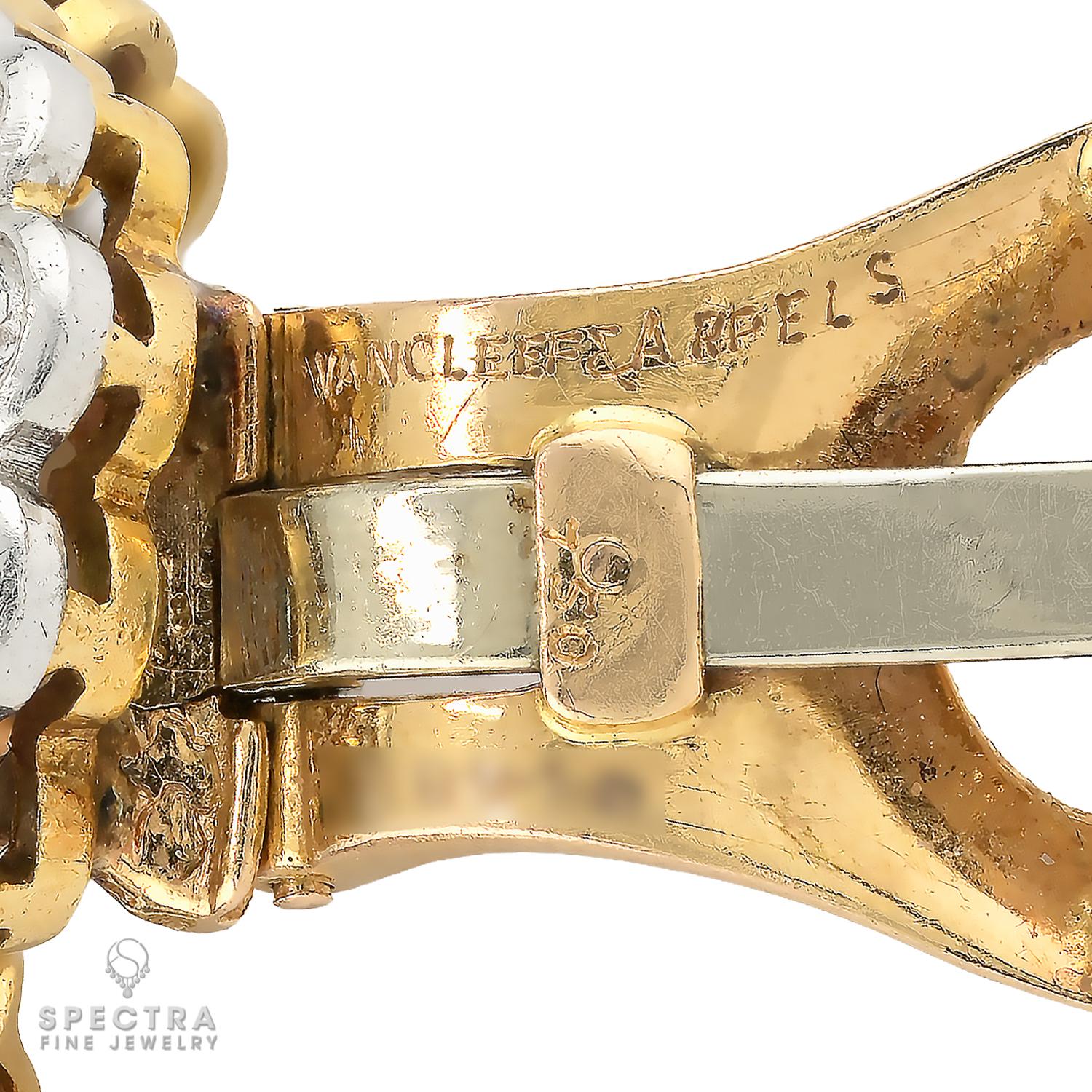 Real French hallmarks on Van Cleef & Arpels: Eagle head (18K gold), maker's lozenge with initials. These tiny marks tell a complete story. Photo: Spectra Fine Jewelry
French Hallmarks
France has one of the most comprehensive hallmarking systems. These marks are applied by the Bureau de Garantie (assay office), providing independent verification of metal content.
Eagle Head — 18K Gold (Made in France)
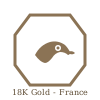
What it means: The piece contains minimum 750 fineness (18 karat) gold and was manufactured in France.
Used since: 1838 to present
Where to find it: Near the maker's mark and brand signature, typically on clasps, inside ring shanks, or on tags.
Owl (Hibou) — Import Mark
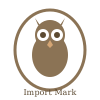
What it means: The piece was imported into France and tested by French assay offices upon entry. Does not indicate country of origin.
Where to find it: Alongside brand signatures on pieces entering the French market from abroad.
Note: A piece with an owl mark was made outside France but meets French gold standards.
Rhinoceros — Platinum (Current System)

What it means: The piece is platinum, typically 950 fineness (95% pure platinum).
Used: Current French system for platinum
Where to find it: On platinum jewelry alongside maker's marks.
Dog Head — Platinum (Historical)

What it means: Historical mark for platinum, used before the rhinoceros mark was introduced.
Period: Earlier 20th century platinum pieces
Where to find it: On vintage platinum jewelry, particularly Art Deco pieces.
Real French Hallmarks in Practice
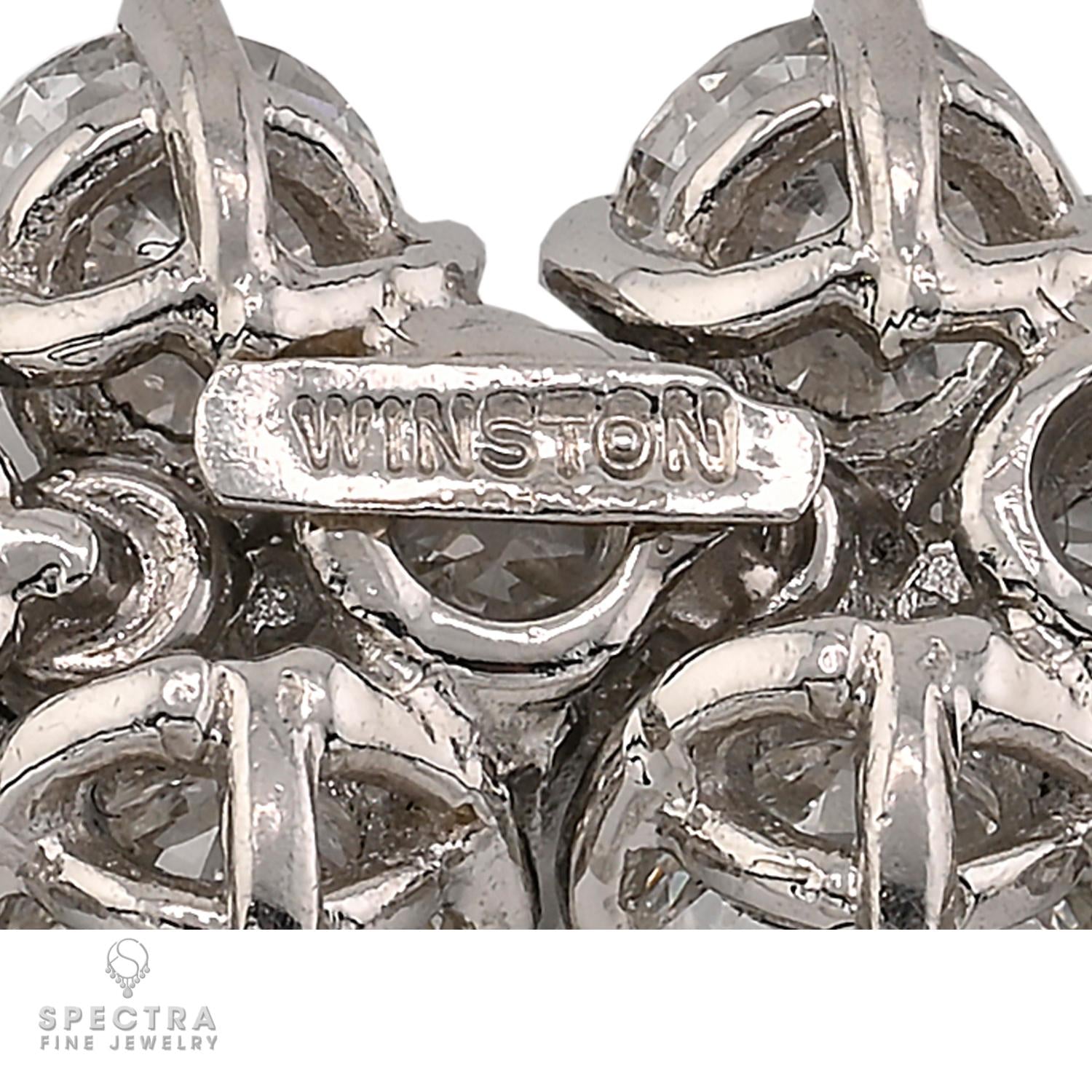 French platinum hallmarks on Harry Winston: The dog's head mark indicates platinum tested in France. Photo: Spectra Fine Jewelry
UK Hallmarks
The British hallmarking system dates to 1300 and remains one of the most thorough in the world. Marks are applied by independent assay offices after testing.
Lion Passant — Sterling Silver

What it means: Sterling silver, 925 fineness (92.5% silver content).
Symbol: Walking lion facing left
Used: Throughout UK hallmarking history for sterling silver
Leopard's Head — London Assay Office

What it means: The piece was assayed (tested) at the London Assay Office.
History: Oldest assay office mark, used since 1300
Note: Originally crowned; the crown was removed in 1821 for gold and silver.
Anchor — Birmingham Assay Office

What it means: The piece was assayed at Birmingham Assay Office.
Established: 1773
Note: Birmingham is a major jewelry manufacturing center; this mark is very common on British jewelry.
Rose — Sheffield Assay Office

What it means: The piece was assayed at Sheffield Assay Office.
Symbol: Yorkshire Rose
Established: 1773
Note: Sheffield was historically known for silver production; replaced the crown mark in 1974.
Castle — Edinburgh Assay Office

What it means: The piece was assayed at Edinburgh (Scottish) Assay Office.
Symbol: Three-turreted castle
Established: 1457
Note: Edinburgh handles Scottish precious metal items.
Italian Hallmarks
Italy uses a self-declaration system where manufacturers register and mark their own pieces. The star with a number identifies the registered maker.
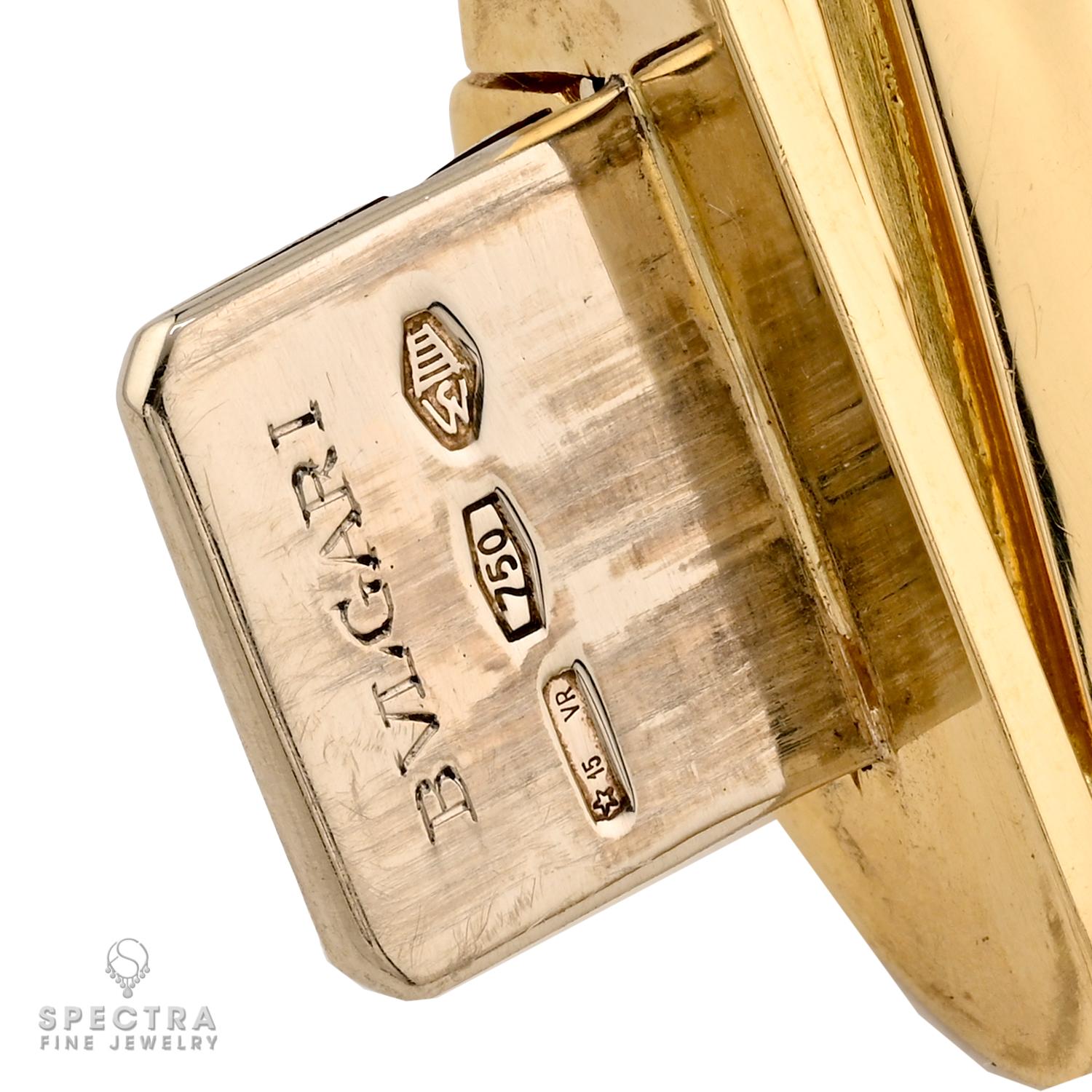 Italian hallmarks on Bulgari: "BVLGARI" maker's mark, "750" fineness (18K), and the Italian star with provincial code. Photo: Spectra Fine Jewelry
Star with Number — Manufacturer Registration
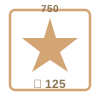
What it means: The manufacturer is registered with Italian authorities. The number is their registration code.
Format: Star symbol above a registration number
Note: Unlike French or UK marks, Italian marks are applied by the manufacturer, not an independent assay office.
750 — 18K Gold Fineness

What it means: 18 karat gold (75% pure gold, or 750 parts per thousand).
Universal: This numeric fineness mark is used internationally, not just in Italy.
Variations: May appear as "750," "18K," "18KT," or "18ct"
Brand Signatures
Major jewelry houses have distinctive signature styles. These are applied by the maker (not assay offices) and identify the brand.
Cartier
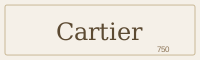
Key features:
- Elegant script "Cartier"
- Usually accompanied by metal mark (750)
- Serial number on many pieces
- French hallmarks on French-made pieces
Variations: "CARTIER" (capitals), "Cartier Paris," "Cartier London," "Cartier New York"
Van Cleef & Arpels
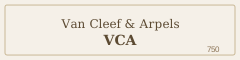
Key features:
- "Van Cleef & Arpels" (full name) or "VCA" (abbreviated)
- Never just "Van Cleef" alone (this indicates a fake)
- Serial numbers
- French hallmarks typical
Note: Both full name and VCA abbreviation are authentic; partial names are not.
BVLGARI (Bulgari)

Key features:
- Latin spelling: BVLGARI (V instead of U)
- Clear, bold engraving
- "Made in Italy" on many pieces
- 750 mark for gold
Warning: "BULGARI" with a U is typically counterfeit.
Tiffany & Co.

Key features:
- "TIFFANY & CO." full signature
- "925" or "STERLING" for silver
- "750" or "18K" for gold
- Designer names when applicable (Elsa Peretti, Paloma Picasso)
Note: Tiffany is known for sterling silver; 14K gold is uncommon in their production.
How to Use This Guide
1. Locate all marks on the piece Check clasps, inside ring bands, behind pendants, on tags—everywhere marks might appear.
2. Identify each mark type Is it a fineness mark? Assay office mark? Brand signature? Maker's mark?
3. Check for consistency Do the marks match the claimed origin and era? French hallmarks on a "Cartier Paris" piece make sense. British hallmarks would not.
4. Compare to reference examples Use these images to compare the style, quality, and character of marks on your piece.
5. Consider the complete picture Marks are evidence, not proof. Evaluate them alongside construction quality, weight, and overall authenticity indicators.
Important Notes
These are representative diagrams, not photographs. Actual hallmarks on jewelry are very small (often 1-2mm) and require magnification to examine properly.
Marks vary by era. Historical marks may look different from modern versions. Research period-specific variations for vintage pieces.
Fakes can have marks. The presence of marks doesn't prove authenticity. Quality, placement, and consistency matter.
Get expert help for valuable pieces. For significant purchases, professional authentication is worth the investment.
Need Help Identifying Marks?
Send photos of the marks on your piece. We'll help identify what you're looking at.
Learn More
Gold Hallmarks by Country → Comprehensive guide to UK, French, Italian, US marks and more.
Platinum & Silver Hallmarks → White metal marks have their own systems and symbols.
Where to Find Hallmarks → Know exactly where to look on rings, bracelets, and necklaces.
How to Authenticate → The complete workflow for verifying signed jewelry.
History of Hallmarks → 700 years of consumer protection in precious metals.
Diagrams are educational illustrations created for reference purposes. Photographs courtesy of Spectra Fine Jewelry. Independent educational resource.
Need Help?
Send photos of a piece you're evaluating. We'll give you a straight read—no pressure, no BS.
Contact Spectra Fine Jewelry →Ready to Browse Authenticated Pieces?
Every item at Spectra Fine Jewelry goes through our verification process before it hits the case. No guesswork. No surprises.