Where to Find Hallmarks: A Visual Location Guide
Finding hallmarks requires knowing where to look. Different jewelry types have standard locations for stamps and marks. Miss the right spot, and you'll miss crucial information.
This guide shows you exactly where to search—with real examples from authenticated pieces.
Why Location Matters
Marks appear in specific places for specific reasons:
- Functional: Marks go where they won't interfere with the design or wear
- Traditional: Hallmarking conventions developed over centuries
- Practical: Assay offices need accessible surfaces to stamp
- Space: Small pieces have limited marking area
When marks appear in unusual locations, or expected locations are unmarked, that's information worth noting.
Rings: Inside the Shank
The primary location for ring hallmarks is inside the band (the shank). This is where you'll find brand signatures, metal purity marks, hallmarks, and serial numbers.
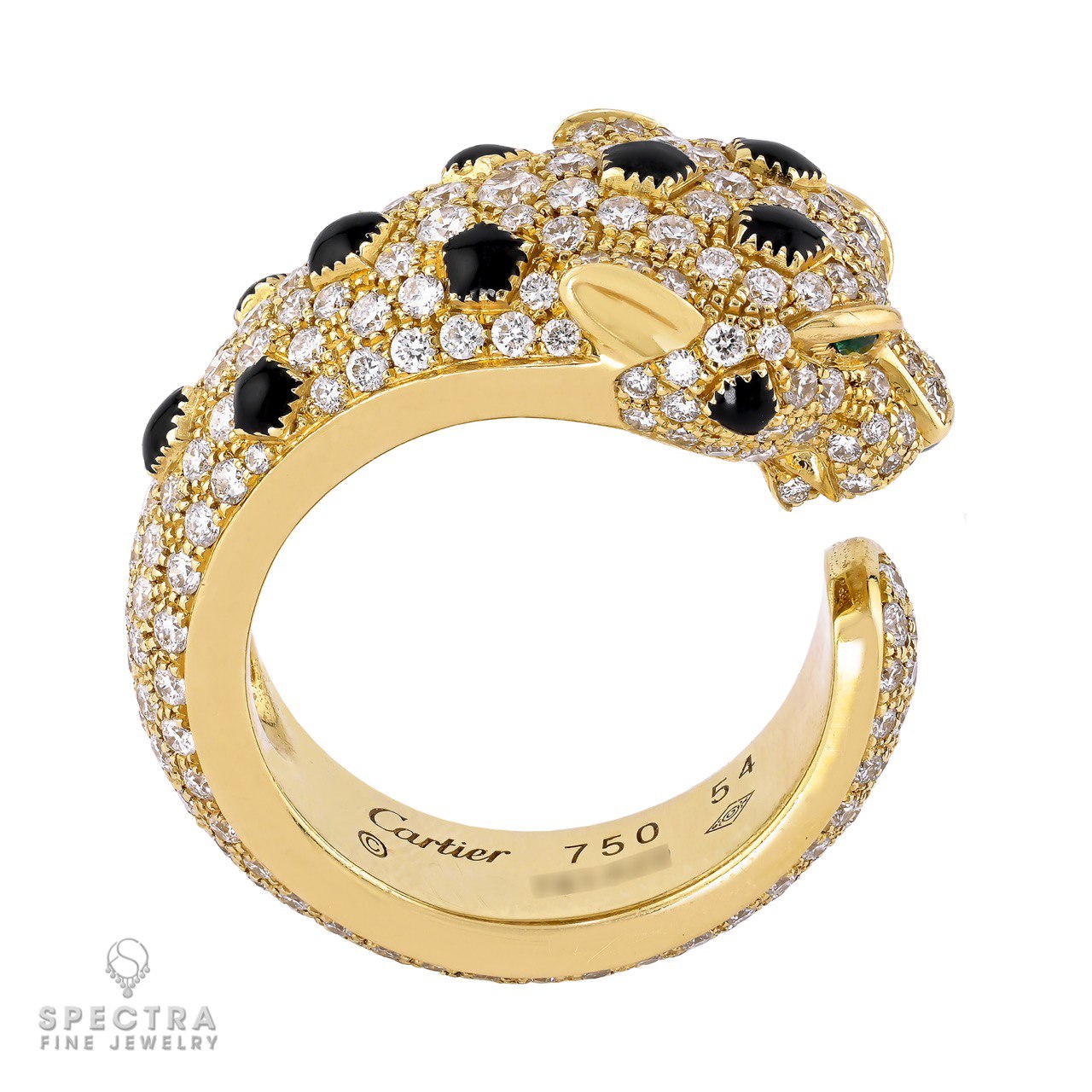 Cartier Panthère ring: Inside the shank shows "Cartier", "750" (18k gold), size "54", and the French eagle head hallmark
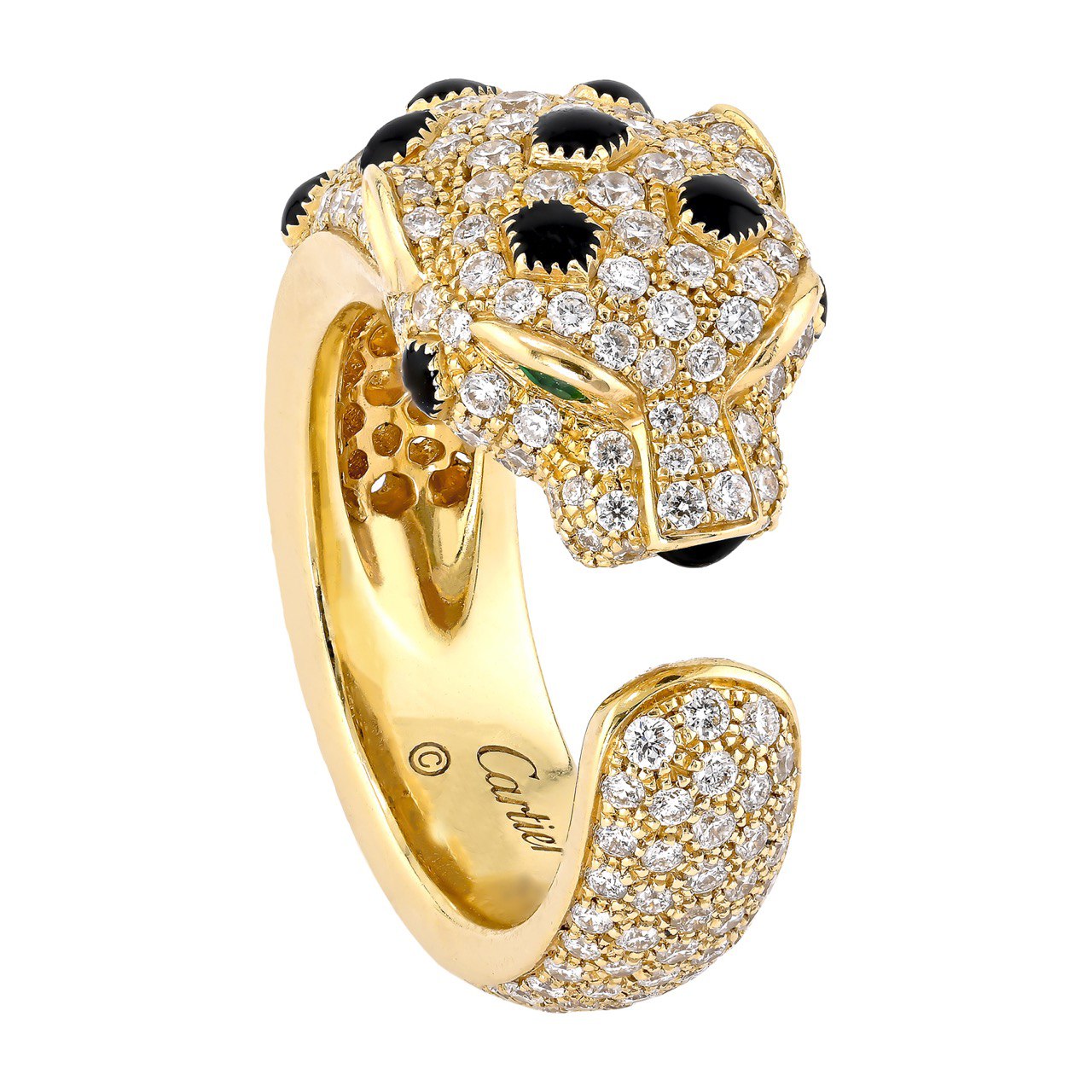 Same ring, different angle: The © Cartier signature is clearly visible inside the band
What you'll typically find inside a ring band:
- Brand signature ("CARTIER", "TIFFANY & CO.", "VCA", etc.)
- Metal fineness (750, 18K, 925, PLAT)
- Hallmarks (assay office marks, date letters)
- Serial numbers (on some pieces)
- Size indicator
Tips for examining rings:
- Check near where sizing would happen—marks may be partially affected by resizing
- Look under large settings—marks may be hidden underneath
- Use a loupe and good lighting to catch small stamps
Bracelets: The Clasp Area
For bracelets, check the clasp mechanism first. This is where most hallmarks appear—on the clasp tongue, inside the clasp box, or on a tag near the closure.
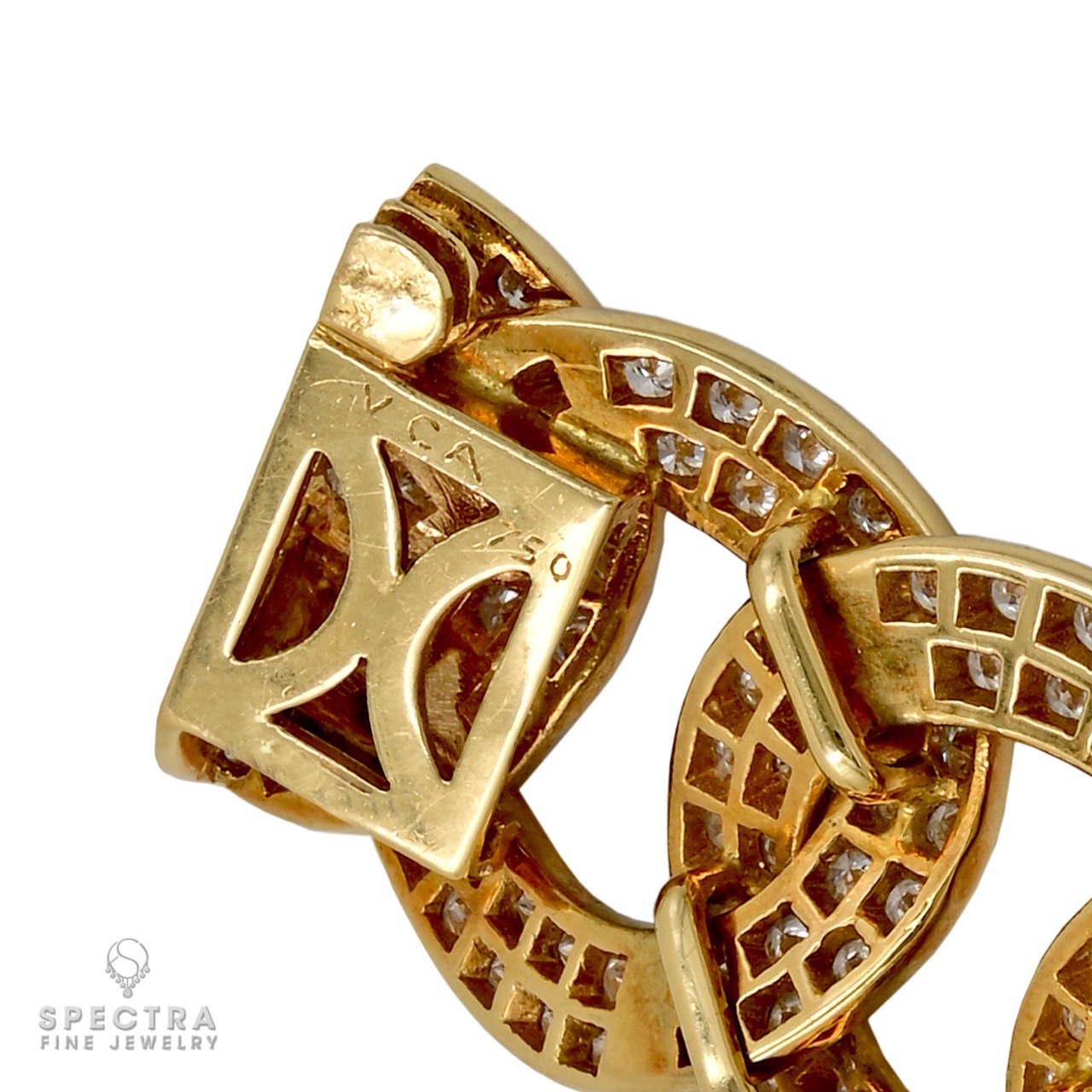 Van Cleef & Arpels "Olympia" bracelet (c. 1970): The clasp area shows "VCA" and "750" stamps
Where to look on different bracelet types:
Chain bracelets: Clasp tongue (the part that inserts), inside the clasp mechanism, tag near the clasp
Cuff bracelets: Interior surface, typically near one end
Bangle bracelets: Inside surface, marks may be grouped in one area or spaced around
Love-style bracelets: Interior of both halves—each half should have brand, metal mark, and serial
Earrings: Clip Mechanisms and Posts
Earring hallmarks appear on the back of the decorative element or on the clip/post mechanism. Small earrings may only have room for abbreviated marks.
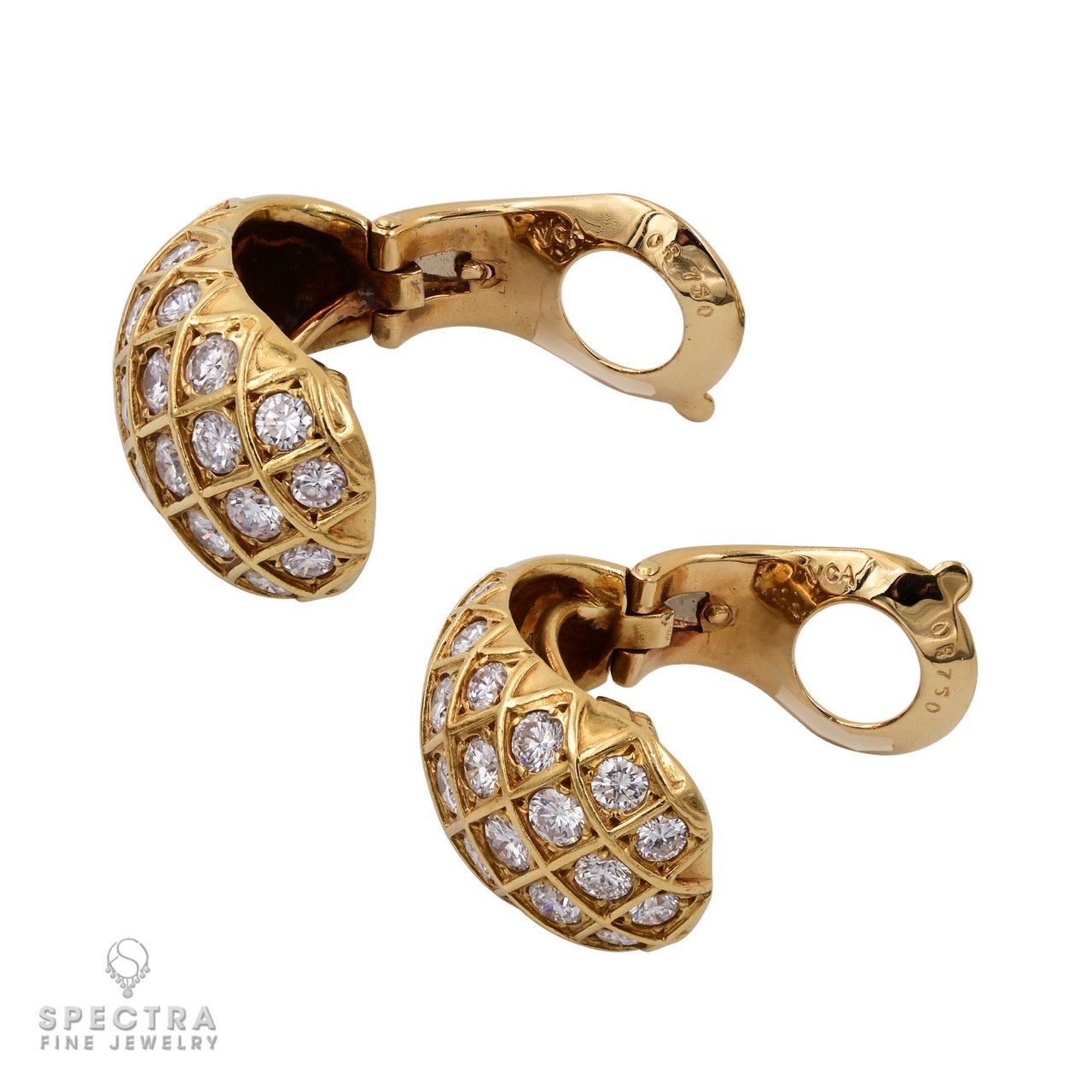 Van Cleef & Arpels clip earrings (1970s): "VCA" and "750" are stamped on the clip mechanism
Where to look by earring type:
Clip earrings: Inside the clip mechanism, back of the decorative front, hinge area
Post earrings: The post itself (may have tiny marks), behind the decorative front, butterfly backing
Drop earrings: Multiple locations along connections and decorative elements
Brooches & Pins: Near the Pin Mechanism
Brooches typically have hallmarks on the reverse side, near the pin mechanism (catch, joint, and stem area).
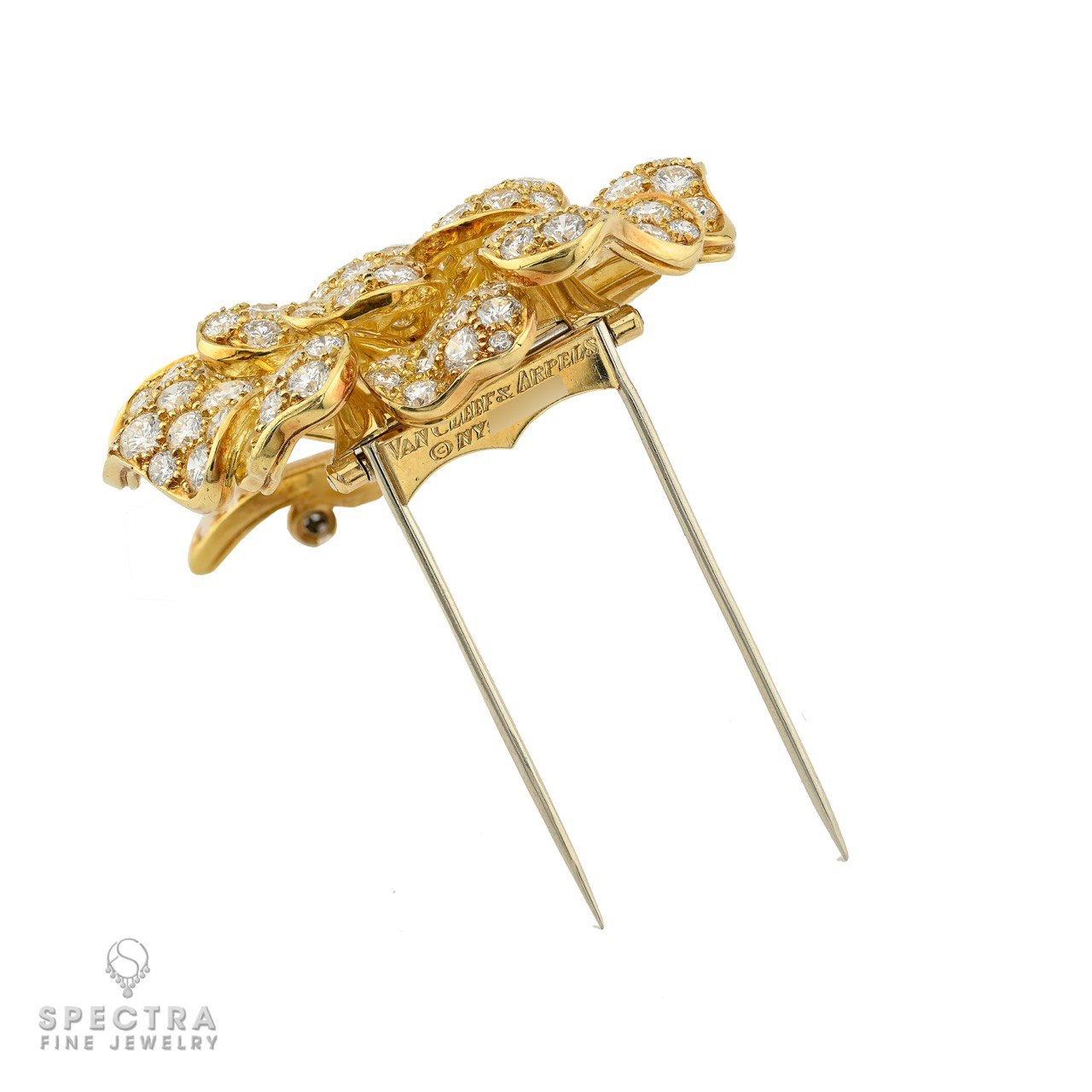 Van Cleef & Arpels brooch: The back shows "Van Cleef & Arpels © NY" near the pin mechanism
Where to look on brooches:
- Near the pin catch and joint
- Flat areas of the reverse
- Edge of the piece
- Behind any three-dimensional elements
The pin mechanism area is the most common location because it provides a flat surface for stamping without affecting the front design.
Necklaces & Pendants: Clasp and Back
For necklaces, check the clasp area for chain marks. For pendants, check the back of the pendant and the bail (the loop connecting pendant to chain).
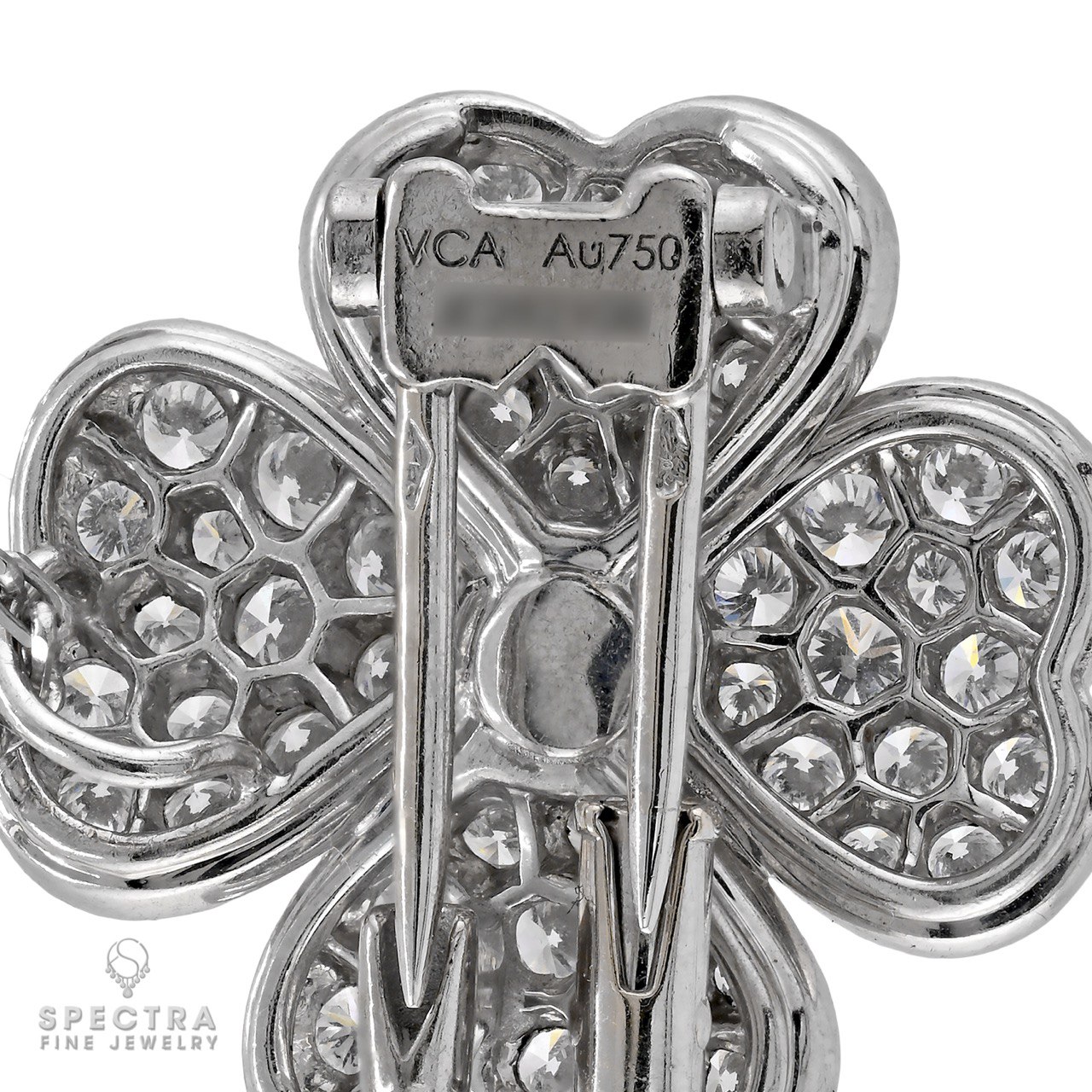 Van Cleef & Arpels Cosmos pendant: The back shows "VCA", "Au750", and a serial number
Where to look:
Chain necklaces: Clasp tongue, tag near clasp, plate attached to clasp mechanism
Pendant necklaces: Back of the pendant, bail (connection loop), clasp area for the chain
Statement necklaces: Clasp mechanism, behind decorative elements, connection points
French Hallmark Locations
French pieces have traditional placement with specific marks to look for:
- Eagle head: 18k gold, French manufacture
- Owl: Gold import mark
- Dog head/Rhinoceros: Platinum marks
- Diamond-shaped lozenge: Maker's mark
These typically appear grouped together near the brand signature.
UK Hallmark Locations
British hallmarks appear as a "stack" or group—typically four marks together:
- Sponsor's mark (maker)
- Standard mark (purity)
- Assay office mark
- Date letter
Location follows the piece type (same guidelines as above), but marks should appear together as a complete set.
What to Do When Marks Are Hard to Find
- Use proper magnification — 10x loupe minimum, 20x helps for small marks
- Use angled lighting — Shows impressions better than direct light
- Clean the piece first — Dirt and polish buildup hide marks
- Check systematically — Work through every potential location
- Take macro photos — May reveal marks invisible to the naked eye
- Consider wear — Old pieces may have worn marks; look for traces
Red Flags in Mark Placement
Marks where they shouldn't be: A brand signature on the exterior of a ring shank is unusual—that's not standard placement.
Marks too visible: Legitimate marks are placed to be found when you look, not prominently displayed on visible surfaces.
Marks without companions: A brand signature with no metal marks, or a serial with no brand signature, raises questions.
Marks that don't match wear: Crisp, sharp marks on heavily worn pieces suggest recent application.
Need Help Finding or Interpreting Marks?
Send photos. We'll tell you what we see and where to look.
Related Guides
Understanding Hallmarks → What each type of mark means—and what it can't tell you.
Gold Hallmarks by Country → UK, French, Italian, and American gold marks decoded.
Platinum & Silver Hallmarks → White metals have their own marking systems.
Visual Hallmark Reference → See what authentic French, UK, and Italian marks look like.
How to Authenticate → The complete workflow for verifying signed jewelry.
All photographs courtesy of Spectra Fine Jewelry. Authenticated pieces from our collection.
Need Help?
Send photos of a piece you're evaluating. We'll give you a straight read—no pressure, no BS.
Contact Spectra Fine Jewelry →Ready to Browse Authenticated Pieces?
Every item at Spectra Fine Jewelry goes through our verification process before it hits the case. No guesswork. No surprises.