The History of Jewelry Hallmarks: Why They Exist and What They Mean
Understanding the 700-year history behind the marks on your jewelry
Hallmarks aren't just decoration. They're a system of consumer protection that evolved over seven centuries, designed to prevent fraud, ensure quality, and create accountability in the precious metals trade.
Understanding this history makes you a better judge of what those tiny stamps actually tell you—and what they don't.
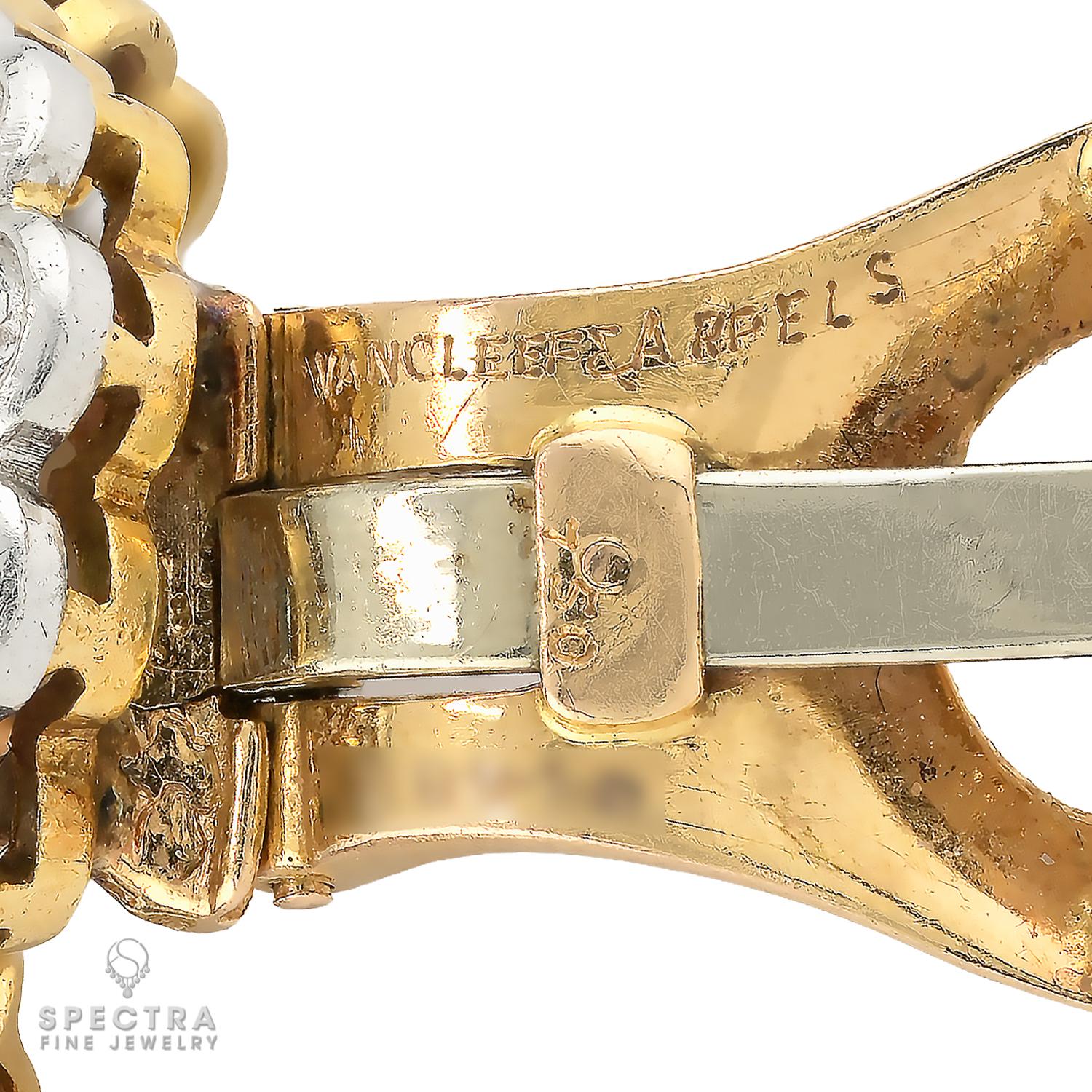 French hallmarks today still follow conventions established in 1797: the eagle head for 18K gold, the maker's lozenge with registered initials. Photo: Spectra Fine Jewelry
The Origins: Medieval Consumer Protection
The story of hallmarking begins with a simple problem: fraud.
Gold and silver have been used as currency and stores of value for millennia. And for just as long, unscrupulous craftsmen and merchants have tried to pass off inferior metals as precious ones.
The legendary story of Archimedes and King Hiero's crown—where Archimedes supposedly discovered how to test gold purity while sitting in a bathtub—illustrates how old this problem is. Whether that tale is accurate or not, the concern it represents is real: how do you know what you're buying is what the seller claims?
By the Middle Ages, this problem had become serious enough that governments stepped in.
England Sets the Standard (1300)
In 1300, King Edward I of England established one of the earliest formal hallmarking systems. The Statute of 1300 required that all gold and silver articles be tested at Goldsmiths' Hall in London before sale.
This is where the term "hallmark" originates—literally, a mark applied at the Hall.
The system introduced several key concepts:
- Independent testing by a third party
- Legal standards for metal purity
- Accountability marks identifying who made items
The London assay office, marked by the leopard's head, remains active today—over 700 years later.
The Purpose: Beyond Quality Control
Early hallmarking served multiple functions:
Consumer protection: Buyers could trust that marked items met legal standards.
Tax collection: Governments could track and tax precious metal transactions.
Guild regulation: Craft guilds maintained standards and prevented unauthorized production.
Legal accountability: When problems arose, marks identified responsible parties.
The maker's mark—identifying who submitted an item for testing—was originally a liability mark. If the metal proved substandard, authorities knew whom to punish.
The Four Traditional Mark Types
The classical European hallmarking system uses four types of marks:
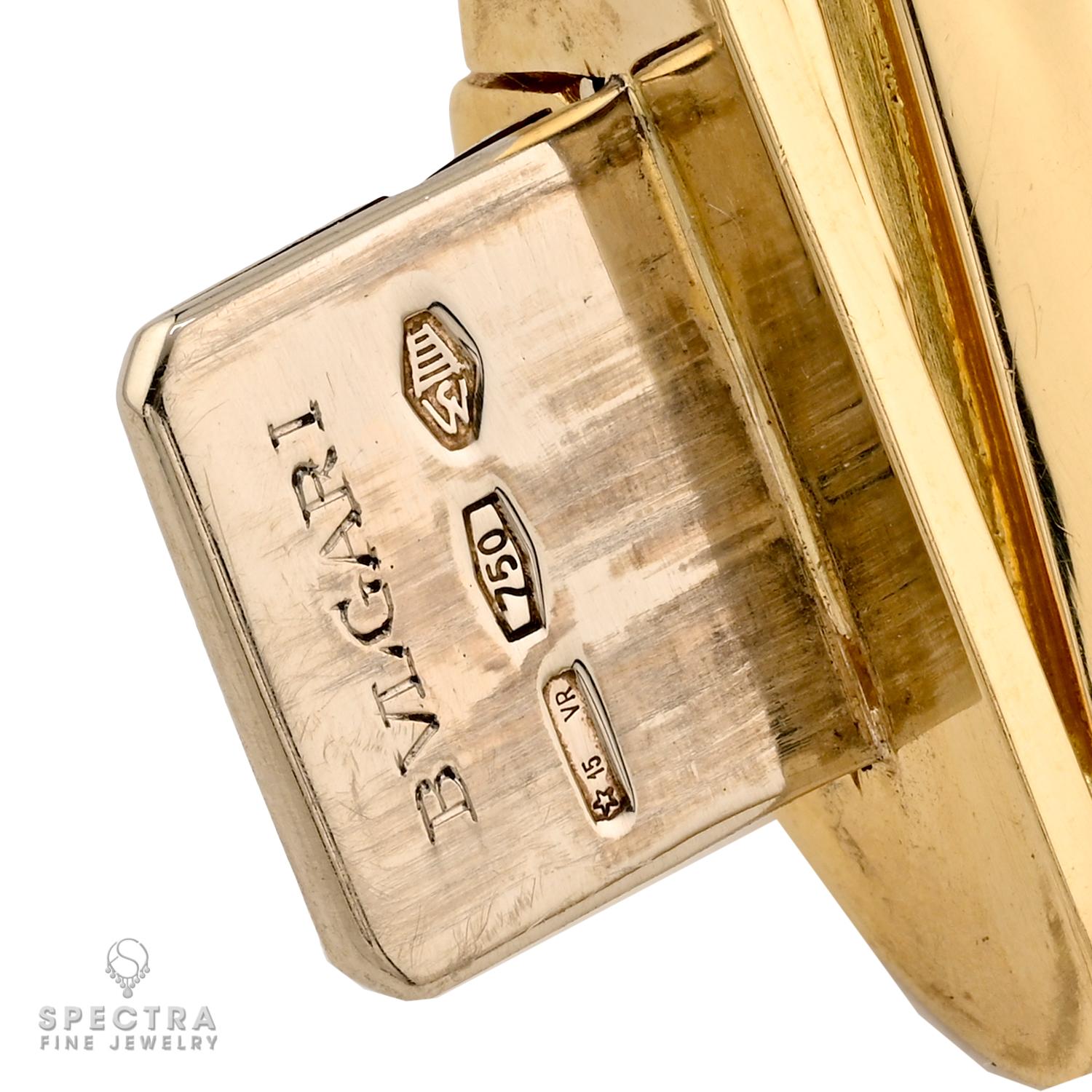 Different systems developed: Italian hallmarks use the star with provincial code (shown on this Bulgari piece), while French marks use symbolic creatures. Photo: Spectra Fine Jewelry
1. Purity Mark (Fineness)
Indicates metal content—the percentage of precious metal in the alloy.
- Modern systems use parts per thousand (750 = 75% gold)
- Older systems used karats (18K = 18/24 = 75%)
- Each country developed its own symbols and conventions
2. Maker's Mark (Sponsor's Mark)
Identifies who submitted the piece for testing—typically the manufacturer, though sometimes an importer or retailer.
- Usually initials in a distinctive shape
- Registered with assay offices
- Creates accountability for metal content claims
3. Assay Office Mark (Town Mark)
Shows which testing facility certified the piece.
- Different cities had different symbols
- Tells you where, not when, the piece was tested
- Examples: anchor (Birmingham), leopard's head (London), castle (Edinburgh)
4. Date Letter
Indicates when the piece was assayed.
- Letters cycle through the alphabet
- Font and cartouche shapes change each cycle
- Allows precise dating of British pieces
- Not universal—many countries don't use date letters
The Spread Across Europe
Following England's example, hallmarking systems spread across Europe:
France: Developed sophisticated systems beginning in the 13th century, formalized in 1797. The famous eagle head for 18K gold dates to 1838.
Germany: Various German states established their own systems, leading to a complex patchwork of marks.
Italy: Provincial marking systems, modernized in the 20th century with the distinctive star mark.
Russia: The zolotnik system (56 zolotniki = 14K) was used until metrication, followed by distinctive Soviet-era marks.
Each country developed marks reflecting its own history, politics, and trade practices.
The Problem of Pseudo-Marks
Not all marks tell the truth. By the mid-19th century, a market developed for what experts call "pseudo-hallmarks"—marks designed to deceive.
Why they appeared:
In the 1840s, British import taxes created incentives for evasion. Antique items were often exempt from duties. Craftsmen in Germany, the Netherlands, and elsewhere began stamping new items with marks mimicking antique hallmarks from other countries.
The first World Exhibition (London, 1851) sparked renewed interest in antique decorative arts—and with it, a market for "antiqued" items with falsified marks.
The study begins:
By the 1860s, collectors and customs officials noticed repetitive patterns in supposedly antique marks. The scholarly study of hallmarks began in earnest, eventually exposing many frauds.
Today, reference works documenting legitimate historical marks help identify pseudo-marks. But the warning remains: marks alone don't prove authenticity.
The Vienna Convention: International Standards
In 1972, the Vienna Convention on the Control of the Fineness and the Hallmarking of Precious Metal Objects created a framework for international recognition of hallmarks.
Member countries agreed to:
- Recognize each other's hallmarks
- Apply a Common Control Mark (CCM)
- Maintain consistent testing standards
The CCM—a scales symbol—indicates testing by an approved assay office in a member country.
Current member countries include: Austria, Cyprus, Czech Republic, Denmark, Finland, Hungary, Ireland, Israel, Latvia, Lithuania, Netherlands, Norway, Poland, Portugal, Slovakia, Slovenia, Sweden, Switzerland, United Kingdom, and Ukraine.
The American Exception
The United States never developed a government-supervised hallmarking system comparable to European models.
The National Gold and Silver Stamping Act of 1906 (amended 1961) requires that:
- Items marked with gold/silver claims must be accurate
- Makers must include a trademark or name with purity marks
But there's no independent testing requirement. American marks are claims, not certifications.
This is why marks on American jewelry carry different evidentiary weight than marks from countries with supervised systems.
Modern Hallmarking: Still Relevant?
In an age of electronic testing and sophisticated fakes, does hallmarking still matter?
Arguments for continued relevance:
- Hallmarks provide documented chain of certification
- Systems have evolved with technology (laser marking, database tracking)
- Established systems maintain high compliance rates
Limitations:
- Marks can be added to pieces after manufacture
- Some countries have weak enforcement
- Sophisticated fakes can include convincing marks
The practical conclusion: hallmarks remain valuable evidence but shouldn't be trusted blindly. They're one piece of the authentication puzzle.
Reading Marks in Context
Understanding hallmarking history helps you evaluate marks you encounter:
Consider the claimed origin: Does the marking system match the supposed country of manufacture?
Consider the claimed date: Are the marks appropriate for the alleged period?
Consider the piece: Would this type of item have been marked? (Small delicate pieces often weren't, to avoid damage.)
Consider the combination: Do all marks work together logically?
Consider wear: Old marks should show age consistent with the piece.
A mark that looks wrong for its context—even if it appears genuine in isolation—raises questions.
The Ongoing Evolution
Hallmarking continues to evolve:
Digital databases: Assay offices increasingly maintain searchable records of marked items.
Laser marking: More precise, harder to remove or alter than traditional stamps.
Blockchain exploration: Some propose using distributed ledger technology for provenance tracking.
Expanding requirements: Some countries are strengthening hallmarking requirements; others are loosening them.
The fundamental purpose remains: creating verifiable evidence of metal content and responsible parties.
Further Research
For deeper study of international hallmarks, several resources are invaluable:
The Hallmark Research Institute publishes comprehensive reference works on world hallmarks, organized by region and era.
Lang Antiques' Antique Jewelry University (langantiques.com/university) offers excellent educational content on jewelry identification, including detailed hallmark articles. Their coverage of period jewelry hallmarks and the history of hallmarking provides valuable context for collectors.
Assay office websites often include historical information and mark identification guides for their jurisdictions.
Practical Takeaways
-
Hallmarks are evidence, not proof. They support authentication but don't replace comprehensive evaluation.
-
Context matters. Marks must be consistent with the piece's claimed origin, era, and type.
-
Systems vary. Don't apply one country's expectations to another's pieces.
-
Independent testing is key. A mark from a regulated system carries more weight than a claim stamp.
-
When in doubt, research. The history is documented—take time to verify marks against established references.
Need Help Interpreting Hallmarks?
Send photos of the marks you're trying to understand. We'll help identify what you're looking at and what it means for authentication.
Continue Your Research
Hallmarks Explained → What each type of mark means for authentication.
Gold Hallmarks by Country → UK, French, Italian, US, and more—country-specific marks decoded.
Platinum & Silver Hallmarks → White metals have their own marking systems.
Visual Hallmark Reference → See what authentic marks actually look like.
This page provides historical context for jewelry hallmarking systems. For detailed mark identification, consult country-specific reference works. Independent educational resource—not affiliated with any brands, assay offices, or research institutions mentioned.
Explore More History
Need Help?
Send photos of a piece you're evaluating. We'll give you a straight read—no pressure, no BS.
Contact Spectra Fine Jewelry →Ready to Browse Authenticated Pieces?
Every item at Spectra Fine Jewelry goes through our verification process before it hits the case. No guesswork. No surprises.