Platinum & Silver Hallmarks
A guide to platinum, palladium, and silver hallmarks
Platinum and silver have their own hallmarking systems, often distinct from gold marks. Understanding these marks is crucial for authentication, especially since platinum became popular in fine jewelry around 1900 and has been used extensively for diamond settings ever since.
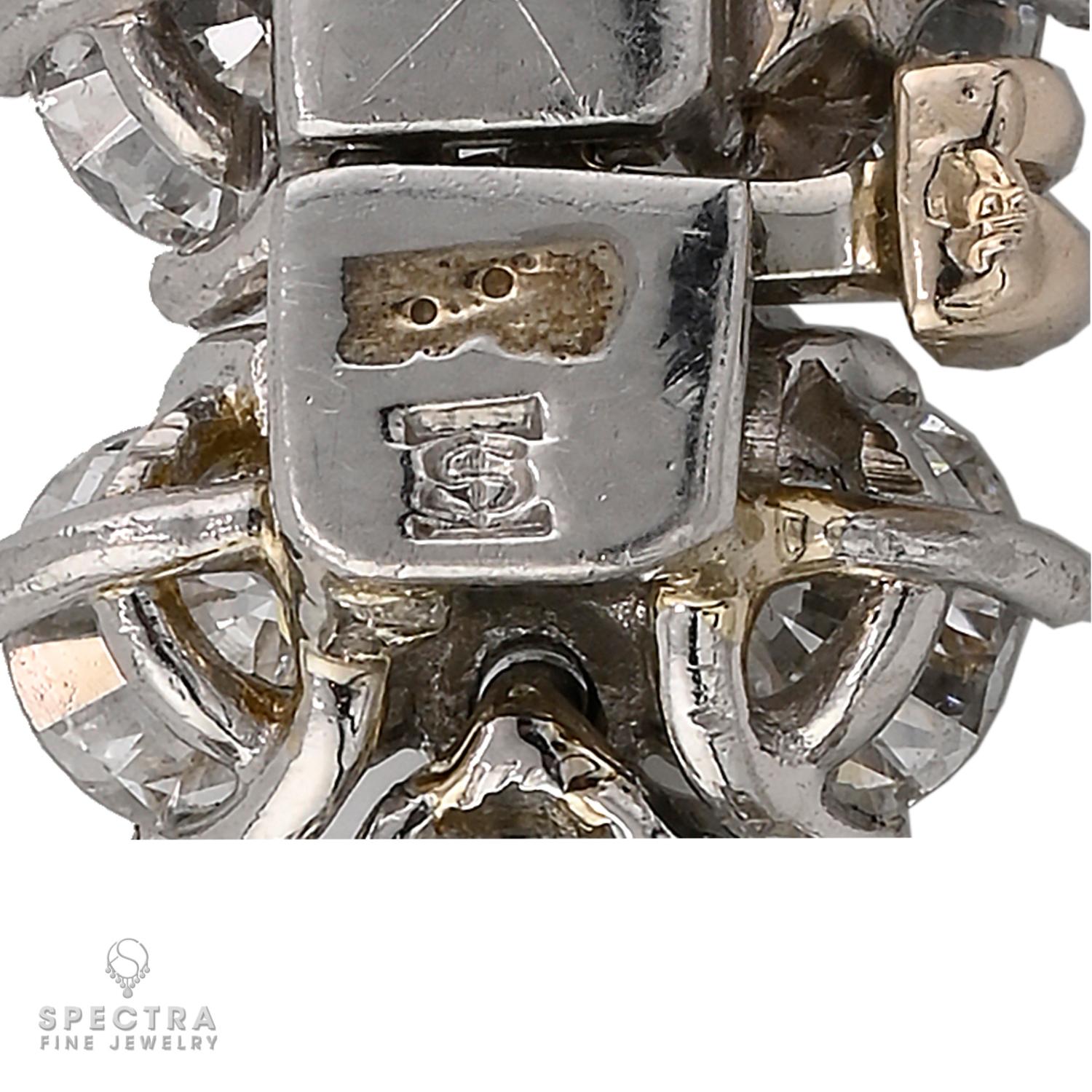 Harry Winston diamond necklace showing platinum hallmarks including the French dog's head mark (for platinum), maker's initials, and serial numbers. The detail and clarity of these marks indicate fine craftsmanship. Photo: Spectra Fine Jewelry
Platinum Basics
Why Platinum Matters
- Density: Heavier than gold—a key identification factor
- Durability: Doesn't wear away as quickly as gold
- Color: Naturally white, doesn't require plating
- Hypoallergenic: Contains no nickel (usually)
- Prestige: Often used for the finest jewelry
Platinum Purity Standards
| Grade | Purity | Common Use |
|---|---|---|
| 950 Platinum | 95% Pt | Fine jewelry standard |
| 900 Platinum | 90% Pt | Vintage pieces, some modern |
| 850 Platinum | 85% Pt | Some vintage pieces |
| Iridium-Platinum | 90% Pt, 10% Ir | Very hard, vintage |
For calculations involving platinum and gold weight or purity conversions, see our precious metals converter.
Platinum Hallmarks by Country
United States
US platinum marking is less regulated than in Europe:
- PLAT or PT — Common abbreviations
- PLATINUM — Full word marking
- 950 PLAT or PT950 — With purity
- 900 PLAT — 90% platinum
- IRID PLAT or IRIDPLAT — Iridium-platinum alloy
Legal Requirements:
- At least 850 parts per thousand to be marked "Platinum"
- 500-850 ppt must specify alloy percentage
- Below 500 ppt cannot be called platinum
United Kingdom
UK platinum hallmarks are mandatory and specific:
Required Marks:
- Sponsor's Mark — Maker identification
- Fineness Mark — 850, 900, 950, or 999
- Assay Office Mark — Same offices as gold
- Orb Symbol — Indicates platinum (since 1975)
Assay Office Marks:
- London (leopard's head)
- Birmingham (anchor)
- Sheffield (rose)
- Edinburgh (castle)
France
French platinum carries the dog's head mark:
- Dog Head (profile) — French platinum mark
- PT950 — Purity mark
- Maker's Lozenge — Same as for gold
- Used since early 20th century
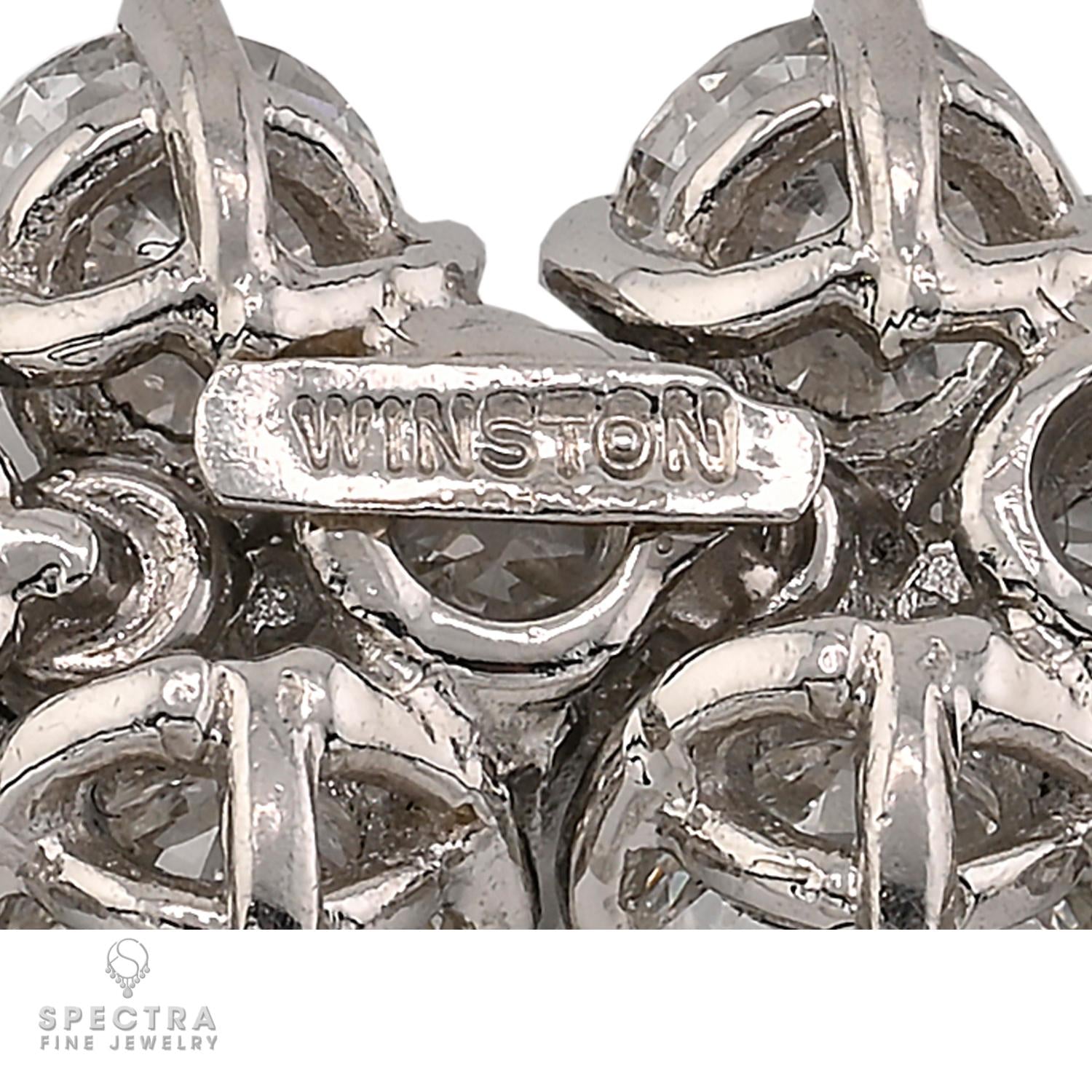 Close-up of platinum hallmarks on a Harry Winston necklace showing the French dog's head mark (indicating platinum tested in France) and maker's identification stamps. Photo: Spectra Fine Jewelry
Germany
German platinum marks:
- PT or PLAT — Common marks
- 950 — Purity number
- Crescent and crown (voluntary)
- Maker's marks as registered
Switzerland
Swiss platinum marking:
- PT950 — Standard mark
- Ibex head — Swiss platinum symbol
- Cantonal marks possible
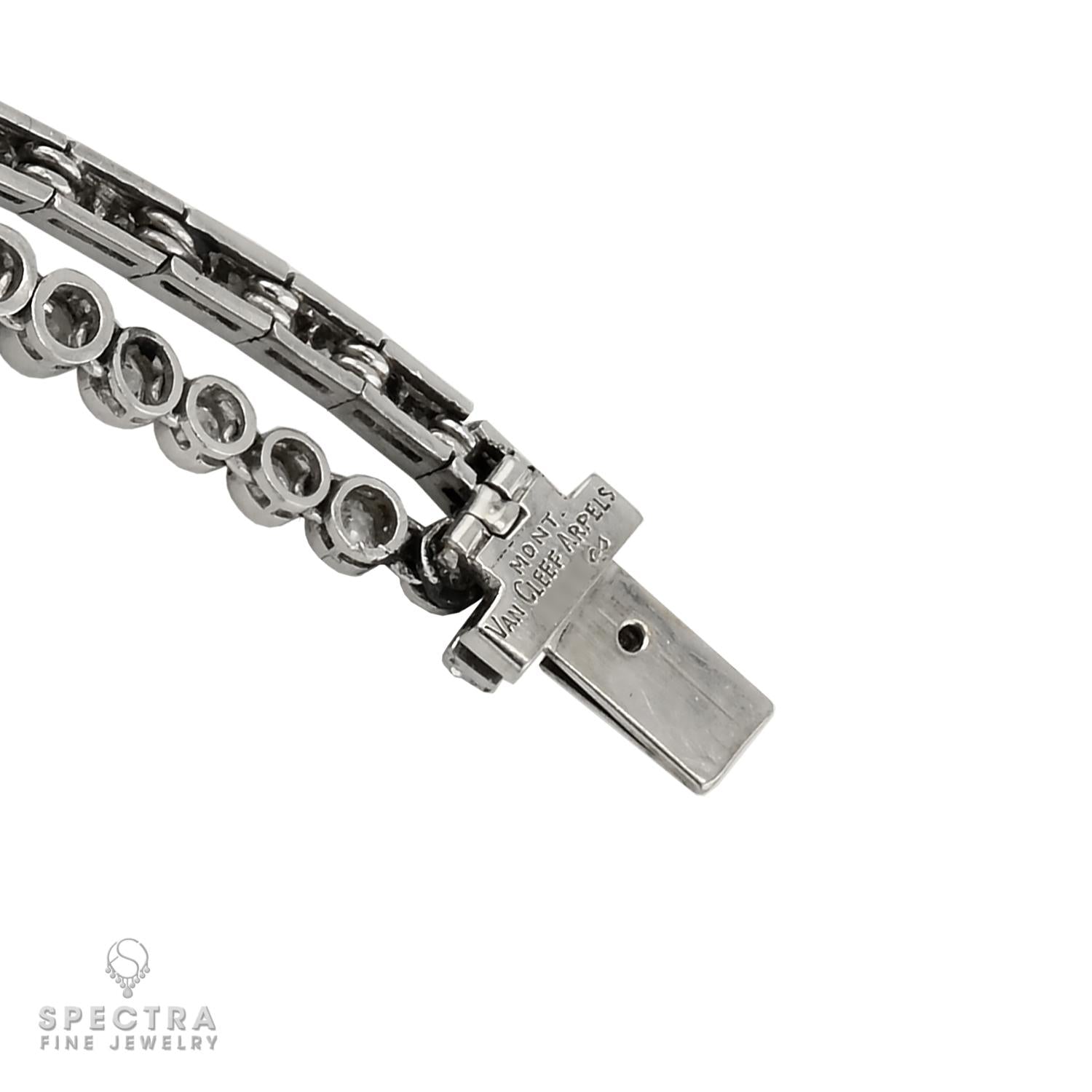 Van Cleef & Arpels two-row diamond necklace in platinum showing the "VAN CLEEF ARPELS" maker's signature and "MONT." (for monture/mounting) engraved on the clasp. The gray-white color of the metal is characteristic of platinum. Photo: Spectra Fine Jewelry
Identifying Platinum Without Marks
Sometimes marks are worn or a piece was never formally hallmarked. Other indicators:
Physical Properties
- Weight: Significantly heavier than white gold
- Color: Gray-white, not bright white like rhodium-plated gold
- Wear: Develops patina but doesn't wear thin
- Non-magnetic: Should not respond to magnets
Acid Testing
- Platinum resists acids that attack gold
- Specific gravity testing (21.45 for pure Pt)
- XRF testing is definitive
Platinum vs. White Gold
A common question—here's how to tell:
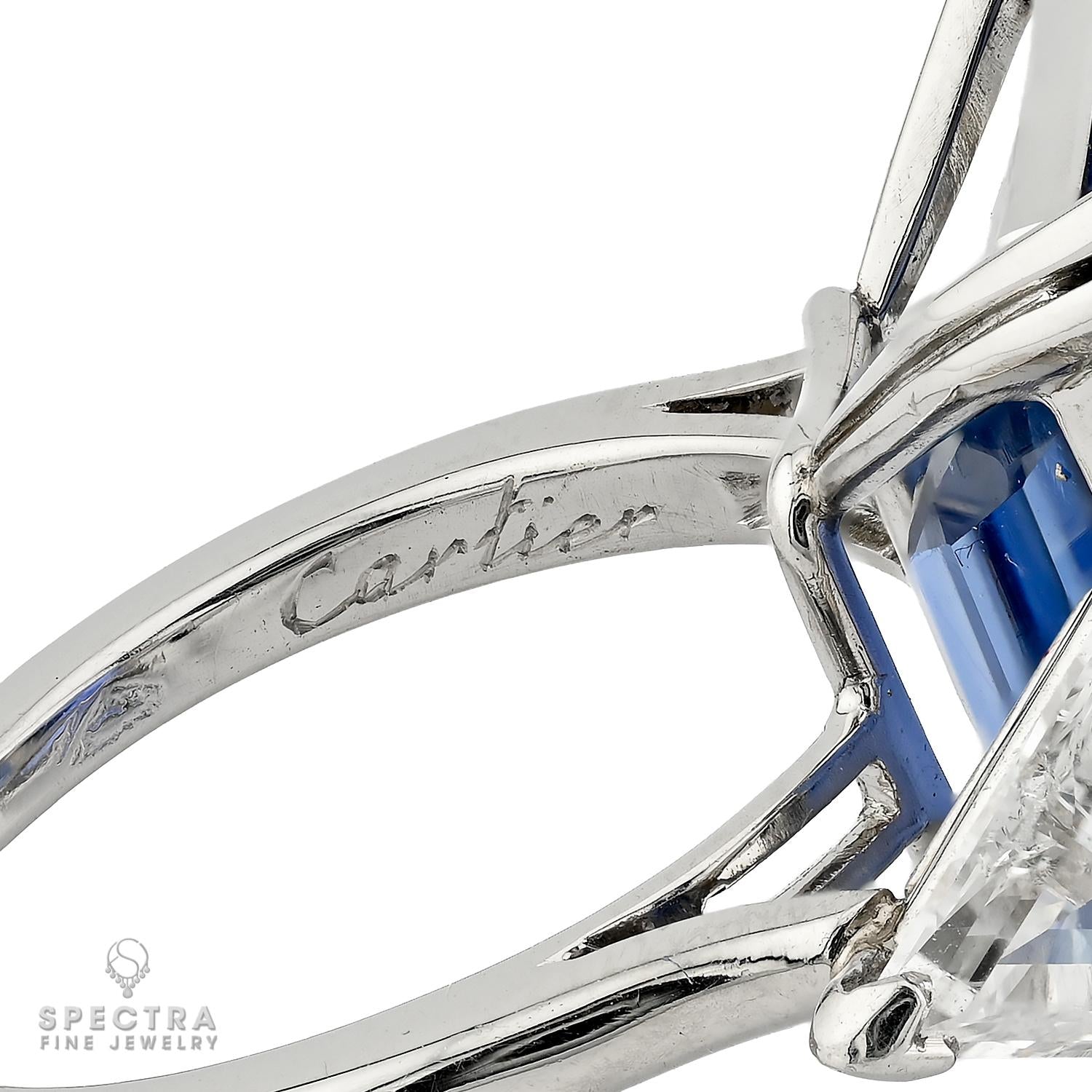 Cartier sapphire ring in platinum showing the elegant "Cartier" script signature engraved inside the shank. The gray-white color of platinum is evident compared to the bright blue of the sapphire. Photo: Spectra Fine Jewelry
| Property | Platinum | White Gold |
|---|---|---|
| Marks | PLAT, PT950, etc. | 750, 18K, etc. |
| Weight | Heavier | Lighter |
| Color | Gray-white | Bright white (if plated) |
| Wear | Displaces, doesn't wear away | Can wear thin |
| Magnet | No response | No response (usually) |
| Age indicator | Post-1890 for jewelry | More common post-1920 |
Silver Hallmarks
Silver Purity Standards
| Grade | Purity | Common Name |
|---|---|---|
| 999 | 99.9% | Fine Silver |
| 958 | 95.84% | Britannia Silver |
| 925 | 92.5% | Sterling Silver |
| 900 | 90% | Coin Silver |
| 800 | 80% | European Standard |
Silver Hallmarks by Country
United States
US silver marking:
- STERLING — Most common mark
- 925 — Fineness mark
- .925 — Alternative format
- STER — Abbreviation
- COIN — Made from coin silver (900)
United Kingdom
UK silver hallmarks are comprehensive:
Required Marks:
- Sponsor's Mark
- Lion Passant — Sterling silver symbol (England)
- Thistle — Scottish sterling
- Fineness Mark — 925, 958, 999
- Assay Office Mark
- Date Letter (optional since 1999)
Historical Marks:
- Britannia figure — 958 silver (1697-1720, optional after)
- Lion's Head Erased — Accompanied Britannia mark
France
French silver marks:
- Minerva Head — French silver (post-1838)
- 1 — First standard (925+)
- 2 — Second standard (800+)
- Boar's Head — Small items
Germany
German silver marks:
- 800 — Common German standard
- 835 — Another German standard
- 925 — Sterling equivalent
- Crescent and Crown — Traditional mark
- Half-moon indicates silver
Russia
Russian silver marks:
Pre-Revolutionary:
- 84 — Zolotniki (equivalent to 875)
- 88 — Zolotniki (equivalent to 916)
- Kokoshnik (woman's head)
Soviet/Modern:
- 875 — Standard Soviet/Russian silver
- 925 — Sterling equivalent
- Head-in-profile mark
Mexican Silver
Mexican silver has distinctive marks:
- STERLING or 925 — Purity mark
- MEXICO — Country of origin
- Eagle Mark (1-3) — Government assay marks
- TS- numbers — Tax stamps (Taxco era)
Important Notes
- Pre-1948 pieces may lack eagle marks
- Eagle 1 = highest silver standard
- Taxco was major silver center
- William Spratling, Margot de Taxco are notable makers
Palladium
Palladium is used as a platinum alternative:
Common Marks
- PD or PALL — Palladium mark
- 500 or 950 — Purity marks
- Less common in vintage pieces
- Growing popularity in modern jewelry
Properties
- Lighter than platinum
- Similar color to platinum
- Hypoallergenic
- Less expensive than platinum
Authentication Tips
For Platinum
- Check the weight — Platinum is notably heavy
- Examine the color — Gray-white, not bright
- Look at wear patterns — Platinum displaces, doesn't wear thin
- Verify marks — Should be consistent with era and origin
- Consider the age — Platinum jewelry rare before 1890
For Silver
- Check for tarnish patterns — Real silver tarnishes specifically
- Test with magnet — Should not be magnetic
- Verify weight — Should feel substantial
- Examine hallmarks — Should match claimed origin
- Look for wear — Silver develops patina over time
Red Flags
- Marks inconsistent with era
- Piece is too light for claimed metal
- Magnetic response
- Plating visible at wear points
- Illogical combination of marks
Professional Testing
When authentication matters:
- XRF Analysis — Non-destructive, accurate
- Specific Gravity — Density testing
- Acid Testing — Traditional method
- Professional Assay — Definitive but may leave marks
Related Guides
Gold Hallmarks by Country → UK, French, Italian, US, and more—gold marks decoded.
Where to Find Hallmarks → Know exactly where to look on each jewelry type.
Visual Hallmark Reference → See what authentic marks actually look like.
How to Authenticate → The complete workflow for verifying signed jewelry.
History of Hallmarks → 700 years of consumer protection in precious metals.
Need help with platinum or silver authentication? Our experts are here to assist.
Identify Your Hallmarks
Need Help?
Send photos of a piece you're evaluating. We'll give you a straight read—no pressure, no BS.
Contact Spectra Fine Jewelry →Ready to Browse Authenticated Pieces?
Every item at Spectra Fine Jewelry goes through our verification process before it hits the case. No guesswork. No surprises.