New to Signed Jewelry?Start Here.
Whether you're a new collector or just want to learn how authentication actually works, this page will get you oriented. No jargon, no pretense—just the practical knowledge that matters.
The Big Picture
Signed vintage jewelry refers to pieces that bear the mark or signature of a recognized maker—usually a luxury house like Cartier, Van Cleef & Arpels, Tiffany, or Bulgari.
These signatures matter because they tell a story: who made the piece, where, and often when. But here's what most beginners get wrong: the signature alone doesn't prove anything.
Fakes have signatures too. That's the whole point of faking.
Real authentication is about examining the entire picture: the marks, the metal, the construction, the wear patterns, and whether they all tell a consistent story. Use our visual hallmark reference to see what authentic marks look like, learn about gold hallmarks by country and platinum hallmarks, and discover how we authenticate pieces professionally. When everything aligns, you've probably got something genuine. When they don't, you've got questions.
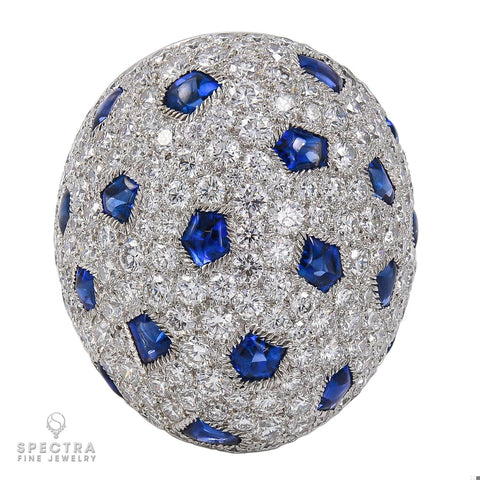
Cartier Panthère ring - one of the most sought-after signed pieces

Van Cleef Alhambra - iconic design with frequent counterfeits
Your Learning Journey
Here's the path I recommend for new collectors. Follow these steps in order, or jump to whatever interests you most.
Understand What 'Signed' Means
5 min readA signature is a mark claiming a piece was made by a particular house. But the signature alone proves almost nothing—authentication requires examining the whole picture.
Learn about hallmarks →Learn the Authentication Process
10 min readAuthentication isn't magic—it's methodical. Learn the systematic approach dealers use to verify pieces: marks, construction, materials, and wear patterns.
See the workflow →Study the Major Houses
15 min per brandEach luxury brand has specific signatures, hallmarks, and construction characteristics. Start with the houses you're most interested in collecting.
Start with Cartier →Master Hallmark Identification
10 min readLearn to read metal fineness marks (750, 18K, 950), assay office stamps, and maker's marks. These tell you where and when a piece was made.
Gold hallmarks guide →Know the Red Flags
8 min readSome things should make you slow down: inconsistent wear, wrong mark placement, too-good prices. Learn what experienced dealers watch for.
Most faked brands →Essential Resources
Guides
Brand Guides
References
Key Principles to Remember
🔍 Signatures ≠ Authenticity
A signature is a claim, not proof. Real authentication examines whether the entire piece supports that claim.
📋 Document Everything
Good photos of all marks, measurements, and details. You can't examine what you can't see clearly. Our free jewelry tools help with calculations and identification.
⚖️ Context Matters
A crisp signature on a heavily worn piece is suspicious. Everything should show consistent age and wear.
🤔 When in Doubt, Slow Down
Red flags aren't proof of fakes, but they're reasons to investigate further. Don't buy under pressure.
Common Questions from New Collectors
Get the Collector's Newsletter
Join collectors who get authentication tips, market insights, and new guide alerts. No spam, just practical knowledge.
Ready to Dive Deeper?
Pick a topic that interests you and start learning. Every expert was once a beginner.